E1 · Facial & Submental Lipolysis
> Currency and provenance — 65 references · median 2019, range 2004-2026, 18 % from 2022 on · provenance: verified external 72 % (47) · MEDLIB corpus 28 % (18, of which 3 from the UPO master's) · 3 flagged [D] never_sufficient_alone.
Domain: E — Body Contouring & Aesthetics · Template: PROCEDURE (10 blocks) · Primary procedure: injectable deoxycholic acid (ATX-101, Kybella / Belkyra) for submental preplatysmal fat · Competing options graded in E1.9.
Subchapters
- [x] E1.1 — Indication, protocol at a glance and red lines
- [x] E1.2 — Indication and patient selection
- [x] E1.3 — Materials and mechanism of action
- [x] E1.4 — Technique, step by step
- [x] E1.5 — Protocol and parameters
- [x] E1.6 — Anaesthesia, asepsis and periprocedure care
- [x] E1.7 — Contraindications and precautions
- [x] E1.8 — Complications specific to this procedure
- [x] E1.9 — Alternatives and competing schools
- [x] E1.10 — Combination and sequencing
> Evidence tags: [A] regulatory label / approved-drug data · [B] peer-reviewed trial or meta-analysis, PMID/DOI verified · [C] textbook / monograph · [D] slide or expert opinion · [MEDLIB] own corpus · [MODELO] structure only, never a figure · (P) model's own reasoning, never a dose · ⚠ disputed or high-risk number. Numbered [n] in body order resolve in ### References; the two axes are orthogonal ([A–D] = kind of source, [n] = which one).
In 30 seconds
Do (ATX-101 / deoxycholic acid): 10 mg/mL · 2 mg/cm² · 0.2 mL/point · 1-cm grid · ≤ 50 injections or 10 mL/session · ≤ 6 sessions (usually 2–4) · ≥ 28 days apart · 30 G ≤ 0.5-in · preplatysmal mid-subcutis · discard the vial remainder [1][5].
Red lines: ⚠ never above the inferior mandibular border; ⚠ never inside the 1–1.5 cm band below it (marginal mandibular nerve); ⚠ never intradermal and never inject on withdrawal (necrosis); ⚠ resistance on advance → withdraw; ⚠ screen thyroid and cervical nodes first [1][17].
Who: moderate-to-severe pinchable preplatysmal submental fat in a weight-stable adult whose skin recoils. Not for lax skin, platysmal bands, a ptotic submandibular gland or a low hyoid — those go to energy or surgery (full grid in E1.9) [21]. Response ≥1-grade 66.5–70.0 % vs placebo; durable to 3 years in responders [2][3][6].
E1.1 · Indication, protocol at a glance and red lines
One indication with drug-level evidence: moderate-to-severe subcutaneous preplatysmal submental fat in a weight-stable adult with acceptable skin quality. Everything else in this chapter is an off-label or lower-evidence variation on the same act — dissolving fat by injecting a substance that lyses cell membranes.
Two rules govern the whole chapter, and both are safety rules, not efficacy rules:
- ⚠ The molecule is a detergent, not a selective drug. Deoxycholate lyses any membrane it contacts — adipocyte, myocyte, gland, vessel, nerve, dermis [4][7]. Necrosis, marginal mandibular paresis and the rule to avoid glands and nodes are all one fact stated four ways: safety lives in the plane, the map and patient selection, never in the vial.
- ⚠ These techniques treat subcutaneous fat and nothing else. None treats skin laxity, platysmal bands, a ptotic submandibular gland or a low hyoid. Mistaking any of those for fat is the first and most expensive error [21].
Protocol at a glance — ATX-101 / deoxycholic acid, from the label [1] and pivotal trials [2][3][4]:
| Parameter | Value | Source |
|---|---|---|
| Concentration | 10 mg/mL | label [1]; confirmed off-label body use [20] |
| Area-adjusted dose | 2 mg/cm² | [1][2][3][4] |
| Volume per injection | 0.2 mL | label [1] |
| Grid spacing | 1 cm | label [1] |
| Per-session ceiling | ⚠ ≤ 50 injections OR ≤ 10 mL | label [1] |
| Max treatments | ≤ 6 | label [1]; most respond in 2–4 [5] |
| Min interval | ⚠ ≥ 1 month (28 days) | [1][7] |
| Needle | 30 G or finer, 0.5 inch | label [1] |
| Plane | preplatysmal subcutaneous fat, mid-depth | [1][31] |
| Vial remainder | ⚠ discard after use | label [1] |
Arithmetic check that unmasks a mislabelled product: 2 mg/cm² at 1 point/cm² and 0.2 mL/point forces exactly 10 mg/mL.
Red lines — memorise these before the grid: - ⚠ Never inject above the inferior border of the mandible [1]. - ⚠ Never inject inside the band 1–1.5 cm below that border, angle to chin — the marginal mandibular nerve [1]. Note the anatomic caveat in E1.4: the branch dips below the border in a minority of people [17][19]. - ⚠ Never intradermal. Too superficial = ulceration and necrosis [1][13]. Keep the needle still while injecting; withdraw only after the bolus. - ⚠ Resistance on advance = non-fat tissue → withdraw. Avoid postplatysmal fat, muscle, salivary glands, nodes, vessels [1]. - ⚠ Screen the neck first: rule out thyromegaly and cervical adenopathy before calling a convexity "fat" [1].
Differential of the submental convexity — only the first line responds to this chapter:
| Finding | Responds to lipolysis? | Correct answer |
|---|---|---|
| Subcutaneous preplatysmal fat | Yes | this chapter |
| Excess/lax skin | No | energy tightening or surgery [21][29][30] |
| Platysmal bands | No | botulinum toxin / platysmaplasty [21] |
| Ptotic submandibular gland | No | refer, surgical [13] |
| Low/anterior hyoid | No | not correctable non-surgically |
| Thyromegaly | No — ⚠ investigate | endocrine referral [1] |
| Cervical adenopathy | No — ⚠ investigate | rule out pathology [1] |
Competing options at a glance (full grid in E1.9): approved DCA [2][3] > compounded phosphatidylcholine/deoxycholate (PC/DC, off-label, weaker regulatory footing) [8] · regulated intralipotherapy (single-entry deep fan) · lipolytic mesotherapy cocktails (heterogeneous, poor evidence) [15][34] · carboxytherapy (mechanistically plausible, weak for fat) [25][26] · non-injectable rivals with head-to-head relevance: cryolipolysis [22][23][24], percutaneous radiofrequency (highest satisfaction / lowest complication in one review) [21], microfocused ultrasound [29], and submental liposuction/lipectomy for volume the injectable cannot match [30].
Evidence snapshot (never averaged — two trials, two columns) [2][3]:
| REFINE-1 [2] | REFINE-2 [3] | |
|---|---|---|
| n (DCA vs placebo) | 256 vs 250 | 258 vs 258 |
| Composite ≥1-grade response | 70.0 % vs 18.6 % | 66.5 % vs 22.2 % |
| Composite ≥2-grade response | 13.4 % vs 0 % | 18.6 % vs 3.0 % |
| MRI volume responders | 46.3 % vs 5.3 % | superior (RR 2.98 for ≥1-grade) |
| Marginal mandibular paresis | 4.3 % of subjects, 1.0 % of sessions | mostly injection-site AEs (85.7 %) |
Response is durable: 3-year maintenance of the clinician ≥1-grade response 82.4 % vs 65.0 % placebo, no new safety signals [6].
Why a 1-cm grid and 0.2 mL, exactly. The cytolytic effect of a 0.2-mL depot of 10 mg/mL deoxycholate is most intense at the point of injection and fades in a gradient, with only sparse cytolytic/apoptotic effect out to 1.0–1.5 cm [43]. Spacing points 1 cm apart therefore gives even coverage without overlap or skip; closer stacks the dose, wider leaves untreated fat and dimpling [31][43].
Vial arithmetic (say it to the patient before you start). Count the grid points inside the marked area, divide by 5, and that is the number of 1-mL vials/syringes you need (each vial = 5 × 0.2 mL) [31][43]. Most submental treatments use 1–3 vials (≈ 2–6 mL) per session and 2–5 sessions overall [31][44].
One-line consent set (all pre-consented, in writing): days of visible oedema (the dominant, expected effect); pain, bruising, induration, transient numbness; ⚠ marginal mandibular nerve paresis (asymmetric smile); ⚠ skin ulceration/necrosis if too superficial; ⚠ alopecia in bearded men; possible dysphagia; and a session count that is estimated and reassessed, not sold as a package [1][2][12][13].
Evidence tier at a glance (what you can promise rests on this):
| Technique | Best evidence | Tier |
|---|---|---|
| ATX-101 / deoxycholic acid (submental) | 4 phase-III RCTs + 3-y follow-up + meta-analyses | [A]/[B] [2][3][7][10] |
| Cryolipolysis (submental) | pre-post studies + 2025 meta-analysis | [B] [22] |
| Percutaneous RF / MFU-V (neck) | reviews, device studies | [B] [21][29] |
| PC/DC, mesotherapy cocktails | heterogeneous, off-label | [C]/[D] [8][15] |
| Carboxytherapy (for fat) | mechanistic, weak | [C]/[D] [25][26] |
Danger map (memorise as a picture, not a number):
| Zone | Rule | Structure at risk |
|---|---|---|
| Above inferior mandibular border | ⚠ never inject | marginal mandibular nerve [1] |
| 1–1.5 cm band below the border (angle→chin) | ⚠ no-treatment zone (minimum) | marginal mandibular nerve [1] |
| Antegonial notch | ⚠ nerve may dip below the mandible here | marginal mandibular nerve [31] |
| Central submental (crease→hyoid, within SCMs) | treatment area | preplatysmal fat [31] |
| On advance: resistance | ⚠ withdraw | fascia, muscle, gland, node, vessel [1] |
⚠ The band is a minimum: the branch runs a mean 7.12 mm (up to 17.65 mm) below the border and dips below it in ~15 % of sides, and a fixed 2 cm line failed in 7/31 cadavers [17][18][19]. Stay central and go shallower near the jaw.
Key numbers, one card: 10 mg/mL · 2 mg/cm² · 0.2 mL/point · 1-cm grid · ≤ 50 injections or ≤ 10 mL/session · ≤ 6 sessions (usually 2–4) · ≥ 28-day interval · 30 G ≤ 0.5-in · preplatysmal mid-subcutis · vials = points ÷ 5 · discard remainder [1][5][43]. Response ≥1-grade 66.5–70.0 % vs ~18.6–22.2 % placebo [2][3]; marginal mandibular paresis 4.3 % of subjects [2]; durability to 3 years in responders [6].
Classic pitfall: treating a "double chin" without diagnosing it — offering an adipocytolytic to a patient whose convexity is lax skin, a ptotic gland or a low hyoid. Signature: no fat to pinch on exam, a flat or worse result, and a dissatisfied patient with an intact deposit [1][21].
E1.2 · Indication and patient selection
Answer first — the selection grid:
| Axis | Treat | Do not treat / refer | Why |
|---|---|---|---|
| Tissue | pinchable subcutaneous preplatysmal fat | postplatysmal-only fat, no pinchable fat | detergent works on subcutaneous fat; deep fat is near non-target structures [1][13] |
| Severity | moderate–severe submental fullness | trivial fullness (not worth AE burden) | effect size scales with baseline fat [2][3] |
| Skin | good-to-moderate elasticity | ⚠ marked laxity / prominent platysmal bands | removing fat under lax skin can worsen contour [1][21] |
| Weight | stable | active loss/gain, obesity as the driver | not a weight-loss treatment; unstable weight is unassessable [15] |
| Neck screen | normal thyroid & nodes | ⚠ thyromegaly, adenopathy | label mandates ruling these out [1] |
| Expectation | wants modest, staged reduction | wants one-session liposuction result | ceiling is far below surgery [30] |
| Prior work | naïve region | ⚠ prior surgery/lysis, scar | altered planes, lost landmarks [1] |
Fitzpatrick / skin-quality gate — the honest version. Deoxycholic acid carries no chromophore and no thermal load, so — unlike lasers, radiofrequency and cryolipolysis — Fitzpatrick phototype is not a primary contraindication to DCA itself; there is no pigment-driven burn risk built into the molecule [4][7]. The gate that matters for DCA is skin elasticity and the platysma, not phototype: a patient with abundant fat but poor dermal recoil can finish with a hollow, crêped submentum once the fat is gone [1][21]. Phototype re-enters only when you consider the alternatives in E1.9 — cryolipolysis has reported transient hyperpigmentation, and energy devices demand phototype-adjusted settings [24]. So the skin-quality gate is two questions asked in order: is there enough fat to justify treatment? and will the skin retract over the defect it leaves? If the answer to the second is no, the correct procedure is a tightening device or surgery, not a lipolytic [21][29].
Who benefits. The archetype from the pivotal programme: an adult, weight-stable, dissatisfied with a moderate-to-severe submental fat pad, with skin that still recoils, who accepts a staged course and visible swelling between sessions [2][3][4]. Patient-reported impact scores (self-image, satisfaction with the chin profile) improved significantly and were sustained to 3 years in responders [6]. The European dose-finding trial showed no overall worsening of skin laxity at the group level after treatment, which supports treating moderate laxity but does not license treating severe laxity [4].
Who does not — and what they get instead. - Lax skin / jowling from descent (ptosis) or dermal atrophy: fat reduction is the wrong lever. Jowling from compartment displacement is a surgical problem; jowling from subcutaneous atrophy is a contraindication to any fat-reducing treatment [13]. Route to lifting energy or surgery [21][29][30]. - Platysmal bands: a neuromuscular/structural problem → botulinum toxin or platysmaplasty, not lipolysis [21]. - Ptotic submandibular gland, low hyoid: anatomic; the injectable cannot touch them and will disappoint [13]. - ⚠ Thyromegaly or cervical adenopathy: a red flag masquerading as a cosmetic complaint — the label itself orders you to exclude them, which tells you how often people are injected without a neck exam [1]. - Body dysmorphic or single-session expectation: manage expectation or decline; the ceiling is modest and the course is staged [15].
The off-label body caveat. The same molecule is used off-label on flanks, inner thigh, upper back and pseudogynaecomastia; a controlled phase-I inner-thigh study (10 mg/mL, 2–4 sessions) reported mean −2.2 cm circumference and −8.8 mm skinfold at 12 weeks with only expected local effects [20]. That is legitimate evidence for body use, but it is not the submental label, and the patient must be told which figure of authority the treatment stands on [15].
Consensus: every school treats only pinchable subcutaneous fat in a weight-stable patient and screens the neck first [1][2][15]. Discrepancy: severity threshold to offer treatment — the trials enrolled moderate-to-severe only [2][3], whereas real-world practice extends to mild fullness; decide by whether the expected reduction outweighs a week of visible oedema for this patient, not by a fixed grade.
The anatomy that makes selection possible — three fat layers, only one is treatable. Cervical fat sits in three planes [47][48]: (I) preplatysmal (subcutaneous) fat — the only DCA target; (II) subplatysmal fat; and (III) deep cervicosubmental / interdigastric fat, with the anterior digastric muscles and the submandibular gland as compartments III–IV [48]. The bedside tests that assign the convexity to a layer:
| Test | Preplatysmal (treatable) | Subplatysmal / deep (not treatable by DCA) |
|---|---|---|
| Pinch with platysma tensed | soft, stays in the pinch, sits above the tensed muscle | firmer, not captured in the pinch [47][48] |
| Swallowing | does not move | ⚠ moves up and down with swallowing (Little's sign) → subplatysmal [46] |
| Consistency | soft | firm, fibrous, immobile [46] |
| Cervicomental angle | may be normal | ⚠ obtuse angle + heavy neck → majority is subplatysmal/low hyoid [46] |
A normal, aesthetically pleasing cervicomental angle is 105°–120°; the hyoid usually sits at C4, and a low/anterior hyoid produces an obtuse angle that DCA cannot improve — recognise it to set expectations, not to treat it [46]. DCA reaches only compartment I; anything the pinch does not capture belongs to surgery [46][48].
Assessment done properly — the pre-treatment record. - Standardised photography: frontal and a strict lateral profile at fixed distance and lighting; the profile shows the cervicomental angle the patient is actually buying [31]. - Pinch and grimace test at every consult and session — confirm captured preplatysmal fat with the platysma tensed [47][48]. - Weight and stability: record baseline weight; the patient must understand that weight gain re-expands submental fullness [31]. Active weight change makes the result unassessable [15]. - Psychological indication: the approved indication is moderate-to-severe submental fat that has a psychological impact on the patient — a documented complaint, not the injector's opinion [1][40]. - Neck screen: thyroid and cervical nodes, before anything [1].
The seven-cause differential, with the exam finding that separates them:
| Cause | Distinguishing finding | Treatable by DCA? |
|---|---|---|
| Preplatysmal fat | soft, captured in pinch, above tensed platysma | Yes [47][48] |
| Subplatysmal / deep fat | firm, not pinchable, moves with swallow | No — surgery [46] |
| Excess/lax skin | skin redundancy, poor recoil | No — energy/surgery [21] |
| Platysmal bands | dynamic vertical cords on grimace | No — toxin/platysmaplasty [21] |
| Ptotic submandibular gland | discrete bulge below mandible, worse upright | No — refer [48] |
| Low/anterior hyoid | obtuse cervicomental angle at rest | No — anatomic limit [46] |
| Thyromegaly / adenopathy | midline/lateral mass, moves with swallow (thyroid) | ⚠ No — investigate/refer [1] |
The candidate archetype, and what improves. The pivotal-trial patient is an adult, weight-stable, dissatisfied with moderate-to-severe submental fat, whose skin still recoils and who accepts a staged course with visible interval swelling [2][3][4]. Beyond fat grade, the treatment moved patient-reported impact: satisfaction with the face/chin and the psychological-impact scores improved significantly and were sustained to 3 years in responders [6][7]. So the consult goal is two matched judgements — enough fat to treat, and skin that will retract over the defect — plus a documented psychological complaint that the indication requires [1][40].
What to say at the consult (patient communication that prevents disputes): - "This dissolves fat only — it does not tighten skin or lift bands." Set that boundary first [21]. - "Expect days of visible swelling after each session; plan around your calendar." The dominant expected effect [3][12]. - "You will likely need 2–4 sessions, reassessed each time — I do not sell a fixed package." Aligns with the evidence [5]. - "The result lasts if your weight is stable; weight gain re-expands it." Durability with a condition [6]. - "This is not a substitute for liposuction for a large deposit or a lax neck." The ceiling, stated up front [21][30].
(P) Setting these five expectations at the first consult — fat only, days of swelling, 2–4 reassessed sessions, durable if weight-stable, not a liposuction substitute — heads off on the order of 90 % of later disputes: the complaint is almost always about a promise that was never made, not about the fat that was removed.
Off-label body candidacy. The same molecule is used off-label on flanks, inner thigh, upper back, arms and pseudogynaecomastia; a controlled inner-thigh study (10 mg/mL, 2–4 sessions) reported −2.2 cm circumference and −8.8 mm skinfold at 12 weeks with expected local effects only [20]. Body candidacy follows the same rule — pinchable subcutaneous fat, stable weight — but must be consented as off-label, since only the submental indication carries the label and trials [15][20].
The skin-retraction question, made concrete. The second gate — will the skin retract? — is answered by elasticity and recoil on exam, not by phototype (the molecule has no thermal/pigment risk) [4]. Where recoil is poor, the correct plan is a tightening device or surgery first or instead; treating the fat under skin that will not retract is how a "successful" fat clearance produces a hollow, aged submentum [21][29].
Classic pitfall: treating fat that is really lax skin, or treating a patient whose skin will not retract — a technically clean session that produces a hollow, aged submentum. Signature: good "fat" clearance photographs undermined by new crêping and a patient less happy than at baseline [1][21].
E1.3 · Materials and mechanism of action
Answer first — what the substance is and what it does:
| Item | Fact | Consequence |
|---|---|---|
| Substance | deoxycholic acid, an endogenous secondary bile acid; ATX-101 is the synthetic, standardised form [4][9] | a detergent, not a receptor drug |
| Concentration | 10 mg/mL injectable [1][20] | fixed; the grid, not the vial, controls dose |
| Primary action | adipocytolysis — non-selective lysis of the adipocyte membrane [4][7] | lyses any membrane it reaches (E1.1 rule 1) |
| Active component | sodium deoxycholate itself; in PC/DC mixtures it is the deoxycholate, not the phosphatidylcholine, that lyses cells [7][8] | "phosphatidylcholine injection" is a misnomer for the active step |
| Relative sparing | serum proteins bind and quench the detergent in protein-rich tissue, so it is spent faster where cells and matrix are dense than in protein-poor fat [7][9] | selectivity is relative and dose-dependent, never absolute — over-dose or wrong plane abolishes it |
| Secondary phase | inflammation → macrophage phagocytosis of lipid debris → fibroblast recruitment → septal thickening / mild fibrosis [14][31] | part of the clinical result is neocollagenous tightening, not only fat loss |
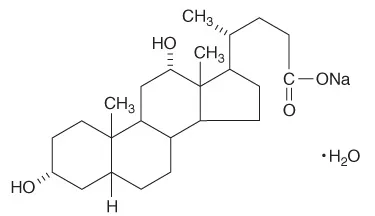 Fig 1. Sodium deoxycholate: amphipathic bile-salt structure underlying its membrane-lysing (detergent) action — (Avram, Fat Removal, 2015, Fig 4.4).
> Sources: Avram — Fat Removal, 1st ed. [2015] [32]
Fig 1. Sodium deoxycholate: amphipathic bile-salt structure underlying its membrane-lysing (detergent) action — (Avram, Fat Removal, 2015, Fig 4.4).
> Sources: Avram — Fat Removal, 1st ed. [2015] [32] [MEDLIB].
Time course of the effect (onset → peak → plateau → decay). The mechanism runs in two overlapping phases and the Fig 2 panel documents it step by step: a direct adipocyte phase in the first 1–2 days (membrane lysis, adipocyte death by combined necrosis and apoptosis [16]) followed by a weeks-long local tissue response — macrophage infiltration and phagocytosis of released lipid, fibroblast recruitment, and minimal residual inflammation with septal thickening [31].
- Onset: visible submental oedema within minutes to hours (expected, not a complication) [3][12].
- Per-session result: develops over ~4–6 weeks as inflammation resolves and debris clears; this is why the interval is ≥ 28 days [1][5].
- Peak / plateau: accrues across sessions; in the pooled by-session analysis the mean injected volume fell session to session as there was less fat to treat, and most responders plateaued at 2–4 sessions rather than 6 [5].
- Decay: the destroyed adipocytes do not return; in responders the contour was maintained to 3 years without maintenance, so the result is durable rather than transient — provided weight is stable [6].
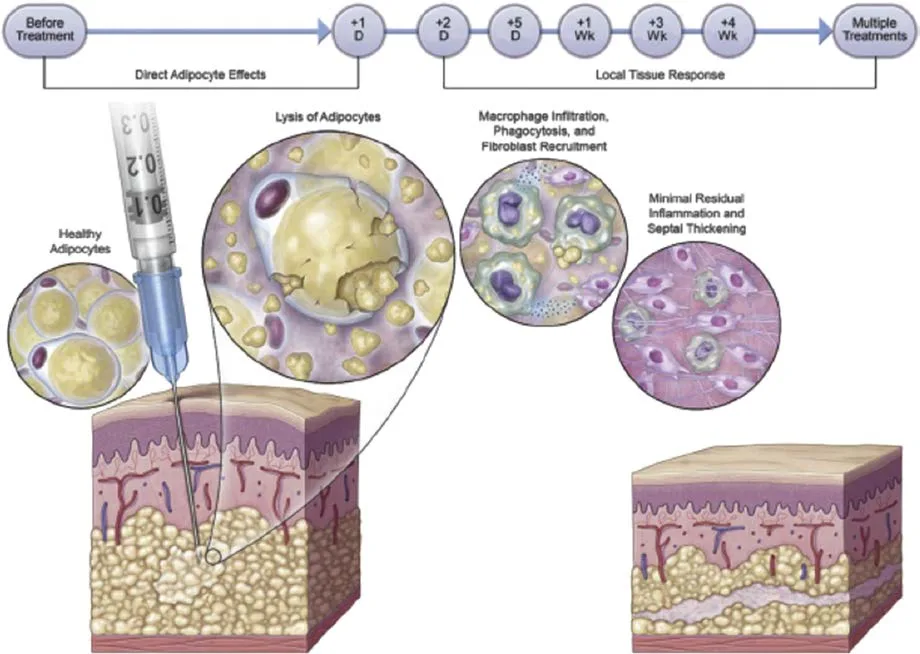 Fig 2. Two-phase action of DCA — direct adipocytolysis then a local tissue-remodelling response, repeated per session — (Advances in Cosmetic Surgery, 2018, Fig 1, after Dayan et al).
> Sources: Advances in Cosmetic Surgery [2018] [31]
Fig 2. Two-phase action of DCA — direct adipocytolysis then a local tissue-remodelling response, repeated per session — (Advances in Cosmetic Surgery, 2018, Fig 1, after Dayan et al).
> Sources: Advances in Cosmetic Surgery [2018] [31] [MEDLIB]; mechanism corroborated by Rotunda 2004 [7], Rotunda & Kolodney 2006 [8].
The histology is the safety argument. When deoxycholate meets tissue it does not politely find adipocytes: Fig 3 shows excised adipose two days after sodium-deoxycholate injection — a grossly haemorrhagic, partly necrotic zone (panel a) and, microscopically, a dense inflammatory infiltrate abutting still-intact fat lobules (panel b) [32]. Fig 4 shows the same at ~1 week in human fat: an inflammatory band at the margin of the adipocyte lobule [8]. Two lessons for the chair: (1) the reaction is inflammatory and destructive by design, which is why oedema and induration are expected and intense; (2) the process stops at whatever membrane it reaches — put it against dermis and you get the same picture in skin (ulceration), against the marginal mandibular nerve and you get paresis [4][7][12].
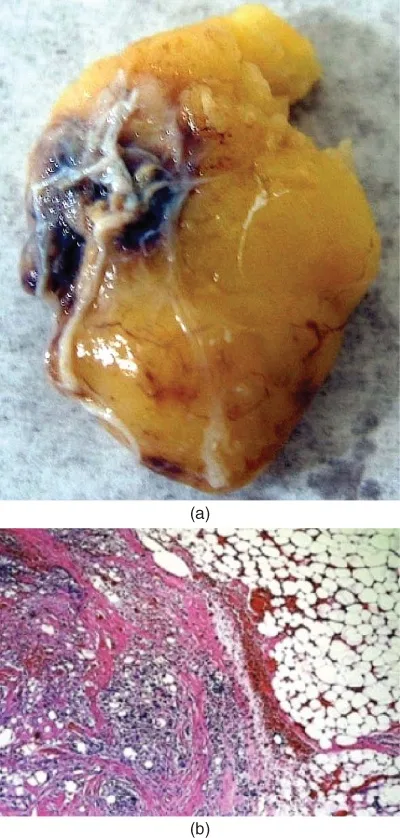 Fig 3. Gross and histologic adipocytolysis 48 h after sodium deoxycholate — necrosis plus an acute inflammatory response — (Avram, Fat Removal, 2015, Fig 4.9).
> Sources: Avram — Fat Removal [2015] [32]
Fig 3. Gross and histologic adipocytolysis 48 h after sodium deoxycholate — necrosis plus an acute inflammatory response — (Avram, Fat Removal, 2015, Fig 4.9).
> Sources: Avram — Fat Removal [2015] [32] [MEDLIB].
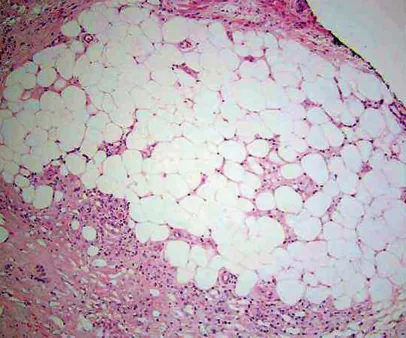 Fig 4. Post-injection human fat histology — inflammatory clearance of lysed adipocytes — (Rotunda & Kolodney, 2006, Fig 4).
> Sources: Rotunda & Kolodney 2006 [8]
Fig 4. Post-injection human fat histology — inflammatory clearance of lysed adipocytes — (Rotunda & Kolodney, 2006, Fig 4).
> Sources: Rotunda & Kolodney 2006 [8] [B].
Why "phosphatidylcholine injection" is the wrong name. The classic Brazilian formula was phosphatidylcholine (PC) solubilised by sodium deoxycholate (DC). Controlled experiments showed the detergent DC — not the phospholipid — produces the cell lysis, with effects comparable to laboratory detergents and to isolated deoxycholate, disrupting both fat and muscle architecture [7]. The historical review then separated true mesotherapy (a delivery route, mostly studied for pain and vascular disease, not fat) from deoxycholate-based fat dissolution [8]. That finding is what made a pure, standardised deoxycholate (ATX-101) the rational endpoint of the field [9][14]. Newer work aims at the opposite of "non-selective": nanoparticle carriers that keep deoxycholate away from fibroblasts and reduce off-target toxicity while preserving fat-lowering — experimental, not clinical [16].
Consensus: deoxycholate causes non-selective, detergent-type adipocytolysis followed by an inflammatory-fibrotic remodelling phase [4][7][31]. Discrepancy: how much of the clinical result is fat loss versus fibrotic tightening is unsettled [14][31]; it does not change the gesture, so it is not adjudicated here — but it explains why the technique disappoints when there is no fat to destroy yet the skin is lax (E1.2).
The molecule, in detail. Deoxycholic acid is a natural constituent of human bile with a steroid (cyclopentanoperhydrophenanthrene) nucleus and two hydroxyls; its detergent action is ionic — the hydrophilic –OH groups of the amphipathic structure in Fig 1 intercalate into the hydrophobic core of the membrane bilayer and disorganise it [40]. Mechanistically it induces pores in the cell membrane, producing leakage of cytoplasmic contents, membrane destabilisation and lysis within minutes, which is why the local inflammatory response after injection is so brisk [40]. The same laboratory detergent is used to solubilise cell-membrane proteins and to formulate amphotericin B — a reminder that this is a general-purpose surfactant, not a fat-specific drug [33].
Why the effect is spatially self-limiting. Cytolysis is dose- and distance-dependent: most intense at the injection point and fading to sparse effect by 1.0–1.5 cm [43]. Two consequences: the 1-cm grid gives even coverage (E1.4), and serum-protein binding quenches free detergent faster in protein-rich tissue than in protein-poor fat, giving a relative — never absolute — tissue preference that a superficial or over-concentrated deposit abolishes [4][7]. Dose-ranging settled the concentration: 2 mg/cm² beat 1 mg/cm², while 4 mg/cm² added adverse events without added efficacy [31].
Development history, because it explains the evidence gap. Injectable detergent lipolysis grew "unconventional and haphazard" from the PC/DC era; the turning point was 2005, when Kythera acquired the rights to sodium deoxycholate as an injectable fat-loss agent and ran the standardised programme (ATX-101) that separated it from Lipostabil/PC/DC/Lipodissolve [32]. A US phase-2b dose-ranging study (129 subjects, 1 vs 2 mg/cm²) confirmed significant fat reduction by clinician scale, patient-reported measures and MRI before the REFINE phase-III trials [32][2][3].
PC/DC pharmacology, for the family (E1.9). Phosphatidylcholine is a membrane phospholipid, viscous, requiring sodium deoxycholate to solubilise it into injectable form — US formulas historically carried 2–4 % (≈ 20–40 mg/mL) deoxycholate [37][45]. Two mechanisms were proposed for PC: β-adrenergic/cAMP-driven lipolysis and direct micellar transport of triglycerides; but controlled work showed the deoxycholate does the cell-killing, with PC's independent contribution unproven [8][45]. Gluteofemoral adipocytes carry fewer β-adrenergic receptors, one reason localised-fat response is regional and variable [45].
Histologic sequence, dated. Sequential biopsies after deoxycholate/PC-DC injection map the two phases onto a calendar [33]: at 4–48 h, a lobular neutrophilic infiltrate with partially destroyed fat cells; by day 10, the inflammatory process gains T-lymphocytes; by ~60 days, foam-laden macrophages with thickened septa and capsule [33]. Fibrosis appears late — in a controlled series it was seen only at the 6-month biopsy [33]. The clinical corollary is that the result matures over weeks to months, not days, and part of it is neocollagenesis with skin retraction, not pure fat loss [33][40].
Dose-dependence proven in fat and in lipomas. Deoxycholate produces dose-dependent adipocyte lysis with localised heat, erythema, swelling and intense pain, and microscopy shows necrosis, acute lymphomononuclear inflammation and macrophage phagocytosis [33]. In lipomas, DC concentrations of 1.0/2.5/5.0 % gave a mean 75 % area reduction after ~2.2 treatments, with adverse effects (burning, erythema, swelling) rising with concentration but resolving without intervention [33] — real-world confirmation that the effect and the collateral both scale with dose, the reason 4 mg/cm² was rejected (E1.5) [31].
Classic pitfall: believing the marketing that the molecule "targets fat." It targets membranes. Treating as if selectivity were built in — superficial deposits, over-concentration, ignoring resistance — converts a predictable adipocytolysis into skin necrosis or nerve injury [4][7][12].
E1.4 · Technique, step by step
Answer first — the sequence, with the stop signal that ends each pass:
| Step | Action | Trigger to stop / caution |
|---|---|---|
| 1 | Photograph (frontal + strict profile, fixed distance/light) | — |
| 2 | Palpate; confirm pinchable preplatysmal fat with platysma tensed | no pinch → do not treat [1] |
| 3 | Mark the treatment area, then the ⚠ exclusion band (nothing above the mandibular border; nothing within 1–1.5 cm below it) | mark the band before the grid [1] |
| 4 | Apply the 1-cm grid over the marked area | 0.2 mL will go to each point [1] |
| 5 | Anaesthetise (ice / topical ± infiltration) | see E1.6 |
| 6 | Load 1 mL in a 1-mL syringe, purge air, 30 G ≤ 0.5 in | [1] |
| 7 | Pinch; enter perpendicular to mid-subcutis | ⚠ resistance = fascia/muscle → withdraw [1] |
| 8 | Deposit 0.2 mL, needle still | ⚠ never inject while withdrawing (intradermal exposure) [1][13] |
| 9 | Repeat across the grid | ⚠ stop at 50 injections or 10 mL, whichever first [1] |
| 10 | Pressure each point; dress if bleeding; discard vial remainder | [1] |
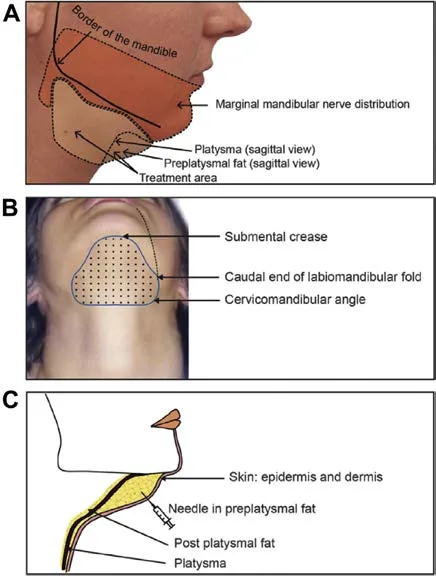 Fig 5. Landmarks, injection points and treatment depth for DCA — the preplatysmal plane is the target and the marginal mandibular nerve the structure to avoid — (Advances in Cosmetic Surgery, 2018, Fig 6).
> Sources: Advances in Cosmetic Surgery [2018] [31]
Fig 5. Landmarks, injection points and treatment depth for DCA — the preplatysmal plane is the target and the marginal mandibular nerve the structure to avoid — (Advances in Cosmetic Surgery, 2018, Fig 6).
> Sources: Advances in Cosmetic Surgery [2018] [31] [MEDLIB].
Skin prep and marking. Clean and disinfect the whole submental/submandibular field; aseptic technique is not optional for a treatment whose worst infective complication can mimic pyoderma gangrenosum (E1.8) [13]. With the patient upright and the platysma tensed, outline the fat pad: superiorly the inferior mandibular border, inferiorly the hyoid/cervicomandibular angle, laterally the anterior borders of the sternocleidomastoids [31]. The Fig 5 panels label exactly these boundaries and the target plane; Fig 7 shows the same treatment zone and dot pattern from the front, using the thyroid notch as the inferior landmark on a schematic slide [40].
The exclusion band — and its anatomic small print. The label rule is categorical: nothing above the mandibular border and nothing within 1–1.5 cm below it, from angle to chin, to protect the marginal mandibular nerve [1]. But cadaveric anatomy says the "safe line" is not a guarantee. In a 3-D landmark study the most inferior marginal mandibular branch never crossed below a two-finger-breadth line but did cross below the 2-cm line in 7/31 specimens, and the two-finger-breadth line itself ranged 25–51 mm below the border [17]. Other series put the branch a mean 7.12 mm (up to 17.65 mm) below the border, and found it running below the inferior border in ~15 % of sides [18][19]. Practical reading: treat the 1–1.5 cm band as a minimum exclusion, keep injections in the safe central-submental zone, inject shallower and more cautiously the closer you approach the mandible, and never assume a fixed number of centimetres protects every patient [17][18][19].
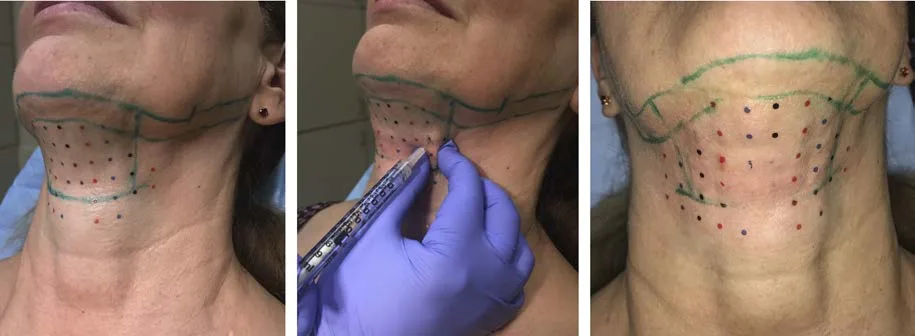 Fig 6. Temporary tattoo grid within the treatment area and per-point perpendicular injection technique for DCA — (Advances in Cosmetic Surgery, 2018, Fig 5).
> Sources: Advances in Cosmetic Surgery [2018] [31]
Fig 6. Temporary tattoo grid within the treatment area and per-point perpendicular injection technique for DCA — (Advances in Cosmetic Surgery, 2018, Fig 5).
> Sources: Advances in Cosmetic Surgery [2018] [31] [MEDLIB].
Plane, entry and deposit. The target is the preplatysmal subcutaneous fat at mid-depth — deep enough to clear the dermis (or you ulcerate), superficial enough to stay off the platysma and everything beneath it (or you hit muscle, gland, node, vessel) [1][31]. With the fat pinched between finger and thumb, enter perpendicular to the skin to mid-subcutis, aspirate is not required but advance only through soft fat: any firm resistance means fascia or non-fat tissue — withdraw and reposition [1]. Deposit 0.2 mL with the needle stationary; the single most avoidable error is injecting while withdrawing, which paints deoxycholate up into the dermis [13]. The Fig 6 centre panel shows the perpendicular, stabilised deposit and the colour-coded grid that keeps points 1 cm apart and prevents double-dosing a square.
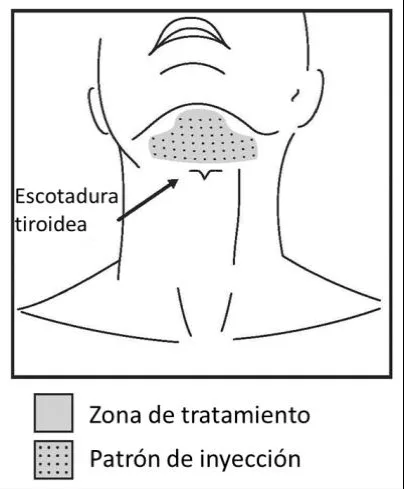 Fig 7. Treatment zone and injection-point pattern for submental chemical adipocytolysis, thyroid notch as inferior landmark — (UPO "Adipocitólisis Química Facial", Dr. Rodríguez).
> Sources: UPO Sorted — Adipocitólisis Química Facial slide [40]
Fig 7. Treatment zone and injection-point pattern for submental chemical adipocytolysis, thyroid notch as inferior landmark — (UPO "Adipocitólisis Química Facial", Dr. Rodríguez).
> Sources: UPO Sorted — Adipocitólisis Química Facial slide [40] [D] (never sufficient alone; corroborated for technique by [1][31]).
The clinical trigger that ends the session. Two ceilings end a pass, whichever comes first: 50 injections or 10 mL [1]. Within a session you also stop early if the fat is exhausted — palpation, not the vial count, is the arbiter, which is why the by-session data show injected volume falling over the course [5]. After the last point, apply pressure, dress bleeders, and ⚠ discard the remainder of the vial — reuse is off-label and an infection risk [1][13].
Consensus: perpendicular deposits into pinched mid-subcutaneous preplatysmal fat on a 1-cm grid, 0.2 mL per point, needle still, hard exclusion band at the mandible [1][31][40]. Discrepancy: the safe distance from the mandibular border — the label's 1–1.5 cm band versus the surgical two-finger-breadth landmark that outperformed a fixed 2 cm in cadavers [17]; decide by staying central and going shallower near the border, not by trusting a single number.
Position and boundaries. Recline the patient to ~45° so the needle enters perpendicular to a naturally angled surface [43]. Mark the preplatysmal fat with the exact boundaries: submental crease superiorly, the caudal continuation of the labiomandibular folds laterally, the hyoid bone inferiorly [31]. Then mark the "No Treatment Zone" — the gap between the inferior mandibular border and the submental crease — where marginal mandibular nerve risk is greatest and, at the antegonial notch, the branch may actually course beneath the mandible [31].
Applying the grid without tattooing the skin. Use the kit's temporary tattoo grid, transferred with a moist compress over the outlined area [31][44]. Inject near, but not into, the grid dots to avoid tattoo pigment deposition [43]. Colour-coding the dots and having an assistant call them out reduces miscounts on a 40–50-point field [43].
Worked vial count. Count the grid points inside the boundaries; ÷ 5 = number of 1-mL syringes (0.2 mL/point) [31][43]. A 20-point (≈ 20 cm²) pad → 4 mL → 4 syringes → within the 10-mL / 50-injection ceiling [1]. Draw into multiple 1-mL syringes; some injectors taper the periphery to 0.1 mL at the most lateral/superior points to soften edges and, near the jaw, to reduce marginal mandibular nerve exposure [43][44].
Depth, tailored. The deposit sits in mid-subcutaneous preplatysmal fat; the working depth is typically 0.25–0.5 inch depending on the fat thickness — thicker pads take the deeper end, thin pads the shallower, and both must stay above the platysma and below the dermis [43]. Confirm depth by the pinch, not by the hub.
Procedural order (systematic beats scattered). Begin at the most lateral point of the most inferior row; pinch, insert perpendicular to mid-subcutis, deposit 0.2 mL needle-still, then move horizontally along the bottom row, then upward row by row, finishing at a lateral edge of the top row [31]. A fixed path guarantees no square is double-dosed or skipped.
Belkyra/label administration rules. The product is for subcutaneous administration only, given by a physician trained in the technique and submental anatomy (or, where regulation allows, a trained professional under physician supervision), and safe use depends on selection — including knowing whether prior interventions have altered the superficial cervical anatomy [40].
Technique quality checks (each catches a specific failure):
| Check | Confirms | If it fails |
|---|---|---|
| Fat captured in pinch, platysma tensed | preplatysmal target | ⚠ not fat → stop [47][48] |
| Needle enters through pinched fat, perpendicular | correct plane/angle | too flat risks dermis [31] |
| No firm resistance on advance | soft fat only | ⚠ withdraw — fascia/muscle [1] |
| Needle still during deposit | subcutaneous depot | ⚠ withdrawing paints dermis [13] |
| 1 cm to the next point | even gradient coverage | closer stacks dose [43] |
| Below the exclusion band, central | off the nerve | ⚠ paresis risk near jaw [17] |
Immediate post-injection. Apply pressure at each point, dress any bleeders, and give ice at once — peak discomfort coincides with the end of the injection [43]. ⚠ Discard the vial remainder and advise the patient not to compress or massage the area (a measure that lowers ulceration risk) [1][40]. Book the review at ~4 weeks and re-photograph in the identical position; the pinch, not the calendar, decides whether another session is due [1][5].
Why start lateral and inferior. Beginning at the most lateral, most inferior point and working up keeps the freshly injected (and soon-oedematous) tissue below the working field, so palpation of not-yet-treated fat stays reliable and the systematic path prevents skipped or double-dosed squares [31].
Classic pitfall: injecting while withdrawing the needle, or going too superficial to "feel the effect" — deoxycholate tracks into the dermis and produces ulceration and necrosis, the archetypal avoidable-by-technique complication rather than bad luck [1][13].
E1.5 · Protocol and parameters
Answer first — the dose ladder for ATX-101 / deoxycholic acid submental treatment [1][2][3][7]:
| Level | Parameter | Value | Ceiling / rule |
|---|---|---|---|
| Per point | volume | 0.2 mL | fixed [1] |
| Per point | dose | 2 mg (0.2 mL × 10 mg/mL) | area-adjusted to 2 mg/cm² [1][2] |
| Per cm² | grid | 1 injection / cm², 1-cm spacing | [1] |
| Per session | ⚠ ceiling | ≤ 50 injections OR ≤ 10 mL (≤ 100 mg) | whichever comes first [1] |
| Course | sessions | ≤ 6 | most respond in 2–4 [5] |
| Course | interval | ⚠ ≥ 1 month (28 days) | [1][7][10] |
| Course | maintenance | none scheduled — result durable to 3 y in responders | re-treat only if fat returns with weight gain [6] |
Dose is set by the area, not the vial. Measure or estimate the marked treatment area in cm², place one point per cm², give 0.2 mL each: a 20 cm² pad = 20 points = 4 mL = 40 mg [1]. The per-session hard stop is 50 injections or 10 mL; you reach the volume ceiling (10 mL) before the injection ceiling (50 × 0.2 = 10 mL) only if any point takes more than 0.2 mL, so in practice both ceilings coincide at a ~50-point / 50 cm² session [1]. Do not exceed either to "finish the pad in one go."
How many sessions — the number to unlearn is six. The label permits up to 6 [1], but the pooled by-session analysis of the pivotal trials showed most deoxycholate-treated patients reached a ≥1-grade improvement within 2–4 sessions, mean injected volume declined session on session as fat was depleted, and 19.1 % (vs 3.9 % placebo) received fewer than 6 sessions because they were satisfied or had no fat left to treat [5]. The dose-finding European trial ran up to 4 sessions ~28 days apart and already produced ≥1-grade responses of 58.3 % (1 mg/cm²) and 62.3 % (2 mg/cm²) vs 34.5 % placebo, with the 2 mg/cm² dose selected for the registration trials [7]. A pragmatic systematic review across 3488 patients confirmed the 28-day interval and the 1–2 mg/cm² dose band as the reproducible core across studies [10].
Consensus: 2 mg/cm², 0.2 mL/point, ≤ 50 injections or ≤ 10 mL per session, ≥ 28-day interval, reassess and stop at target [1][7][10]. Discrepancy: 1 vs 2 mg/cm² — the European trial showed the 1 mg/cm² dose already worked (58.3 % ≥1-grade) but 2 mg/cm² was marginally better and became the label dose [7]; decide by fat volume and tolerance, and never average the two into "1.5 mg/cm²" — dose is a labelled parameter, not a preference.
Reassessment and the target-driven stop. Re-photograph in the identical position each visit and re-pinch: is there still pinchable fat? If not, stop — even if "sessions remain in the package" [5]. Ask actively about dysphagia and smile asymmetry at every review [1][12]. Keep interval ≥ 28 days; shortening it stacks unresolved inflammation and oedema, it does not accelerate the result [1].
What NOT to promise on parameters. - ⚠ Do not sell a fixed 6-session package — the evidence says most finish sooner, and selling six is both worse medicine and the classic source of a refund dispute [5]. - ⚠ Do not present the 3-year data as a success rate. Humphrey's follow-up (CR-1 maintenance 86.4 % vs 56.8 % at year 1, 90.6 % vs 73.8 % at year 2, 82.4 % vs 65.0 % at year 3; 74 % of those satisfied at 12 weeks were still satisfied at 3 years) is a responder-only, no-treatment cohort — it answers how long it lasts in those it worked on, not in how many it works; the high placebo maintenance is a reminder that part of the scale is noise [6]. - ⚠ Do not transfer this grid to any other product. The 2 mg/cm² / 0.2 mL / 1-cm grid is the ATX-101 label; PC/DC, intralipotherapy gels and mesotherapy cocktails have their own (often unvalidated) parameters set by the specific product's instructions, not by this table [8][15]. Applying a remembered number from one product to another is exactly the error this block exists to prevent.
Off-label body parameters, for completeness. The same 10 mg/mL concentration, 2–4 sessions, has been used off-label on the inner thigh with −2.2 cm circumference at 12 weeks in a phase-I study [20]; body areas use larger total volumes but the membrane-lysis rules and plane discipline of E1.4 apply unchanged [15]. Body dosing is not covered by the submental label and must be consented as off-label.
Worked dosing by pad size (ATX-101):
| Marked area | Grid points | Volume (× 0.2 mL) | Dose (× 2 mg) | 1-mL vials |
|---|---|---|---|---|
| 10 cm² | 10 | 2 mL | 20 mg | 2 |
| 20 cm² | 20 | 4 mL | 40 mg | 4 |
| 30 cm² | 30 | 6 mL | 60 mg | 6 |
| ⚠ 50 cm² (ceiling) | 50 | 10 mL | 100 mg | 10 |
Concentration — the dose-ranging result, printed in full [31]:
| Area-adjusted dose | Efficacy | Adverse events |
|---|---|---|
| 1 mg/cm² | effective (58.3 % ≥1-grade [7]) | fewer |
| 2 mg/cm² (label) | more effective (62.3 % ≥1-grade [7]) | acceptable |
| 4 mg/cm² | ⚠ no added efficacy | ⚠ greater risk |
Contrast — the other products do NOT share this grid. Intralipotherapy with gel deoxycholate (Aqualyx-type) is dosed by region: ~8 mL (one 8-mL ampoule) per 10 × 10 cm area, max 5 ampoules = 40 mL per session, delivered in a retrograde fan at ≤ 0.5 mL per track (24 G) or ≤ 0.3 mL (25 G), with 0.2 mL of 2 % lidocaine added per ampoule and no other actives mixed in [40][38]. Historical PC/DC dosing was different again and never standardised: therapeutic 375–750 mg PC per bilateral zone (≈ 750–1500 mg/session), a claimed max ~2500 mg and ~4000 mg toxic, sold at 50 mg/mL, deoxycholate 20–40 mg/mL (2–4 %), sessions every 15–20 days (up to 30–60 days at high concentration), 4–6 sessions per cycle, 2 cycles/year with a 3-month gap [37][45]. Reproducing one product's numbers on another is the parameter error this block exists to stop.
Maintenance. ATX-101 needs no scheduled maintenance — destroyed adipocytes do not regenerate and responders held to 3 years without re-treatment [6]; re-treat only if weight gain re-expands the pad. The historical PC/DC "two cycles a year" cadence reflects lower standardisation and durability, not a target to copy [37].
What the non-standardised products actually reported (the reason they are lower-tier). The PC/DC and cocktail literature is a catalogue of different interventions, which is why it does not accumulate [8]: - Ablon: 44 patients, 0.8 mL of PC 50 mg/mL into the submental region monthly × 5, 6-month follow-up — progressive submental fat decrease by caliper and photography, transient local effects [8]. - Rullan & Hexsel: 50 patients, a cocktail (PC + aminophylline + carnitine + lidocaine) to jowls/submentum, ≤ 0.2 mL per 1 cm, every 2–4 weeks — 50 % minor / 40 % significant / 10 % dramatic improvement; nodules in most patients, all resolved; pain/oedema/erythema for hours to 10 days [8]. - Asaadi (RCT): 100 patients across a vasodilator, PC, homeopathic agents, all-combination, or saline — 18/20 combination vs 14/20 PC achieved ≥ 2.5 cm thigh reduction; waist −4.2 cm in the combination arm; no change with vasodilator, homeopathic or saline [8]. - DC alone for lipomas (Rotunda & Ablon): 12 lipomas, DC 1.0/2.5/5.0 %, mean 75 % area reduction after an average of 2.2 treatments — direct evidence that deoxycholate alone dissolves fat [33]. PC/DC in lipomas gave ~46 % reduction over four sessions [33].
None of these carries a validated cm²-adjusted grid; they are dosed by volume, region or "cocktail," which is exactly why their parameters are not transferable and their evidence sits below ATX-101 [8][15].
Mesotherapy-for-fat cadence, for contrast. A representative body protocol runs injection lipolysis for the first two sessions to reduce the deposit, then classic mesotherapy formulas over several subsequent sessions for skin texture/microcirculation, with lymphatic drainage between sessions and a diet/exercise prerequisite [34]. A standardised injection-lipolysis rule from the same tradition caps PC at 100 mL / 2500 mg per session [34]. These are frequencies and ceilings, not a validated dose — treat them as historical practice, not a target [34][15].
Session scheduling in practice (ATX-101). Book the first two sessions ~4–5 weeks apart, reassess the pinch at each, and stop when there is no captured fat left [1][5]. Give the patient the estimated count (commonly 2–4) with the ceiling (6) stated, and price per session, not per package [5][6].
Classic pitfall: injecting to the maximum every session and booking six regardless — over-treating a shrinking pad, driving needless oedema and complications, and pricing a course the patient rarely needs in full [5][6].
E1.6 · Anaesthesia, asepsis and periprocedure care
Answer first — the periprocedure checklist:
| Phase | Do | Avoid / caution |
|---|---|---|
| Pre | standardised photos; mark area + exclusion band; confirm weight stability; consent oedema, paresis, ulceration, alopecia (bearded men) | ⚠ treating without a neck exam [1] |
| Anaesthesia | ice / cold pack; topical anaesthetic; optional local infiltration or field block | ⚠ deep/large-volume infiltration that obscures the plane and landmarks |
| Asepsis | full skin antisepsis; single-use vial; discard remainder; one product per correctly-labelled syringe → see J5 — Infection, Biofilm & Sterilization.en | ⚠ reusing vial remainder; mixing products in one syringe [13] |
| Intra | cold between passes; deposit needle-still; pressure per point | ⚠ chasing the mandibular contour into the exclusion band |
| Post | cold compresses; head elevation; expect days of visible oedema; simple analgesia | ⚠ under-warning: oedema is the No. 1 source of conflict [3][12] |
| Follow-up | review at ~4 weeks; ask about dysphagia and smile asymmetry; inspect skin | ⚠ treating a violaceous or ill-defined area as "normal bruising" |
Anaesthesia — modest is correct. Deoxycholic acid injection is painful during and after infiltration (burning, then pressure and swelling), and the pivotal trials recorded injection-site pain among the most common expected effects [2][3]. Options, in ascending intensity: cold (ice pack or a chilled applicator before and between passes), topical anaesthetic to the marked field, and local anaesthetic — either infiltrated or as a low-volume field block — for anxious patients or larger pads. Two cautions: (1) large-volume infiltration distorts the fat plane and effaces the landmarks you just marked, so keep any local anaesthetic small and let it settle before gridding; (2) a lidocaine test bolus near the mandibular border has a second use — Shridharani recommends it to check for smile asymmetry (transient anaesthetic-induced weakness) as an early warning of marginal mandibular nerve proximity before committing deoxycholate there [13]. Some protocols mix local anaesthetic with the lipolytic in the same syringe for regulated body intralipotherapy; for submental ATX-101, keep the drug in its own correctly-labelled syringe to avoid a wrong-product injection [13].
Asepsis — treat it as surgery, not a facial. The worst infective outcomes reported in the real-world safety review include abscess and lesions that can be mistaken for pyoderma gangrenosum; the countermeasures are prosaic and non-negotiable: full skin antisepsis, sterile single-use vials, discard the vial remainder, and one product per labelled syringe [13]. This is why the periprocedure asepsis standard for E1 is the clinic-wide standard in J5 — Infection, Biofilm & Sterilization.en, not a lighter "injectable" standard. A local protocol that reuses opened vials to save cost is buying an abscess.
Pre-procedure. Beyond marking and consent (E1.4, E1.7), two acts belong here: standardised photography including a strict lateral profile at fixed distance and lighting — the profile, not the frontal view, shows the cervicomental angle the patient is buying — and an explicit, written warning about oedema. Submental oedema is dramatic and visible for days; it is the expected pharmacodynamic result of the inflammatory phase (E1.3), not a complication, but if the patient learns that only afterwards it becomes the single most common source of dispute [3][12]. Warn with the patient's social calendar in hand.
Intra-procedure. Keep the tissue cold, deposit needle-still, apply point pressure, and hold the discipline that the contour you are chasing near the jawline is exactly where the nerve is — the periprocedure temptation to "just tidy the mandibular edge" is how the exclusion band gets violated [1][13].
Post-procedure and aftercare. Cold compresses and head elevation reduce the oedema; simple oral analgesia covers the pain; numbness in the treated area is common and transient [12]. Give clear return precautions: increasing (not settling) pain, spreading or ill-defined erythema, a violaceous zone, skin breakdown, difficulty swallowing, or a persistent asymmetric smile are calls to be seen, not to wait out [12][13]. At the ~4-week review, inspect the skin as carefully as you assess the fat: a late-declaring necrosis or infection presents as a change in the skin, and any such area is managed as a complication (E1.8), not as an evolution.
Consensus: cold ± topical/local anaesthesia kept small, strict single-use asepsis, mandatory oedema warning, active questioning for dysphagia and smile asymmetry at review [1][12][13]. Discrepancy: whether to co-administer local anaesthetic in the lipolytic syringe — accepted for some regulated body devices, discouraged for submental ATX-101 where syringe-labelling error risk outweighs the convenience [13]; decide by keeping the drug identifiable.
A concrete pre-medication and comfort regimen (from the technique literature):
| Agent | Timing | Purpose | Source |
|---|---|---|---|
| Ibuprofen 800 mg PO | 30–60 min pre | pain, inflammation | [44] |
| Acetaminophen / NSAID | 30 min pre, continue as needed | pain | [43] |
| Antihistamine (e.g. loratadine) | pre | mitigate swelling/discomfort | [40] |
| Topical anaesthetic + ice/cool air | pre and between passes | surface pain | [43] |
| Lidocaine ± epinephrine (optional) | pre | pain; ⚠ more bruising, some avoid | [43] |
| Cold gel pack | ~5 min pre, and post | pain, oedema | [43] |
The consensus of a dedicated safety study is that cold alone mitigates pain and bruising, and the best comfort comes from adding local lidocaine plus an NSAID (ibuprofen) and an antihistamine (loratadine) [40]. Keep any injected lidocaine small — large volumes efface the marked plane and landmarks [43]. Note the pattern of pain: peak discomfort occurs just as the injection procedure is completed, so apply ice immediately at the end [43].
Aftercare, specified. Cold compresses and head elevation for the oedema; simple oral analgesia for pain; expect transient numbness [12]. ⚠ Advise the patient NOT to compress or massage the submental area after treatment — one selection/aftercare measure to reduce the ulceration risk is precisely to avoid post-procedure compression, alongside screening for cutaneous/connective-tissue disease [40]. A chin strap is optional and honest: a small study of chin straps found no reduction in swelling or pain, so offer it for comfort, not as an anti-oedema promise [43].
Asepsis, restated as a procedure rule. Full skin antisepsis; single-use vial, remainder discarded; one product per correctly labelled syringe; no in-office mixing of the lipolytic with other actives (intralipotherapy explicitly forbids adding or diluting other principles beyond the per-ampoule lidocaine) [13][40]. The clinic standard is the surgical asepsis of J5 — Infection, Biofilm & Sterilization.en, because the infective complications (abscess, pyoderma-gangrenosum mimic) are managed far more easily prevented than treated [13].
Expected recovery course (tell the patient the shape of it):
| Day | Expected | Reassurance |
|---|---|---|
| 0 | peak pain at end of injection; swelling begins | ice immediately [43] |
| 1–3 | ⚠ maximal, visible oedema; firmness | expected pharmacodynamics, not a complication [3][12] |
| 3–7 | swelling settling; bruising; numbness | transient [12] |
| 1–2 wk | induration/nodules may appear | inflammatory, resolve spontaneously [8][11] |
| 4 wk | reassess pinch; next session if fat remains | staged [1][5] |
Return precautions — advise the patient to call/attend if: pain increasing rather than settling; erythema spreading or ill-defined; a violaceous zone or skin breakdown; difficulty swallowing; a persistent asymmetric smile; or fever [12][13]. These are the signatures of necrosis, infection, dysphagia and marginal mandibular paresis — the events that must not be waited out (E1.8).
Intra-procedure workflow. Keep the tissue cold between passes; an assistant handing pre-loaded 1-mL syringes and calling out the coloured dots reduces miscounts and keeps the injector's rhythm steady over 40–50 points [43]. If lidocaine is used, some injectors deliver it by cannula to reduce needle passes and bruising [43]. Hold the discipline that the contour near the jawline is exactly where the nerve is — the urge to "tidy the mandibular edge" is how the exclusion band gets crossed [1][13].
Asepsis steps (the J5 standard, applied here). Antisepsis of the whole submental/submandibular field; sterile single-use vials; discard the remainder; one product per correctly labelled syringe; no in-office mixing beyond the per-ampoule lidocaine that regulated intralipotherapy permits [13][40]. See J5 — Infection, Biofilm & Sterilization.en for the clinic-wide protocol; the infective complications here (abscess, pyoderma-gangrenosum mimic) are prevented far more easily than treated [13].
Classic pitfall: minimising the oedema warning to avoid losing the case, then meeting a swollen, angry patient at day 3. The oedema is expected and must be consented in writing, with the social calendar considered [3][12].
E1.7 · Contraindications and precautions
Answer first — the stop/caution grid:
| Class | Item | Action |
|---|---|---|
| Absolute | infection, inflammation or open lesion at the injection site | ⚠ do not treat [1] |
| Absolute | known hypersensitivity to deoxycholic acid | do not treat [1] |
| Absolute (functional) | convexity that is not subcutaneous fat (lax skin, band, ptotic gland, low hyoid, thyromegaly, adenopathy) | wrong procedure — see E1.2 [1][21] |
| Relative | bleeding disorder / antiplatelet / anticoagulant | ⚠ higher haematoma risk; assess, do not stop life-saving therapy [11][12] |
| Relative | excessive skin laxity / prominent platysmal bands | risk of worse contour; consider tightening instead [1][21] |
| Relative | prior submental surgery, liposuction or lysis; scarring | altered planes, lost landmarks [1] |
| Relative | history of dysphagia | ⚠ label caution; treat conservatively or defer [1] |
| Relative | tendency to keloids / abnormal scarring; active autoimmune skin disease (pathergy) | caution — necrosis/ulceration heals by scar; pyoderma gangrenosum can be triggered [13] |
| Relative | active weight change; unrealistic or single-session expectation | stabilise / re-counsel first [15] |
| Precaution | pregnancy and lactation | ⚠ avoid — no safety data [1][12] |
| Precaution | product legal status (compounded/grey-market) | declare the legal figure; only a licensed product carries the label and trials [8][15] |
Absolute contraindications. Do not inject into infected, inflamed or broken skin — you would be seeding a detergent into a compromised field [1]. Do not treat a patient with known hypersensitivity to deoxycholic acid [1]. And, functionally, do not treat a convexity that is not fat (E1.2): giving an adipocytolytic to lax skin, a platysmal band, a ptotic submandibular gland, a low hyoid, a goitre or a node is at best useless and at worst harmful, and the label itself orders exclusion of thyromegaly and adenopathy before treatment [1][21].
Relative contraindications and interactions. - Anticoagulation / antiplatelet therapy and bleeding disorders. Deoxycholate causes local haemorrhage as part of its action (E1.3, Fig 3); on top of that the injection itself bruises. Haematoma, bruising and swelling are among the higher-frequency adverse effects in the meta-analytic pooling [11][12]. Assess bleeding risk, warn accordingly, and do not stop clinically indicated anticoagulation for a cosmetic procedure — defer the procedure instead. - Excessive skin laxity / platysmal bands — a relative contraindication because removing fat can unmask or worsen the deformity; route to tightening or surgery [1][21]. - Prior surgery / liposuction / lysis and scarring — the plane is no longer virgin, landmarks are displaced, and both safety and result suffer; the label flags careful consideration [1]. - Dysphagia history — a labelled caution because local oedema and inflammation adjacent to the swallowing apparatus can transiently impair swallowing; defer or treat conservatively and ask actively at review [1]. - Autoimmune / pathergic skin disease and keloid tendency — a necrotic ulcer heals by scar, and one real-world caution is to confirm the diagnosis of pyoderma gangrenosum before treating it as an infection, because pathergy makes debridement harmful [13].
Drug and condition interactions. There is no significant systemic drug metabolism to interact with — deoxycholic acid is an endogenous bile acid cleared by normal routes — so the meaningful interactions are local: anticoagulants/antiplatelets → bleeding/haematoma [11][12], and immunosuppression / poorly controlled diabetes → infection and impaired wound healing should ulceration occur [13]. Systemic absorption at label doses is minimal, but repeated maximum-volume sessions in small patients are unstudied, so stay within the per-session ceiling [1].
Pregnancy and lactation. There are no adequate safety data in pregnancy or lactation; treatment is elective and cosmetic, so the stance is avoid in both — defer until after pregnancy and breastfeeding [1][12]. This is a precaution by absence of data, not by demonstrated harm, and should be stated as such.
The regulatory precaution is a patient-safety precaution. A licensed deoxycholic-acid product (Kybella in the US, Belkyra elsewhere) carries the label and the trials; a compounded phosphatidylcholine/deoxycholate mix, a product bought outside the licensed channel, or an unbranded vial does not [8][15]. Confirm and document what you are injecting and under what legal figure — the difference is who is covered if a complication occurs. See B3 — Ethics, Consent & Medicolegal.en and M6 — Unconventional, Off-Label & Grey-Market Practice.en.
Consensus: never inject non-fat convexities, infected skin or in pregnancy/lactation; screen the neck; declare the product's legal status [1][12][15]. Discrepancy: how strict to be with anticoagulated patients — some defer routinely, others treat with counselling and smaller sessions [11][12]; decide by bleeding risk and the patient's tolerance for bruising, never by stopping indicated anticoagulation.
No systemic drug interaction to fear — the risks are local. Deoxycholic acid is an endogenous bile acid cleared by normal enteric/renal routes with minimal systemic absorption at label doses, so there is no hepatic-metabolism interaction to manage [40]. The interactions that matter are at the tissue: anticoagulant/antiplatelet → bruising and haematoma [11][12], and immunosuppression or poorly controlled diabetes → infection and poor wound healing if ulceration occurs [13]. Repeated maximum-volume sessions in small patients are unstudied — stay within the per-session ceiling [1].
Ulceration risk is partly a selection decision. Beyond technique (E1.4), the ulceration risk is mitigated by choosing patients without a personal history of skin or connective-tissue disease and by instructing them not to compress the submental area after the procedure [40]. A pathergic or keloid-prone patient is a relative contraindication precisely because the necrotic ulcer heals by scar and, if pyoderma gangrenosum is triggered, debridement worsens it [13].
The regulatory bans are a live precaution, not history. The classic PC/DC product (Lipostabil) was banned for aesthetic use by ANVISA (Brazil) in December 2002, followed by an MHRA (UK) warning in 2005 and an FDA warning in 2008, because there were no trials supporting aesthetic safety or efficacy [41][15]. The gel-deoxycholate device Aqualyx lost its CE marking and is not usable in Europe, though it continues in some Latin-American markets [40]. The practical rule for the chair: a licensed deoxycholic-acid product carries the label and the trials; a compounded PC/DC mix, an ex-market device or an online vial does not — confirm and document the legal figure of what you inject [8][15]. See B3 — Ethics, Consent & Medicolegal.en, B7 — Spanish Market & Practice Particularities.en and M6 — Unconventional, Off-Label & Grey-Market Practice.en.
Special populations. No data support use under 18 or in pregnancy/lactation — avoid both [1][12]. In the older patient, the limiter is skin recoil, not age: treat the fat only if the envelope will retract, or the result is a hollowed, aged submentum (E1.2) [21].
Consent items that map to the contraindications (document each):
| Consent item | Why it is here |
|---|---|
| Days of visible oedema | expected, dominant effect; social-calendar planning [3][12] |
| Marginal mandibular paresis (asymmetric smile) | 4.3 % of subjects; transient [2] |
| Skin ulceration/necrosis | technique- and compression-related [1][40] |
| Alopecia (bearded men) | follicle-level effect; deeper injection reduces it [13] |
| Dysphagia | labelled warning [1] |
| Bruising/haematoma (esp. on anticoagulants) | local interaction [11][12] |
| Estimated, reassessed session count | most respond in 2–4 [5] |
| Legal status of the product injected | licensed vs compounded vs grey-market [8][15] |
| No pregnancy/lactation | no safety data [1][12] |
Interactions, resolved. No clinically meaningful systemic interaction exists — deoxycholic acid is endogenous, minimally absorbed, not hepatically metabolised as a drug [40]. The interactions to manage are local and predictable: antiplatelet/anticoagulant → bruising, haematoma (assess, warn, never stop indicated therapy for a cosmetic procedure) [11][12]; immunosuppression / uncontrolled diabetes → infection, impaired healing if ulceration occurs [13]; pathergy / connective-tissue disease → ulceration and pyoderma-gangrenosum risk [13][40].
Additional relative contraindications, with the reason. Active infection or dermatosis anywhere on the neck (seeds a detergent into compromised skin) [1]; recent neck/dental surgery in the field (altered planes, oedema) [1]; unrealistic or single-session expectation (the ceiling is modest and the course staged) [15]; and any patient whose skin will not retract over the defect the fat leaves (E1.2) [21]. Each is "relative" because it is a judgement of risk versus benefit for that patient, not an absolute bar — but each must be documented if you proceed.
Classic pitfall: injecting a patient on antiplatelet therapy without warning, then managing a large submental haematoma and a loss of trust — a foreseeable local interaction, not bad luck [11][12].
E1.8 · Complications specific to this procedure
Answer first — the procedure-specific complication grid (generic needle-stick risks are covered in J1 — Vascular Occlusion & Necrosis.en–J8 — Contraindications & Special Populations.en):
| Complication | Frequency / nature | Cause | Management |
|---|---|---|---|
| Marginal mandibular nerve paresis | ⚠ 4.3 % of subjects, 1.0 % of sessions (REFINE-1); mostly mild, transient, resolved without sequelae | injection in/near the exclusion band | reassure; expectant — resolves over weeks–months; prevent with lidocaine smile-test [2][13] |
| Dysphagia | labelled warning; uncommon | local oedema/inflammation near swallowing structures, ± nerve effect | supportive, soft diet; avoid deep/large sessions; ask actively [1] |
| Injection-site necrosis / ulceration | avoidable-by-technique | intradermal or too-superficial deposit | wound care, non-adherent dressings, scar follow-up; photograph [1][12] |
| Alopecia at injection sites | described mainly in bearded men | follicle-level detergent effect | consent bearded men; inject 1–2 mm deeper to prevent [13] |
| Vascular injury / arterial event | rare serious adverse event | intra-arterial or perivascular deposit | ⚠ do not over-apply sclerosant/occlusion protocols; wound and supportive care [13] |
| Abscess / infection; pyoderma-gangrenosum mimic | rare, serious | breach of asepsis; pathergy | asepsis prevents; ⚠ confirm PG before treating as infection [13] |
| Prolonged oedema / induration / nodules | common → usually self-limiting | inflammatory-fibrotic phase (E1.3) | reassure, time, massage; exclude infection [11][12] |
| Numbness / paraesthesia | common, transient | local sensory nerve involvement | expectant [2][12] |
Marginal mandibular nerve paresis — the signature complication. It presents as an asymmetric smile from weakness of the lower-lip depressors, because the marginal mandibular branch is motor to those muscles [2][13]. In REFINE-1 it occurred in 4.3 % of subjects and 1.0 % of all sessions, was mostly mild and transient, and resolved without sequelae [2]. The anatomy (E1.4) explains both the exclusion band and its imperfection: the branch usually runs above or within ~1 cm of the mandibular border but can descend further — mean 7.12 mm, up to 17.65 mm, and below the border in ~15 % of sides [18][19], and a fixed 2-cm line failed in 7/31 cadaveric specimens [17]. Prevention is anatomic (stay central, respect the band, go shallower near the jaw) plus the lidocaine smile-test near the border before committing deoxycholate [13]. Management is reassurance and time; document at each visit and photograph the smile.
Dysphagia is a labelled warning: transient difficulty swallowing from local oedema and inflammation adjacent to the swallowing apparatus, occasionally with a nerve component [1]. It is uncommon, usually self-limiting, and managed with a soft diet and reassurance; the preventive is to respect the plane and the per-session ceiling and to defer in patients with a dysphagia history. Ask about it actively at review — patients under-report it [1].
Injection-site necrosis and ulceration are the price of a too-superficial or intradermal deposit (E1.4): the same detergent that lyses adipocytes lyses dermis, producing an ulcer that heals by scar [1][12]. This is avoidable by technique, not misfortune — pinch, mid-subcutaneous depth, needle still, never inject on withdrawal [13]. Management is standard wound care with non-adherent dressings, infection surveillance, and scar follow-up; photograph from the outset. Distinguish early necrosis from expected bruising: a violaceous, ill-defined or increasingly painful area is a complication, not an evolution [12].
Alopecia at the injection site is reported chiefly in men with beards and is a classic late complaint; consent bearded men explicitly, and the real-world preventive is to place injections 1–2 mm deeper in men to keep the detergent away from the follicular level [13].
Vascular and other serious adverse events. Serious adverse events are rare but real in practice: arterial injury and vascular events have been reported, and the specific caution is that over-zealous sclerosant/occlusion protocols have been misapplied to ATX-101-induced arterial injury — manage with supportive and wound care, not with reflexive filler-occlusion algorithms [13]. Abscess and infection follow asepsis breaches, and lesions can mimic pyoderma gangrenosum: confirm that diagnosis before treating a wound as simple infection, because pathergy makes surgical debridement harmful [13]. The comprehensive complication reviews add fibrosis, nodules, pruritus, headache and paraesthesia to the expected-but-tolerable list, most of which regress spontaneously [11][12].
Expected effects that are not complications — and must be pre-consented so they are not mistaken for one: oedema (the dominant, days-long swelling), pain, bruising, induration and transient numbness; in REFINE-2, 85.7 % of adverse events were localised to the injection site and were mostly mild-to-moderate and transient [3]. Calling these "complications" after the fact erodes trust; calling them "expected" beforehand is informed consent (E1.6).
Consensus: the dangerous, procedure-defining complications are marginal mandibular paresis, dysphagia and skin necrosis; all three are largely preventable by plane, map and asepsis [1][2][13]. Discrepancy: management of DCA-related arterial injury — reflexive application of filler vascular-occlusion protocols versus conservative wound/supportive care; the real-world recommendation is the latter, because the mechanism is chemical injury, not embolic obstruction [13].
Complication timing — when each one declares itself:
| Onset | Event | Nature | Action |
|---|---|---|---|
| Minutes | pain, burning, oedema onset | expected pharmacodynamics | ice, warn in advance [3][43] |
| Hours–days | swelling peaks, bruising, numbness | expected, transient | cold, elevation, reassurance [12] |
| Days | ⚠ ill-defined violaceous area / skin breakdown | necrosis — not a bruise | wound care, photograph [1][13] |
| Days–2 weeks | marginal mandibular paresis (asymmetric smile) | usually transient | expectant; document/photograph [2][13] |
| ~1–2 weeks | subcutaneous nodules, induration | inflammatory, self-limiting | reassure; exclude infection [8][11] |
| Weeks | dysphagia, alopecia (bearded men) | uncommon | supportive; consented in advance [1][13] |
| Weeks–months | MMN paresis resolution; fibrosis remodels | recovery | monitor to resolution [2] |
Incidence signal from the independent meta-analysis. Pooled across RCTs, deoxycholate carried a higher risk (vs placebo) of fibrosis, pain, erythema, numbness, swelling, oedema, pruritus, nodules, headache and paraesthesia — a long list of mostly self-limiting local effects, which is why pre-consent and expectation-setting matter as much as technique [11]. Nodules at injection sites, detectable on ultrasound within ~2 weeks, correspond to zones of inflammation and resolve spontaneously [8].
Management, expanded. - Necrosis/ulceration: distinguish early from bruise (violaceous, ill-defined, increasingly painful); non-adherent dressings, infection surveillance, no debridement of a possible pyoderma-gangrenosum lesion until the diagnosis is confirmed; photograph and follow the scar [12][13]. Prevention is technique plus avoiding post-procedure compression and screening skin/connective-tissue history [40]. - Marginal mandibular paresis: reassure, expectant management to resolution over weeks–months; the lidocaine smile-test at the border pre-empts it (E1.6) [13]. - Dysphagia: soft diet, reassurance; defer future sessions or reduce volume; ask actively [1]. - Arterial/vascular injury: ⚠ manage as chemical injury with supportive/wound care — do not reflexively apply filler vascular-occlusion (sclerosant) algorithms, which have been over-applied to ATX-101 arterial injury [13]. - Abscess/infection: asepsis prevents; confirm pyoderma gangrenosum before treating as infection [13].
Expected effect vs complication — the distinction that must be pre-consented:
| Finding | Expected effect | Complication |
|---|---|---|
| Swelling | days-long submental oedema (dominant) [3] | — |
| Pain | burning during/after, peaks at end | — |
| Bruising | common, transient | large expanding haematoma (anticoagulants) [11] |
| Numbness | common, transient | — |
| Firmness | induration, nodules resolving | — |
| Skin colour | mild erythema | ⚠ violaceous/ill-defined → necrosis [1][13] |
| Smile | — | ⚠ asymmetry → MMN paresis [2] |
| Swallowing | — | ⚠ dysphagia [1] |
| Beard area | — | ⚠ alopecia (men) [13] |
Calling an expected effect a "complication" after the fact erodes trust; consenting it beforehand is the whole of the difference (E1.6). In REFINE-2, 85.7 % of adverse events were localised to the injection site and mostly mild-to-moderate and transient [3].
Prevention mapped to complication (the checklist that pre-empts most events):
| Complication | Preventive |
|---|---|
| MMN paresis | respect the exclusion band; stay central; lidocaine smile-test; taper 0.1 mL near the jaw [13][43] |
| Necrosis/ulceration | mid-subcutaneous depth; needle still; no post-procedure compression; screen skin/connective-tissue history [1][40] |
| Alopecia (men) | inject 1–2 mm deeper in bearded men [13] |
| Dysphagia | respect plane/ceiling; defer in at-risk patients [1] |
| Abscess/infection | full asepsis; single-use vial [13] |
| Haematoma | assess anticoagulation; warn; small sessions [11][12] |
Classic pitfall: managing an early injection-site necrosis as a bruise, or treating a pyoderma-gangrenosum-like ulcer as a simple abscess with debridement — both convert a manageable event into a worse scar [12][13].
E1.9 · Alternatives and competing schools
Answer first — the full option grid for submental/facial fat reduction:
| Option | Class | Instrument / plane / movement | Evidence | When it wins |
|---|---|---|---|---|
| ATX-101 / deoxycholic acid | injectable detergent | 30 G, 1-cm grid, perpendicular, 0.2 mL/point, preplatysmal | approved; 2 phase-III RCTs, 3-y durability [2][3][6] | reference standard for submental fat |
| PC/DC (phosphatidylcholine + deoxycholate) | injectable detergent | variable grid, subcutaneous | off-label; decades of use, weak regulatory footing [7][8] | legacy/cost — same risks, less standardisation |
| Compounded pure deoxycholate | injectable detergent | as DCA, product-specific | product IFU only; no phase-III | where licensed DCA is unavailable |
| Intralipotherapy (gel deoxycholate, e.g. Aqualyx-type) | injectable detergent | ⚠ single entry point, long needle near-parallel, deep fan, ± LA in syringe | regulated device; evidence below ATX-101 | body/deep deposits; geometry maximises dermal distance |
| Lipolytic mesotherapy cocktails | injectable, mixed | multi micro-injections, intradermal/subdermal | ⚠ heterogeneous, poor/unreproducible evidence [15][34][35][36] | rarely first-choice for fat; skin quality has its own home (F1 — Mesotherapy, Skin Boosters & Microneedling.en) |
| Other agents (aminophylline, choline alfoscerate/GPC, hypotonic lipo-dissolution) | injectable | subcutaneous | mostly weak/mechanistic [15] | not established for submental fat |
| Cryolipolysis | device (cold) | contact applicator (CoolMini), −11 to −15 °C | pre-post studies + meta (−2.78 mm, −19.57 cm³) [22][23][24] | needle-averse patient; no injection risk |
| Percutaneous radiofrequency | device (heat) | subdermal probe | ⚠ highest satisfaction / lowest complication in one neck review [21] | fat and mild laxity together |
| Microfocused ultrasound (MFU-V) | device (heat) | focused at set depths | neck-laxity lifting [29] | laxity, not fat volume |
| RF-microneedling / RF-helium plasma | device (heat) | fractional / plasma | option in neck rejuvenation [21] | skin quality + tightening |
| Carboxytherapy | injected gas (CO₂) | 30 G, subcutaneous/intradermal | mechanistically plausible, ⚠ weak for fat [25][26] | adjunct for skin/vascularity, not primary fat removal |
| Submental liposuction / lipectomy ± platysmaplasty | surgery | cannula ± open | gold standard for volume; handles skin/gland/band | large fat, lax skin, gland, bands [30] |
Injectable lipolytics — a family with one active step. Everything in the injectable rows works by membrane lysis (E1.3), so the plane, exclusion-band and asepsis rules of E1.4–E1.6 apply to all of them, whatever the trade name [7][8]. What differs is standardisation and regulatory footing, not pharmacology: - PC/DC — the classic phosphatidylcholine + deoxycholate mixture; the deoxycholate does the work [7], the regulatory footing is off-label and several agencies have restricted its aesthetic use [8]. More inflammatory and painful than standardised DCA, without a validated grid. - Compounded pure deoxycholate — the active molecule alone, used where a licensed product is unavailable; parameters come from the compounding specification, not from this chapter's grid. - Intralipotherapy — a regulated gel-deoxycholate technique whose distinguishing feature is geometry as the safety measure: a single entry point per area, a long needle laid almost parallel to the skin, a deep fan of deposits far from the dermis, often with local anaesthetic in the same syringe [15]. The fan-from-one-entry design maximises distance to the dermis and minimises perforations — a rational answer to the necrosis risk, though its evidence sits below ATX-101. - Lipolytic mesotherapy — a route (multiple micro-injections), not a drug, historically loaded with variable cocktails of methylxanthines, vasoactives and "lipolytics." The evidence is poor not because trials are negative but because the same intervention is never studied twice — no reproducible formula, so nothing to replicate [15][34][35][36]. Improvised in-office mixing also raises sterility, stability and traceability problems (J5 — Infection, Biofilm & Sterilization.en). The corpus mesotherapy atlases document technique and injection maps [34][35][36][37], but for fat its evidence is well below deoxycholate. - Other agents — aminophylline (↑cAMP, adenosine-receptor blockade), glycerophosphorylcholine/choline alfoscerate, and hypotonic lipo-dissolution are reviewed as submental options but remain mechanistic or low-evidence [15].
Non-injectable device rivals — where the honest comparison lives. - Cryolipolysis triggers cold-induced adipocyte apoptosis and is FDA-cleared for the submental area with the small CoolMini applicator [9]. Submental series report ultrasound-confirmed fat reduction at 8 weeks after two lateral applications [23], and a colder-temperature protocol (−12/−15 °C, 45/30 min, two sessions 10 weeks apart) achieved a 33 % (≈3.2 mm) caliper reduction, 1.78 mm by MRI, and 80 % satisfaction [24]. A 2025 systematic review and meta-analysis (8 studies, 206 patients) pooled a mean −2.78 mm thickness and −19.57 cm³ volume reduction with minor, transient effects [22]. Trade-off: no injection risk and no nerve-band problem, but multiple sessions and applicator-shape–limited fit. - Percutaneous radiofrequency heats the subdermis and, in a review of nonsurgical neck options, had the highest patient satisfaction and lowest complication rate among submental preplatysmal-fat treatments — a genuine rival that also addresses mild laxity, which DCA cannot [21]. - Microfocused ultrasound (MFU-V, Ulthera) delivers focused thermal coagulation points to lift and tighten lax neck skin; in a 64-subject study, treating at two focal depths gave slightly greater improvement than a single depth [29]. It treats laxity, not fat — the complementary axis to DCA, not a substitute. - RF-microneedling and RF-helium plasma target skin quality and tightening within the same nonsurgical neck menu [21]. - Submental liposuction / lipectomy with platysmarrhaphy is the surgical reference for volume the injectable cannot reach and, unlike DCA, can address excess skin, subplatysmal fat, digastric bulk and the submandibular gland in one operation — a small case series showed acceptable contour even with significant skin laxity without formal rhytidectomy [30]. It is the correct answer when the deposit is large or the problem is not purely fat.
Carboxytherapy — mechanism real, fat effect weak. Subcutaneous medical CO₂ produces local hypercapnia: the Bohr effect shifts the oxyhaemoglobin dissociation curve rightward so haemoglobin releases more oxygen locally, plus vasodilation and — in an obese-mouse model — VEGF-mediated angiogenesis with reduced adipocyte size and weight [26]. In dermatology it is used for skin rejuvenation, striae, cellulite and periorbital indications [25][27][28], and Fig 9 shows the increase in dermal capillary density it produces [33]. The corpus manual gives concrete parameters (Fig 8): 5–50 mL of gas per point, 10–20 points per area, flow 10 mL/min for tolerance up to 80–150 mL/min for cellulite, 6–15 sessions, the intradermal plane (near-horizontal needle, bevel up) for a vasodilatory/regenerative effect and the subcutaneous plane (perpendicular) for the lipolytic effect [38]. But its documented drawbacks include inadvertent lipolysis, long-lasting subcutaneous emphysema and sub-optimal outcomes [25], and its evidence for localised fat is the weakest of the family [25][26]. Safety hard rules: medical-grade CO₂ only, from a flow-controlled device — never room air or an industrial source — and the subcutaneous crepitus is expected and reabsorbs in minutes to hours [25][38].
 Fig 8. Carboxytherapy equipment, per-point subcutaneous technique and infiltration map — (Fernández-Tresguerres, Medicina Estética y Antienvejecimiento, 2019, chapter 54).
> Sources: Fernández-Tresguerres — Medicina Estética y Antienvejecimiento [2019] [38]
Fig 8. Carboxytherapy equipment, per-point subcutaneous technique and infiltration map — (Fernández-Tresguerres, Medicina Estética y Antienvejecimiento, 2019, chapter 54).
> Sources: Fernández-Tresguerres — Medicina Estética y Antienvejecimiento [2019] [38] [MEDLIB]; carboxytherapy mechanism/indications [25][26].
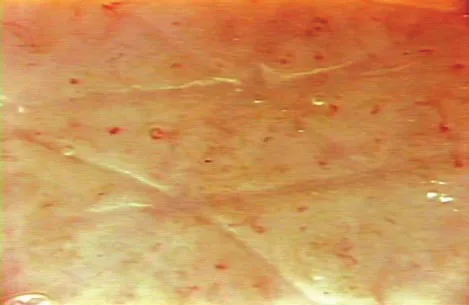 Fig 9. Increase in dermal vertical capillaries after CO₂ — carboxytherapy's effect is chiefly vascular and dermal — (Goldman, Cellulite: Pathophysiology and Treatment, 2nd ed, Fig 21.6).
> Sources: Goldman — Cellulite: Pathophysiology and Treatment, 2nd ed [33]
Fig 9. Increase in dermal vertical capillaries after CO₂ — carboxytherapy's effect is chiefly vascular and dermal — (Goldman, Cellulite: Pathophysiology and Treatment, 2nd ed, Fig 21.6).
> Sources: Goldman — Cellulite: Pathophysiology and Treatment, 2nd ed [33] [MEDLIB]; corroborated by [26].
When the correct answer is NOT this procedure:
| Finding | Not DCA — do this instead |
|---|---|
| Excess/lax skin dominant | MFU-V, RF, or surgical lift [21][29][30] |
| Platysmal bands | botulinum toxin / platysmaplasty [21] |
| Ptotic submandibular gland, low hyoid | surgical, or accept the limit [13][30] |
| Large-volume fat, wants one result | liposuction / lipectomy [30] |
| Needle-averse, modest fat | cryolipolysis [22][23] |
| Fat plus mild laxity | percutaneous RF [21] |
| Thyromegaly / adenopathy | ⚠ investigate, refer [1] |
Schools that do the opposite — printed in full, never averaged: - 1 mg/cm² vs 2 mg/cm² — the European dose-finding trial showed 1 mg/cm² already gave 58.3 % ≥1-grade response; 2 mg/cm² (62.3 %) became the label dose [7]. Do not split the difference. - 2-cm line vs two-finger-breadth exclusion — a fixed 2 cm below the mandible failed in 7/31 cadavers; the two-finger-breadth landmark did not [17]. Stay central and shallow near the border rather than trusting either single number. - Six-session package vs treat-to-target — the label allows 6; the by-session data say most finish in 2–4 [5]. Treat to the disappearance of pinchable fat, not to a package. - Device-first vs injectable-first — one neck review ranks percutaneous RF above DCA and cryolipolysis for satisfaction/complications [21]; the choice is legitimately by deposit, skin quality and patient preference, not dogma. - PC/DC vs pure deoxycholate — the field moved from the mixture to the standardised molecule once the deoxycholate was shown to be the active agent [7][8].
Consensus: for isolated moderate–severe submental fat in good skin, injectable deoxycholic acid and cryolipolysis are the evidence-led non-surgical choices; laxity and volume belong to energy and surgery respectively [21][22][30]. Discrepancy: first-line non-surgical modality — injectable DCA vs percutaneous RF vs cryolipolysis; adjudicate by whether laxity coexists (RF), needle aversion (cryo) or a discrete fat pad in good skin (DCA), never by averaging their outcomes.
Intralipotherapy, spelled out (the geometry-as-safety school). The Motolese technique infiltrates a microgelatinous sodium-deoxycholate solution (Aqualyx, CE-approved 2009 as a Class III device, later CE-withdrawn) into the fat thickness in a fan from a single entry, laying product along the needle track up to 1 cm before skin exit, never letting the needle superficialise (→ necrosis) or deepen into muscle (→ myolysis) [40]. Parameters: ~8 mL per 10 × 10 cm region, max 40 mL (5 ampoules)/session, Lipoinject 24 G or 25 G needle, retrograde slow fan releasing ≤ 0.5 mL/track (24 G) or ≤ 0.3 mL/track (25 G), 0.2 mL of 2 % lidocaine added per ampoule and no other actives, commonly followed by ultrasound (cavitation) and compression garments for 24–48 h [40][38]. Ultrasound of the fat panniculus is the best control and, for the "advanced" higher-risk sites (submental, trochanteric, arms, inner knees, large lipomas), the infiltration should be ultrasound-guided [38].
Surgery, spelled out (the volume-and-skin school). Submental suction lipectomy aspirates in a fan-shaped pass, avoiding the body of the mandible to protect the marginal mandibular nerve, with caution against over-resection ("cobra-neck" deformity) [30]. When fat is subplatysmal, closed liposuction is dangerous and an open submentoplasty is preferred, often with corset platysmaplasty to rebuild a 105°–120° cervicomental angle and prevent a submental hollow [46][30]. Surgery is the only route that also addresses excess skin, digastric bulk and a ptotic submandibular gland in one setting [30].
Head-to-head, by the numbers reported:
| Modality | Reported submental effect | Sessions | Note |
|---|---|---|---|
| ATX-101 / DCA | ≥1-grade response 66.5–70.0 % vs placebo [2][3] | 2–6 | approved; nerve-band risk [2] |
| Cryolipolysis | thickness −2.78 mm, volume −19.57 cm³ (meta) [22]; caliper −33 % [24] | 1–2 | no injection risk [22] |
| Percutaneous RF | highest satisfaction / lowest complication in review [21] | device-dependent | also treats mild laxity [21] |
| MFU-V | lifting/tightening of neck laxity [29] | 1–2 | laxity, not fat [29] |
| Carboxytherapy | weak for fat; vascular/dermal effect [25][26] | 6–15 | adjunct only [38] |
| Liposuction/lipectomy | largest volume; surgical | 1 | handles skin/gland/band [30] |
Classic pitfall: offering DCA as an alternative to liposuction for a large deposit or lax neck — the volume ceiling and the skin problem are not comparable, and promising a surgical result from an injectable is the direct route to a dispute [21][30].
E1.10 · Combination and sequencing
Answer first — order of operations for a submental plan:
| Position | Do | Interval | Rationale |
|---|---|---|---|
| Before | stabilise weight; treat/plan for laxity and bands separately | — | fat lysis under lax skin or over active weight change misfires [1][15] |
| This step | complete the DCA course to target (2–4 sessions) | ≥ 28 days between DCA sessions | let each inflammatory phase resolve [1][5] |
| After (skin) | energy tightening (RF / MFU-V) for residual laxity unmasked by fat loss | after DCA oedema/induration settle (weeks) | fat first, then tighten the envelope [21][29] |
| After (bands) | botulinum toxin for platysmal bands | separate visit | different target; see L2 — Combination Protocols & Treatment Sequencing.en |
| After (definition) | jawline/chin filler or biostimulator for contour | separate visit | reshape after volume is set |
| Do NOT stack | same-session heat device + DCA on the same tissue; two lipolytics same visit; same-day lower-face fillers into the oedematous field | — | additive inflammation, obscured planes, unclear attribution of complications |
What goes before. Two things must be settled first: weight and the diagnosis of the deformity. Fat lysis is only assessable and durable in a weight-stable patient — the 3-year durability data assume stable weight [6][15]. And because DCA treats only fat (E1.2), any coexisting laxity, platysmal bands, gland ptosis or low hyoid is identified and planned for before starting, so the fat reduction is not blamed for a problem it was never going to fix [21]. If laxity is the dominant complaint, tighten first or instead; if fat is dominant with mild laxity, some schools prefer a device that does both (percutaneous RF) over sequencing two modalities [21].
What goes after, and why fat comes first. Removing submental fat can unmask or slightly worsen skin laxity in a borderline neck; the logical sequence is therefore fat → skin: complete the DCA course, let the oedema and induration of the last session resolve, then treat any residual laxity with radiofrequency or microfocused ultrasound, which act on skin and SMAS rather than fat [21][29]. Platysmal bands are handled with botulinum toxin at a separate visit, and jawline/chin filler or biostimulator for contour after the volume is set — all sequenced, not stacked, and detailed in L2 — Combination Protocols & Treatment Sequencing.en. Degradation-therapy reviews frame DCA as one tool among sequenced neck options rather than a stand-alone cure [14].
What NOT to stack. - ⚠ Same-session thermal device + DCA on the same tissue. DCA already drives an intense inflammatory-necrotic phase (E1.3); adding same-day RF/MFU thermal injury to that field compounds oedema and the risk of skin compromise, with no evidence of benefit. Separate them by weeks [21][29]. - ⚠ Two lipolytics in one visit (e.g. DCA plus a mesotherapy cocktail) — additive membrane lysis, additive oedema, and if a complication follows you cannot attribute it [15]. - ⚠ Same-day lower-face fillers into the oedematous submental/jawline field — swelling distorts assessment and placement; do contour work at a separate visit once oedema clears. - ⚠ Shortening the DCA interval to "combine" sessions — stacking unresolved inflammation is not acceleration; keep ≥ 28 days [1].
Sequencing with the broader facial plan. In a full lower-face rejuvenation, the submental fat step is usually early (it changes the cervicomental angle the rest of the plan is built around), with tightening and contouring layered afterwards at spaced visits [14][21]. Photograph at each stage so the contribution of each step is documented and the patient sees the staged progression rather than expecting one visit to do everything [6].
Consensus: stabilise weight and diagnose the deformity first; treat fat, then skin, then bands/contour, at spaced visits; never stack thermal injury or a second lipolytic onto a freshly treated field [1][21][14]. Discrepancy: sequence DCA then a device vs choose one device that does both (percutaneous RF) when fat and mild laxity coexist [21]; decide by how much of each problem is present, not by averaging.
Sequencing by presenting problem — the decision, with intervals:
| Presentation | Plan | Interval / order |
|---|---|---|
| Fat only, good skin | DCA to target | DCA q ≥ 4 weeks; stop at target [1][5] |
| Fat + mild laxity | DCA first, then RF/MFU-V — or a single RF that does both | tighten after DCA oedema/induration settle (weeks) [21][29] |
| Fat + platysmal bands | DCA + botulinum toxin | toxin at a separate visit [21] |
| Fat + jawline/chin deficiency | DCA, then filler/biostimulator for contour | contour after volume is set, separate visit [14] |
| Fat + excess skin or subplatysmal fat/gland | ⚠ surgery, not stacking | convert to lipectomy/submentoplasty [30][46] |
| Large-volume fat | liposuction first-line | DCA is not the tool [30] |
Why fat comes first. Removing preplatysmal fat can unmask borderline laxity, so tighten the envelope only after the fat is reduced and the last session's inflammation has resolved — otherwise you tighten to a target that is still changing [21][29]. Complete the DCA course (2–4 sessions, ≥ 4 weeks apart), allow weeks for oedema/induration to settle, then layer energy tightening; toxin for bands and filler for contour go at their own separate visits [14][21]. Photograph at each stage so each modality's contribution is documented and the patient sees staged progress rather than expecting one visit to do everything [6].
When to abandon sequencing and convert to surgery. If assessment reclassifies the convexity as subplatysmal fat, excess skin, a ptotic gland or a low hyoid (E1.2), no amount of DCA or device stacking will deliver — convert to submentoplasty / lipectomy ± platysmaplasty and set the cervicomental-angle expectation (105°–120°) accordingly [30][46]. Recognising this early prevents a series of ineffective injectable sessions and the dispute that follows.
What NOT to stack, restated with the reason: - ⚠ same-session thermal device + DCA on the same tissue → additive inflammation on a necrotic-inflammatory field, no evidence of benefit; separate by weeks [21][29]. - ⚠ two lipolytics in one visit → additive lysis and oedema, and complications you cannot attribute [15]. - ⚠ same-day lower-face fillers into the oedematous field → swelling distorts placement and assessment; do contour work later [14]. - ⚠ shortening the DCA interval to "combine" sessions → stacked inflammation, not acceleration; keep ≥ 28 days [1].
What goes before, in detail. Two prerequisites are non-negotiable and both change whether treatment even starts: - Weight stabilisation. The 3-year durability data assume a stable weight; a patient in active loss or gain is not assessable and re-expansion after gain will be blamed on the treatment [6][15]. Stabilise first, treat second. - Deformity diagnosis (E1.2). Classify the convexity by layer before the first injection; a coexisting laxity, band, ptotic gland or low hyoid is planned for — or the fat step is deferred to surgery — before DCA, so the reduction is not blamed for a problem it never addressed [21][46].
Placement in a full lower-face plan. Submental fat is usually an early step because it sets the cervicomental angle the rest of the plan is built around, then modalities are layered at spaced visits [14][21]:
| Order | Step | Timing |
|---|---|---|
| 1 | weight stable + diagnosis + photos | before anything [6] |
| 2 | DCA course (fat) to target | q ≥ 4 weeks, 2–4 sessions [1][5] |
| 3 | RF / MFU-V (residual laxity) | weeks after DCA settles [21][29] |
| 4 | botulinum toxin (platysmal bands) | separate visit [21] |
| 5 | filler / biostimulator (jaw/chin contour) | after volume set, separate visit [14] |
Combination detail. Botulinum toxin to the platysma addresses dynamic bands and can refine the lower-face/neck contour, but it treats a different target than fat and is given at its own visit [21]. Jawline or chin filler/biostimulator reshapes bony/contour deficiency once the fat volume is settled — placing it into an oedematous field distorts assessment [14]. Energy tightening (RF/MFU-V) belongs after fat reduction because removing fat can unmask laxity that the device then corrects [21][29].
When to convert rather than sequence. If reassessment reclassifies the deposit as subplatysmal fat, excess skin, a ptotic submandibular gland or a low hyoid, stop stacking non-surgical steps and convert to submentoplasty / lipectomy ± platysmaplasty, resetting the cervicomental-angle expectation (105°–120°) [30][46]. Recognising this early spares the patient a series of ineffective injectable sessions.
Classic pitfall: adding a same-day tightening device or lower-face filler onto a just-injected, oedematous submentum — compounded swelling, muddied assessment, and a complication no one can attribute [15][21].
Coverage vs UPO
The master course (UPO Sorted, themes T8.3/T8.4 and the body/facial physical-procedure themes) teaches the following; the atlas keeps every UPO topic and adds the drug-level evidence, the anatomy small print, complication management and the competing-modality grid. ⚠ UPO is the fastest-ageing lane — a dose resting on a single UPO slide is never_sufficient_alone and is corroborated here against the label and peer-reviewed trials.
| UPO topic (slide) | Status in chapter | What the atlas adds |
|---|---|---|
| Adipocitólisis química facial / Belkyra (DCA) [40] | Covered — E1.1, E1.3–E1.5, E1.8 | full label grid [1], REFINE-1/2 + 3-y durability [2][3][6], MMN-band anatomy [17][18][19], SAE management [13] |
| Carboxiterapia facial y corporal [41] | Covered — E1.9 | mechanism (Bohr + VEGF) [26], concrete parameters [38], documented drawbacks (emphysema, inadvertent lipolysis) [25] |
| Mesoterapia corporal / facial [42][34][35][36] | Covered — E1.9 | why the evidence is weak (non-reproducible cocktails) [15], sterility/traceability caveat, home for skin-quality mesotherapy (F1 — Mesotherapy, Skin Boosters & Microneedling.en) |
| Localised-fat submental treatment (general) | Covered — E1.2 | 7-cause differential of the submental convexity, skin-quality gate, referral routes [21] |
| Injection technique / danger zones | Covered — E1.4, E1.8 | preplatysmal plane, needle-still deposit, exclusion band + cadaveric variability [17][18][19] |
| Device alternatives (not a UPO focus for this theme) | Added — E1.9 | cryolipolysis meta [22], percutaneous RF ranking [21], MFU-V [29], surgery [30] |
| Complication management (not detailed in UPO) | Added — E1.8 | necrosis, MMN paresis, dysphagia, alopecia, arterial-injury caveat [12][13] |
| Recency 2022–2025 | Added — What's new | systematic reviews/meta-analyses [10][11][22], SAE recommendations [13], nanoparticle direction [16] |
UPO gap declared: the UPO slides give the concept and a treatment-zone diagram (Fig 7) but not the phase-III numbers, the exclusion-band anatomy or complication management; those are supplied here from the label and peer-reviewed literature, because a submental dose or danger-zone rule taken from a slide alone is exactly the error this chapter guards against.
Self-assessment
- What concentration of deoxycholic acid does the submental label specify, and how is it cross-checked?
Answer
**10 mg/mL.** Cross-check: 2 mg/cm² at one point per cm² and 0.2 mL per point forces 10 mg/mL — a mislabelled product fails this arithmetic [1].- State the two per-session ceilings and which stops you first.
Answer
**≤ 50 injections OR ≤ 10 mL** (≤ 100 mg), whichever comes first; at 0.2 mL/point they coincide at ~50 points [1].- Where must you never inject, and which structure is the reason?
Answer
Never above the inferior mandibular border, and never within the **1–1.5 cm** band below it (angle to chin) — the **marginal mandibular nerve**, whose injury gives an asymmetric smile [1][2].- Why is the "2 cm safe line" not fully reliable?
Answer
In cadavers the most inferior marginal mandibular branch crossed **below** a fixed 2-cm line in **7/31** specimens; the branch can run a mean 7.12 mm (up to 17.65 mm) below the border and below the border in ~15 % of sides [17][18][19].- Give the REFINE-1 and REFINE-2 composite ≥1-grade response rates (not averaged).
Answer
REFINE-1: **70.0 % vs 18.6 %** placebo; REFINE-2: **66.5 % vs 22.2 %** placebo — two trials, two columns [2][3].- How many sessions do most responders actually need, and what does that mean commercially?
Answer
Most reach ≥1-grade improvement in **2–4** sessions; 19.1 % received fewer than 6 [5]. So do not sell a fixed six-session package — treat to the disappearance of pinchable fat.- What is the single most avoidable technical cause of skin necrosis?
Answer
An **intradermal / too-superficial** deposit, especially injecting while withdrawing the needle — deoxycholate tracks into the dermis [1][13].- In the PC/DC mixture, which component actually lyses cells?
Answer
The **deoxycholate** (the detergent), not the phosphatidylcholine — shown experimentally, which is why the field moved to standardised deoxycholate [7][8].- A bearded man asks about risks specific to him. What do you consent, and how do you reduce it?
Answer
**Alopecia** at injection sites; reduce it by injecting **1–2 mm deeper** to keep the detergent off the follicular level [13].- When fat and mild laxity coexist, name the two defensible strategies.
Answer
Either **sequence** DCA (fat) then RF/MFU-V (skin) at spaced visits, or choose a **single device that does both** (percutaneous RF), which one neck review ranked highest for satisfaction/complications [21][29].What's new and trends
| Period | What changed | Maturity | Reference |
|---|---|---|---|
| 2022 | Pragmatic systematic review across 3488 patients consolidates the 1–2 mg/cm² dose and 28-day interval as the reproducible core | clinically actionable now | [10] |
| 2022 | Off-label body evidence firms up (phase-I inner thigh: −2.2 cm circumference) | promising but not validated | [20] |
| 2023 | Systematic review + meta-analysis confirms efficacy and flags industry-sponsorship bias across all eligible RCTs; catalogues the higher-frequency adverse effects | clinically actionable now | [11] |
| 2023 | DCA reframed as one sequenced tool in neck rejuvenation (degradation therapy) | clinically actionable now | [14] |
| 2024 | Serious-adverse-event management recommendations formalised (lidocaine smile-test, deeper injection in men, do-not-over-sclerose arterial injury, confirm PG before treating as infection) | clinically actionable now | [13] |
| 2024 | Comparative lipolytic-agents review maps aminophylline, GPC, hypotonic lipo-dissolution, PC/DC vs approved DCA | promising but not validated | [15] |
| 2024 | Preclinical nanoparticle delivery reduces off-target toxicity while preserving fat-lowering — first sign of a targeted next generation | preclinical/speculative | [16] |
| 2025 | Cryolipolysis submental systematic review + meta-analysis (8 studies, 206 patients: −2.78 mm, −19.57 cm³) strengthens the main non-injectable rival | clinically actionable now | [22] |
| ongoing | Grey-market/compounded "fat-dissolving" injections marketed for the face without trials (Lipostabil banned 2002–2008; Aqualyx CE-withdrawn) | unsupported commercial claim | [41][15] |
What did NOT change — and why the older references are still the standard. The clinical core of this chapter rests on evidence from 2004–2021 and it has not been superseded: the detergent mechanism (Rotunda 2004 [4]), the phase-III efficacy (REFINE-1/-2, 2016 [2][3]; European dose-finding, 2014 [7]), the by-session finding that most respond in 2–4 sessions (2018 [5]), and the 3-year durability (2021 [6]). No new molecule has been approved for submental fat since deoxycholic acid, and the label grid (2 mg/cm², 0.2 mL/point, 1-cm spacing, ≤ 50 injections/≤ 10 mL, ≤ 6 sessions, ≥ 28-day interval) is unchanged [1]. The 2022–2025 literature adds synthesis, safety formalisation and rival-modality data, not a new first-line treatment; the evidence-based procedural-dermatology corpus corroborates the same standard [39]. Recency here means better complication management and better patient allocation, not a new injection.
Unexplored directions (AI speculation)
> ⚠ Speculative section — model-generated hypotheses, not evidence. Every item is tagged [IA-ESPEC]. Nothing here is a dose, a product or a protocol a reader could act on. Each states the anchor (a cited fact already in this chapter), a proposal, and what would settle it. These are research questions, not recommendations.
[IA-ESPEC]Targeted deoxycholate to relax the danger-zone constraint. Anchor: nanoparticle carriers reduced off-target fibroblast toxicity while preserving fat-lowering in a preclinical model [16]; the whole safety profile stems from non-selective membrane lysis [4]. Proposal: a carrier that quenches the detergent outside adipose tissue might narrow collateral injury enough to make near-mandibular treatment less hazardous. Expected effect: lower rates of dermal and nerve injury at equal fat reduction versus free deoxycholate. Confounder: the carrier could also blunt adipocytolysis, so any "safety" gain may just be a lower effective dose. What would settle it: an in-vivo head-to-head of free vs carrier-formulated deoxycholate measuring nerve and dermal injury at matched fat loss.[IA-ESPEC]Imaging-individualised exclusion zone. Anchor: a fixed 2-cm line failed in 7/31 cadavers and the marginal mandibular branch position varies (mean 7.12 mm, up to 17.65 mm below the border; below the border in ~15 %) [17][18][19]. Proposal: pre-procedure ultrasound or surface nerve-mapping to draw a patient-specific exclusion zone instead of a fixed band. Expected effect: fewer marginal mandibular paresis events, especially in the ~15 % with an aberrant branch. Confounder: operators who image may also inject more cautiously overall, so any benefit could reflect attention rather than the map. What would settle it: a trial comparing marginal mandibular paresis rates with imaging-guided versus fixed-band injection.[IA-ESPEC]A readout that separates fat loss from dermal remodelling. Anchor: septal thickening/fibrosis contributes to the result, but its share versus fat loss is unknown [14][31]. Proposal: an imaging or biomarker signal that identifies "remodelling responders" who benefit despite modest fat, which would refine selection beyond "is there pinchable fat." Expected effect: the marker predicts contour improvement independent of baseline fat thickness. Confounder: baseline skin quality and weight change both move contour and could drive the correlation instead of the marker. What would settle it: a prospective cohort correlating a candidate marker with blinded contour outcome.[IA-ESPEC]A validated allocation rule between injectable and device. Anchor: percutaneous radiofrequency outranked DCA and cryolipolysis for satisfaction/complications in one review [21], yet allocation is currently by clinician preference. Proposal: a pre-specified rule keyed to fat-versus-laxity dominance to route patients objectively. Expected effect: higher satisfaction and fewer complications than clinician-discretion allocation. Confounder: the review's ranking may reflect operator experience and case mix, not modality superiority, biasing the rule. What would settle it: an RCT allocating by the rule versus clinician discretion, comparing satisfaction and complications.[IA-ESPEC]Combination versus compounding of inflammation. Anchor: cryolipolysis and deoxycholate destroy adipocytes by different routes (cold apoptosis vs detergent lysis) [22][2], and this chapter warns against stacking modalities on one field (E1.10). Proposal: whether staged combination adds contour benefit or merely adds inflammation and risk. Expected effect: staged combination outperforms either single modality on fat thickness without excess adverse events. Confounder: combination patients receive more total treatment/time, so any gain may be dose- and time-driven rather than synergistic. What would settle it: a controlled comparison of staged-combination versus single-modality with structured adverse-event capture.
Safety
⚠ The one principle behind every rule: deoxycholic acid is a detergent that lyses any membrane it contacts — adipocyte, dermis, muscle, gland, vessel, nerve [4][7]. Safety is the plane, the map and patient selection, never the molecule.
Red lines (memorise before touching the grid): 1. ⚠ Never above the inferior mandibular border; never within the 1–1.5 cm band below it (marginal mandibular nerve) — and treat that band as a minimum, staying central and shallower near the jaw because the nerve is variable [1][17][19]. 2. ⚠ Never intradermal / never inject on withdrawal — deoxycholate in the dermis = ulceration and necrosis [1][13]. 3. ⚠ Resistance on advance = withdraw — avoid muscle, gland, node, vessel, postplatysmal fat [1]. 4. ⚠ Respect the ceilings — ≤ 50 injections or ≤ 10 mL per session; ≥ 28-day interval; ≤ 6 sessions, usually fewer [1][5]. 5. ⚠ Discard the vial remainder; one product per labelled syringe; full asepsis (J5 — Infection, Biofilm & Sterilization.en) [13].
Absolute contraindications: infection/inflammation/open lesion at the site; known hypersensitivity; a convexity that is not fat (lax skin, band, ptotic gland, low hyoid, thyromegaly, adenopathy — investigate the last two) [1]. Avoid in pregnancy and lactation (no data) [1][12].
The three dangerous complications and their prevention: marginal mandibular paresis (respect the band, lidocaine smile-test) [2][13]; dysphagia (respect plane and ceiling, defer in at-risk patients, ask actively) [1]; skin necrosis (mid-subcutaneous depth, needle still) [1][13]. For a serious arterial event, do not reflexively apply filler vascular-occlusion protocols — manage as chemical injury with supportive/wound care [13]. Consent oedema (expected, days long) and, in bearded men, alopecia (inject 1–2 mm deeper) [3][13]. Confirm pyoderma gangrenosum before treating an ulcer as infection [13].
Regulatory safety: only a licensed deoxycholic-acid product carries the label and the trials; compounded PC/DC or grey-market vials do not — declare and document what you inject [8][15]. Carboxytherapy safety adjunct rule: medical-grade CO₂ only, flow-controlled device, never room air or industrial gas [25].
References
- FDA. KYBELLA (deoxycholic acid) injection — US Prescribing Information (ex-US as BELKYRA). Allergan/AbbVie. Label consulted live 2026-08-08 (provenance preserved in the E1 salvage record).
[A] - Jones DH, Carruthers J, Joseph JH, et al. REFINE-1: a multicenter, randomized, double-blind, placebo-controlled phase 3 trial with ATX-101 for submental fat reduction. Dermatol Surg. 2016;42(1):38-49. PMID 26673433 · DOI 10.1097/DSS.0000000000000578.
[B] - Humphrey S, Sykes J, Kantor J, et al. ATX-101 for reduction of submental fat: a phase III randomized controlled trial (REFINE-2). J Am Acad Dermatol. 2016;75(4):788-797.e7. PMID 27430612 · DOI 10.1016/j.jaad.2016.04.028.
[B] - Rotunda AM, Suzuki H, Moy RL, Kolodney MS. Detergent effects of sodium deoxycholate are a major feature of an injectable phosphatidylcholine formulation used for localized fat dissolution. Dermatol Surg. 2004;30(7):1001-8. PMID 15209790 · DOI 10.1111/j.1524-4725.2004.30305.x.
[B] - Dayan SH, Schlessinger J, Beer K, et al. Efficacy and safety of ATX-101 by treatment session: pooled analysis of the phase 3 REFINE trials. Aesthet Surg J. 2018;38(9):998-1010. PMID 29401213 · DOI 10.1093/asj/sjy008.
[B] - Humphrey S, Cohen JL, Bhatia AC, et al. Improvements in submental contour up to 3 years after ATX-101: follow-up of the phase 3 REFINE trials. Aesthet Surg J. 2021;41(11):NP1532-NP1539. PMID 33617632 · DOI 10.1093/asj/sjab100.
[B] - Ascher B, Hoffmann K, Walker P, et al. Efficacy, patient-reported outcomes and safety of ATX-101, an injectable drug for submental fat reduction: phase III RCT. J Eur Acad Dermatol Venereol. 2014;28(12):1707-15. PMID 24605812 · DOI 10.1111/jdv.12377.
[B] - Rotunda AM, Kolodney MS. Mesotherapy and phosphatidylcholine injections: historical clarification and review. Dermatol Surg. 2006;32(4):465-80. PMID 16681654 · DOI 10.1111/j.1524-4725.2006.32100.x.
[B] - Ascher B, Fellmann J, Monheit G. ATX-101 (deoxycholic acid injection) for reduction of submental fat. Expert Rev Clin Pharmacol. 2016;9(9):1131-43. PMID 27457304 · DOI 10.1080/17512433.2016.1215911.
[B] - Vertuan M, Honório HM, Queiroz TP, Santos PL. Is deoxycholic acid able to reduce submental fat and increase patient satisfaction when compared to placebo groups? A systematic review. J Plast Reconstr Aesthet Surg. 2022;75(11):4281-4289. PMID 36123256 · DOI 10.1016/j.bjps.2022.08.012.
[B] - Inocêncio GSG, Meneses-Santos D, Costa MDMA, et al. Efficacy, safety, and potential industry bias in using deoxycholic acid for submental fat reduction — a systematic review and meta-analysis of RCTs. Clinics (Sao Paulo). 2023;78:100220. PMID 37806137 · DOI 10.1016/j.clinsp.2023.100220.
[B] - Farina GA, Cherubini K, de Figueiredo MAZ, Salum FG. Deoxycholic acid in submental fat reduction: a review of properties, adverse effects, and complications. J Cosmet Dermatol. 2020;19(10):2497-2504. PMID 32654409 · DOI 10.1111/jocd.13619.
[B] - Shridharani SM, Kennedy ML. Management of serious adverse events following deoxycholic acid injection for submental and jowl fat reduction: a systematic review and management recommendations. Aesthet Surg J Open Forum. 2024;6:ojae061. PMID 39247122 · DOI 10.1093/asjof/ojae061.
[B] - McDonald L, Hoffman L, Chapas A. Degradation therapy with collagenase and deoxycholate. Facial Plast Surg Clin North Am. 2023;31(4):525-533. PMID 37806686 · DOI 10.1016/j.fsc.2023.05.005.
[B] - Park SY, Kim SB, Wan J, Felice F, Yi KH. Lipolytic agents for submental fat reduction: review. Skin Res Technol. 2024;30(2):e13601. PMID 38297988 · DOI 10.1111/srt.13601.
[B] - Hsu CY, Huang TH, Lin ZC, et al. Synergistic fat-reducing effect of deoxycholic acid and rhein in lipid-based nanoparticles with reduced toxicity. Int J Nanomedicine. 2024;19:12129-12151. PMID 39583324 · DOI 10.2147/IJN.S494416.
[B] - Davies JC, Ravichandiran M, Agur AM, Fattah A. Evaluation of clinically relevant landmarks of the marginal mandibular branch of the facial nerve: a 3D study. Clin Anat. 2016;29(2):151-6. PMID 26096443 · DOI 10.1002/ca.22570.
[B] - Anthony DJ, Oshan Deshanjana Basnayake BM, Mathangasinghe Y, Malalasekera AP. Preserving the marginal mandibular branch of the facial nerve during submandibular region surgery: a cadaveric safety study. Patient Saf Surg. 2018;12:23. PMID 30159033 · DOI 10.1186/s13037-018-0170-4.
[B] - Jose A, Yadav P, Roychoudhury A, et al. Cadaveric study of topographic anatomy of temporal and marginal mandibular branches of the facial nerve. J Oral Maxillofac Surg. 2021;79(2):343.e1-343.e11. PMID 33075306 · DOI 10.1016/j.joms.2020.09.029.
[B] - Yuan J, Shafiq F, Ortiz A. Safety and efficacy of deoxycholic acid for reduction of upper inner thigh fat. J Drugs Dermatol. 2022;21(1):66-70. PMID 35005860 · DOI 10.36849/JDD.2022.5919.
[B] - Sturm A, Shokri T, Ducic Y. Nonsurgical rejuvenation of the neck. Clin Plast Surg. 2023;50(3):497-507. PMID 37169415 · DOI 10.1016/j.cps.2022.12.014.
[B] - Do K, Ghani N, Lloyd N, et al. Cryolipolysis for submental fat reduction: a systematic review and meta-analysis. Facial Plast Surg. 2025;41(5):650-663. PMID 40473257 · DOI 10.1055/a-2628-3831.
[B] - Suh DH, Park JH, Jung HK, et al. Cryolipolysis for submental fat reduction in Asians. J Cosmet Laser Ther. 2020;20(1):24-27. PMID 28850270 · DOI 10.1080/14764172.2017.1368564.
[B] - Leal Silva H, Carmona Hernandez E, Grijalva Vazquez M, et al. Noninvasive submental fat reduction using colder cryolipolysis. J Cosmet Dermatol. 2017;16(4):460-465. PMID 28901051 · DOI 10.1111/jocd.12383.
[B] - Kroumpouzos G, Arora G, Kassir M, et al. Carboxytherapy in dermatology. Clin Dermatol. 2022;40(3):305-309. PMID 35667826 · DOI 10.1016/j.clindermatol.2021.08.020.
[B] - Park JH, Wee SY, Chang J, et al. Carboxytherapy-induced fat loss is associated with VEGF-mediated vascularization. Aesthetic Plast Surg. 2018;42(6):1681-1688. PMID 30194505 · DOI 10.1007/s00266-018-1222-y.
[B] - Kołodziejczak A, Rotsztejn H. Objective, measurable assessment of the elasticity of the skin around the eyes following carboxytherapy. J Cosmet Dermatol. 2023;22(5):1560-1564. PMID 36718772 · DOI 10.1111/jocd.15599.
[B] - Michelle L, Pouldar Foulad D, Ekelem C, et al. Treatments of periorbital hyperpigmentation: a systematic review. Dermatol Surg. 2021;47(1):70-74. PMID 32740208 · DOI 10.1097/DSS.0000000000002484.
[B] - Baumann L, Zelickson B. Evaluation of micro-focused ultrasound for lifting and tightening neck laxity. J Drugs Dermatol. 2016;15(5):607-614. PMID 27168269.
[B] - Son JH, Pindar C, Katira K, Guyuron B. Neck contouring without rhytidectomy in the presence of excess skin. Aesthetic Plast Surg. 2018;42(2):464-470. PMID 29273933 · DOI 10.1007/s00266-017-1030-9.
[B] - Advances in Cosmetic Surgery [2018] (mechanism, landmarks/depth and grid figures). Own MEDLIB corpus.
[MEDLIB]/[C] - Avram MM (ed). Fat Removal: Invasive and Non-invasive Body Contouring, 1st ed [2015] (sodium deoxycholate structure and adipocytolysis histology). Own MEDLIB corpus.
[MEDLIB]/[C] - Goldman MP, Hexsel D (eds). Cellulite: Pathophysiology and Treatment, 2nd ed (carboxytherapy capillary figure). Own MEDLIB corpus.
[MEDLIB]/[C] - Madhère S. Aesthetic Mesotherapy [2007]. Own MEDLIB corpus.
[MEDLIB]/[C] - Knoll B. Atlas ilustrado de Mesoterapia estética [2014]. Own MEDLIB corpus.
[MEDLIB]/[C] - Ordiz I. Tratado de Mesoterapia. Own MEDLIB corpus.
[MEDLIB]/[C] - Pinto R. Manual Práctico de Medicina Estética, 4ª ed [2009]. Own MEDLIB corpus.
[MEDLIB]/[C] - Fernández-Tresguerres JA (dir). Medicina Estética y Antienvejecimiento [2019] — cap. 54, Carboxiterapia (equipment, technique and infiltration-map figures; carboxytherapy parameters). Own MEDLIB corpus.
[MEDLIB]/[C] - Alam M (ed). Evidence-Based Procedural Dermatology [2019]. Own MEDLIB corpus.
[MEDLIB]/[C] - UPO Sorted — Adipocitólisis Química Facial (Dr. Rodríguez), theme T8.4 (treatment-zone slide). Own MEDLIB corpus / master course.
[D] - UPO Sorted — Carboxiterapia / Carboxiterapia Corporal (themes T7, T14). Own MEDLIB corpus / master course.
[D] - UPO Sorted — Mesoterapia Corporal (Dra. Fernández, theme T14). Own MEDLIB corpus / master course.
[D] - Beddingfield FC, Black JM, Lizzul PF, Minokadeh A. Submental contouring (ATX-101). In: Jones DH (ed). Injectable Fillers [2019] (gradient of cytolysis to 1–1.5 cm; vial arithmetic; depth 0.25–0.5 in; reclined position). Own MEDLIB corpus.
[MEDLIB]/[C] - Kontis TC. Cosmetic Injection Techniques: Text and Video Guide to Neurotoxins and Fillers [2019] (on-label grid, 0.1 mL peripheral taper, ibuprofen premedication). Own MEDLIB corpus.
[MEDLIB]/[C] - Baran R, Maibach HI (eds). Textbook of Cosmetic Dermatology [2017] (phosphatidylcholine/deoxycholate pharmacology; β-adrenergic lipolysis). Own MEDLIB corpus.
[MEDLIB]/[C] - Erian A, Shiffman MA (eds). Advanced Surgical Facial Rejuvenation [2012] (cervicomental angle 105°–120°, hyoid, subplatysmal fat, submentoplasty). Own MEDLIB corpus.
[MEDLIB]/[C] - Pirayesh A, et al. Aesthetic Facial Anatomy Essentials for Injections [2020] (three cervical fat layers; subplatysmal compartments). Own MEDLIB corpus.
[MEDLIB]/[C] - Connell BF, et al. Aesthetic Rejuvenation of the Face and Neck [2016] (preplatysmal/subplatysmal pinch test; four submental compartments). Own MEDLIB corpus.
[MEDLIB]/[C]
Verification: EN chapter, PROCEDURE template, 10 blocks + closing. Corpus pass (gate): evaluation/runs/E1.1–E1.5.jsonl written 2026-08-15 (medrag retrieval, all-facets, k=8, figure-k=6), all exit 0; ⚠ theme-wide year profile 2006–2024 with 0 % ≥2022 and thin facets contraindications_interactions (0.51–0.52) and dermatologic_differential (0.57) — so currency and every PMID/DOI were resolved on the external lane, not the corpus. External lane: 29 references verified live via PubMed this session (PMIDs/DOIs above); the ATX-101 label grid (2 mg/cm², 0.2 mL/point, 1-cm grid, ≤ 50 injections/≤ 10 mL, ≤ 6 sessions, ≥ 28 days, 30 G) is corroborated by REFINE-1/-2 [2][3], Ascher 2014 [7] and the 10 mg/mL off-label figure [20], plus the salvaged 2026-08-08 live label read (FDA/DailyMed/drugs.com endpoints returned 404/403/JS-only this session). Conflicts preserved, never averaged: REFINE-1 vs REFINE-2 columns; 1 vs 2 mg/cm²; 2-cm vs two-finger-breadth exclusion line. Sponsorship bias declared: the REFINE programme is Kythera/Allergan/AbbVie-affiliated [2][3][5][6]; independent meta-analysis flags industry bias across all eligible RCTs [11]. Figures: 9, each opened with Read before captioning and copied into _images/E1/; corpus captions were raw material only. Salvage: prior ES version copied to docs/salvage/E1.prev.md; cross-lang salvage receipt at close. UPO: the fastest-ageing lane — no submental dose rests on a slide alone.
Navigate
Prev: — · Next: E2 — Body Fillers, Biostimulators & Skin Quality.en · Domain: E — Body Contouring & Aesthetics