L4 · Advanced Cross-Modality Topics
> Tags: [A] external, high-grade (SR/RCT/guideline) · [B] external, lower-grade (cohort/case series/expert) · [C] own corpus, book/atlas · [D] own corpus, UPO master slides (never_sufficient_alone) · [n] Vancouver number · (P) model reasoning only (never a dose, never a number). Scope: this chapter owns the transversal safety and immunology that no single-modality chapter owns. It links L2 (routine combinations) and L3 (population eligibility); it does not repeat them.
> Currency and provenance — 41 references · median 2023, range 2009-2025, 61 % from 2022 on · provenance: verified external 100 % (41) · MEDLIB corpus 0 % (0).
Blocks in this chapter: - [x] L4.1 In 30 seconds: what advanced cross-modality owns, the L2/L3 boundary and the red lines - [x] L4.2 Botulinum toxin immunogenicity and secondary non-response - [x] L4.3 Delayed-onset filler inflammatory reactions (post-viral/vaccine), link J5 - [x] L4.4 Drug, supplement and condition interactions - [x] L4.5 Hypersensitivity and immunologic reactions across product classes - [x] L4.6 Advanced cross-modality sequencing risk, link L2 - [x] L4.7 The complication-prone / poly-treated patient, link L3 - [x] L4.8 Pharmacovigilance and emerging transversal risks - [x] L4.9 Alternatives and competing schools on the disputed transversal calls - [x] L4.10 Documentation, consent and medicolegal for advanced/off-label work, link L3 and B-series
L4.1 · In 30 seconds
The seven red lines (memorize before anything else):
| # | Never | Because | Do instead |
|---|---|---|---|
| 1 | Blindly escalate dose after a "failed" toxin | Most non-response is technical, not immune [1][2] | Prove objective failure in >1 target, exclude technique, then test/switch [3] |
| 2 | Inject through an unexplained inflammatory nodule | You seed an active immune/infective field [4][5] | Diagnose first (ultrasound, culture), treat, then reassess [6] |
| 3 | Stop prescribed antithrombotics unilaterally | Thrombotic harm outweighs a bruise [7][8] | Coordinate with prescriber; low-trauma technique + compression [9] |
| 4 | Stack inflammatory modalities in an unstable/unmapped patient | Cumulative injury multiplies risk and destroys attribution [10][11] | Stage; reassess between modalities [8] |
| 5 | Give corticosteroid monotherapy for a late nodule before excluding infection | You feed a biofilm [5][12] | Branch differential; cover infection when plausible [6] |
| 6 | Treat a systemic/immediate allergic reaction as a local problem | Anaphylaxis kills in minutes [13][14] | Adrenaline, emergency pathway, allergy referral [9] |
| 7 | Proceed when there is vascular compromise or progressive neurologic weakness | Blindness and systemic toxin spread are irreversible [14][7] | Stop, activate the emergency protocol, refer [14] |
What L4 owns vs what it links. L4 is the immunology-and-interaction layer that sits underneath every product and device: neutralizing-antibody failure (L4.2), delayed immune reactions (L4.3), the interaction burden (L4.4), cross-class hypersensitivity (L4.5), compounded sequencing risk (L4.6), the poly-treated patient (L4.7), pharmacovigilance (L4.8), the disputed transversal calls (L4.9) and the medicolegal record for advanced/off-label work (L4.10). (P) The organizing idea is that the same patient may meet toxin, filler, energy and regenerative products over years, and the risks that emerge are not the sum of each modality's package insert but the interaction between them and the host immune system.
Boundary with L2 and L3. L2 answers "in what order do I combine treatments in a routine patient?"; L3 answers "is this person eligible?". L4 answers the third question they both defer: "what happens at the immune and pharmacologic interface, and when does that force me to stop?" A reader who wants the standard energy-then-injectable sequence goes to L2; who wants pregnancy or body-dysmorphia screening goes to L3; who faces a secondary toxin failure, a post-vaccine filler flare, an anticoagulated patient or a granuloma stays here.
Cross-modality risk taxonomy (the map of what can go wrong at the interface).
| Risk class | Mechanism | Owning block | The one red line |
|---|---|---|---|
| Loss of efficacy over time | Neutralizing antibodies to the 150 kDa neurotoxin | L4.2 | Do not escalate dose blindly [3] |
| Late immune flare | Type-IV/adjuvant/biofilm at a filler depot | L4.3 | Do not inject or steroid-monotherapy an undiagnosed nodule [12][5] |
| Bleeding / thrombosis | Antithrombotic and supplement burden | L4.4 | Never stop prescribed antithrombotics unilaterally [8] |
| Systemic weakness | Neuromuscular disease + BoNT + potentiating drugs | L4.4 | Verify NMJ status before toxin [7] |
| Immediate/delayed allergy | Type I-IV across product classes and excipients | L4.5 | Adrenaline first for systemic reactions [14] |
| Compounded injury | Stacked energy/injectable/regenerative | L4.6 | Do not stack in an unstable/unmapped field [10][11] |
| Cumulative unknown field | Poly-treatment, unmapped permanent material | L4.7 | Do not inject into an unmapped indurated field [4][15] |
| Undetected population signal | Under-reporting, no denominator | L4.8 | Report on concern, not proven causality [16] |
Which question goes to which chapter (do not duplicate).
| The question | Chapter | What lives there |
|---|---|---|
| In what order do I combine treatments in a routine patient? | L2 | Routine sequence, energy-then-injectable [11] |
| Is this person eligible (age, pregnancy, dysmorphia, comorbidity)? | L3 | Population screen and clearance [8] |
| What happens at the immune/pharmacologic interface, and when do I stop? | L4 | This chapter [12] |
| Biofilm, asepsis, sterilization mechanism | J5 | Infection substrate [5] |
| Private-practice consent architecture | B-series | Consent workflow [17] |
(P) The organizing thesis is that risk at the interface is not additive but interactive: the same host that tolerated three fillers can flare on the fourth after a viral trigger, and the same toxin dose that worked for five years can fail once cumulative antigen exposure crosses a threshold. Reading each modality's package insert in isolation misses exactly the events this chapter owns.
Escalate-or-stop, in one line. Escalate work-up (image, culture, assay, refer) when the phenotype is atypical, refractory, or systemic; stop and refer the moment there is vascular compromise, visual symptoms, progressive neurologic weakness, systemic allergy or suspected infection [14][6].
The recurring numbers, in one glance.
| Number | Where it applies |
|---|---|
| ≥ 12 weeks | Minimum BoNT re-treatment interval to limit immunogenicity [3][18] |
| Lowest effective dose | BoNT prevention rule every session [3] |
| ~10 U hyaluronidase / 0.1 cm³ HA depot | First-line intralesional dose for an HA depot driving a DIR [4][19] |
| Prednisone 20-40 mg every morning × 5-7 days | Short course for a sterile inflammatory phenotype [6][4] |
| Triamcinolone 5-10 mg/mL, repeat q2-4 wk | Intralesional for a localized inflammatory nodule [4] |
| Clarithromycin 500 mg BID × 2-6 wk | Antibiotic option when infection/biofilm plausible [5] |
| ≥ 3 weeks post-injection, ≥ 2 of 4 signs | LIRS diagnostic pattern for a delayed reaction [5] |
| HLA-B*08, DRB1*03 | Haplotypes over-represented in granulomatous filler reactions [5] |
When to image. Reach for high-frequency ultrasound whenever the field is unmapped, the nodule is atypical/persistent/infection-suggestive, or the filler identity is uncertain; it is the bedside test that turns "unknown material" into a plan (L4.3, L4.7, Fig 10) [15][4].
How this chapter is meant to be used at the point of care. Land on the block that matches the question (the routing table above), read its schematic (the table/ladder/grid at the top of the block), and drop into the prose below only for the justification or the edge case; the red-line table and the recurring-numbers table are the two things worth knowing before a patient is in front of you [3][6]. Every block ends with a Trampa clásica line naming the specific mistake made there and its clinical signature, so a fast reader can scan those to inoculate against the common errors [5][8].
Immunology primer in 30 seconds (the concepts used throughout this chapter).
| Term | Meaning here | Why it matters |
|---|---|---|
| Neutralizing vs binding antibody | Neutralizing blocks the 150 kDa toxin core; binding attaches without blocking | Only neutralizing causes toxin secondary non-response (L4.2) [3][2] |
| Type I hypersensitivity | Immediate IgE/mast-cell (urticaria to anaphylaxis) | Adrenaline-first emergency (L4.5) [14] |
| Type IV hypersensitivity | Delayed T-cell (edema, nodules) | The DIR mechanism (L4.3, L4.5) [12] |
| Adjuvant effect | A component amplifying the immune response | Complexing proteins for toxin; volume/biofilm for filler [18][20] |
| Biofilm | Low-load bacterial matrix on implanted material | The infection-first caveat (L4.3, J5) [5] |
| Foreign-body granuloma | Giant-cell reaction around material | Non-reversible pathway for particulate fillers (L4.5) [21] |
Concrete routing (which chapter answers this exact case). "He wants laser then filler in one visit" is L2 order plus the L4.6 risk multiplier; "she is pregnant / has body dysmorphia" is L3; "her Botox stopped working" is L4.2; "a nodule appeared after her flu" is L4.3; "is it safe over her old permanent filler?" is L4.6 plus L4.7; "do I report this blindness event?" is L4.8; "the consent for off-label combination" is L4.10 plus the B-series [3][12][11][17]. (P) When more than one chapter applies, work the population and order questions first (L2/L3), then bring the case here for the interface and stop decisions.
Trampa clásica: reading a corpus "disposition: answer" or a slide title as if it settled a transversal safety question. The thin facets of this chapter (pharmacovigilance, sequencing, the controversies) are corpus-poor by measurement, so the external 2020-2025 lane is mandatory, not optional [12][16].
L4.2 · Botulinum toxin immunogenicity and secondary non-response
Consensus (all schools): true immunologic secondary non-response (SNR) is a diagnosis of exclusion; the lowest effective dose at intervals of at least 12 weeks is the shared prevention rule [3][1][2].
First, separate real SNR from the impostors. Most "my Botox stopped working" is technical, not antibody-mediated [1][22].
| Cause of apparent failure | Signature | Test that discriminates |
|---|---|---|
| Wrong muscle / point selection | Failure in one target, success elsewhere | Re-map anatomy; retreat correct point [2] |
| Under-dosing | Partial, dose-proportional effect | Titrate up within licensed range [22] |
| Dilution / storage / reconstitution error | Whole-batch failure across patients | Audit cold chain and reconstitution [23] |
| Interval-related fluctuation | Effect wanes late in cycle | Shorten within safe limits, not escalate [1] |
| Unrealistic endpoint | Objective effect present, patient dissatisfied | Photographic before/after [2] |
| True neutralizing-antibody SNR | Objective failure in >1 target, previously responsive, dose escalation fails | Antibody assay (MHDA/cell-based) or frontalis/EDB test dose [3][24] |
The immunogenicity mechanism, grounded. The active pharmaceutical ingredient is a 150 kDa dichain neurotoxin (heavy chain ~100 kDa + light chain ~50 kDa, disulfide-linked) that sits inside a larger complex: the BoNT-A complex is ~900 kDa, rimabotulinumtoxinB ~700 kDa [2][22]. Only antibodies raised against the 150 kDa core neurotoxin neutralize activity; antibodies against the complexing proteins (hemagglutinins such as HA33) do not block therapy [2][3]. The clinical relevance of the complexing proteins is disputed but the newer evidence is that they can act as an immune adjuvant, priming cells that then help the response to the core toxin [18][25]. The historical proof of concept: the pre-1997 onabotulinumtoxinA bulk carried roughly 10× the antigenic protein (about 50 ng clostridial protein per vial) and generated a high antibody rate; the reformulated product dropped to about 5 ng and the antibody rate fell with it [2][22]. Fig 2 plots this directly: the total clostridial-protein load and the active-neurotoxin fraction differ sharply between onabotulinumtoxinA, abobotulinumtoxinA and incobotulinumtoxinA, and the total protein load (not the neurotoxin dose) is the immunogenicity-relevant quantity [26][18].
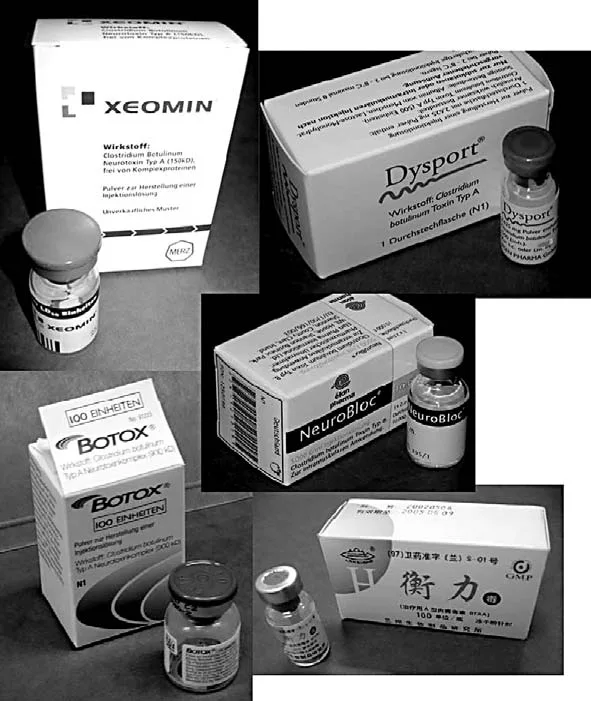
Fig 1. Commercial BoNT formulations by brand and unit system. (Truong, 2009, p. 35). > Fuentes: Truong, Manual of Botulinum Toxin Therapy, 2009 [22].
Antigenic-load / brand grid (never convert units by a universal ratio). The commercial products differ by brand, unit system and formulation (Fig 1 shows the vials and boxes side by side), which is why a dose in one brand's units is meaningless in another's.
| Formulation (brand) | Active core | Complexing proteins | Clostridial protein / 100 U | Specific potency | Unit system | Neutralizing-Ab clinical signal |
|---|---|---|---|---|---|---|
| onabotulinumtoxinA (Botox) | 150 kDa | Present (HA + non-toxic) | ~5 ng | ~137 U/ng (of neurotoxin) / ~20 U/ng total clostridial | Ona units | Low at current dose; not zero [2][3] |
| abobotulinumtoxinA (Dysport) | 150 kDa | Present, different set | ~4.35 ng | ~154 U/ng neurotoxin / ~115 U/ng total | Abo units (≈2.5-3× Ona, indication-dependent) | Low; contains more antigenic protein per neurotoxin [2][27] |
| incobotulinumtoxinA (Xeomin) | 150 kDa | None (complexing-protein-free) | Neurotoxin only | ~227 U/ng total clostridial | Inco units (≈1:1 Ona clinically) | Lowest reported real-world SNR; >10 yr low-immunogenicity record [18][25] |
| daxibotulinumtoxinA (Daxxify) | 150 kDa | None; RTP004 peptide + polysorbate-20 excipients | Neurotoxin only | Brand-specific | Daxi units | Complexing-free, but novel excipients may add neo-epitopes; low-frequency anti-RTP004/anti-BoNT seen early [18][28] |
| rimabotulinumtoxinB (NeuroBloc/Myobloc) | ~700 kDa complex | Present | Higher protein | Rima units (not A-comparable) | Rima units | Higher immunogenicity, acidic pH, more pain [22][2] |
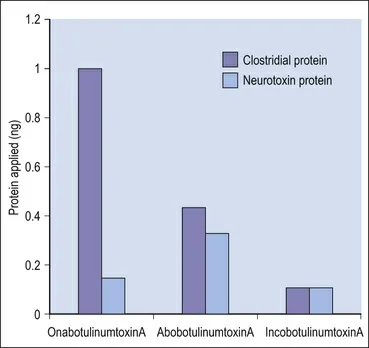
Fig 2. Protein applied (ng) by formulation: clostridial vs neurotoxin. (Carruthers, Botulinum Toxin, Procedures in Cosmetic Dermatology series). > Fuentes: Carruthers & Carruthers, Botulinum Toxin [26].
Dose / frequency risk factors [3][24][18]: (a) larger cumulative dose; (b) booster ("touch-up") injections at short intervals; (c) higher total antigenic/complexing-protein exposure per session; (d) shorter inter-treatment intervals (<12 weeks); (e) concomitant therapeutic high-dose use (spasticity, dystonia, migraine) stacked on aesthetic dosing [27]. The 2025 meta-analysis of secondary treatment failure across indications confirms the dose-and-interval gradient and the lower antibody signal for the complexing-protein-free formulation [24].
Work-up and the switch/management pathway. 1. Confirm objective failure in more than one anatomically correct target on adequate dose [3]. 2. Exclude every technical cause in the table above [1]. 3. Bedside test: inject a small dose into frontalis or extensor digitorum brevis (EDB); absent response supports neutralizing antibody [2]. 4. Where available, antibody assay (mouse hemidiaphragm or cell-based) confirms, but a negative assay does not exclude clinically relevant SNR [3][24]. 5. Do not blindly escalate. Switch to a lower-antigenicity, complexing-protein-free formulation and lengthen intervals; consider a "toxin holiday" of several months to let titers fall [18][25]. 6. Refer to a movement-disorder/neurology pathway when therapeutic (non-aesthetic) indications are involved [27].
Antibody assay methods (and why a negative assay does not clear the patient).
| Assay | What it detects | Note |
|---|---|---|
| Mouse hemidiaphragm assay (MHDA) | Functional neutralizing antibody | Reference standard for neutralizing activity, limited availability [3][24] |
| Cell-based assay (CBA) | Functional neutralization | Emerging functional alternative [3] |
| Mouse protection assay (MPA) | Protection from lethal dose | Functional, animal-based [24] |
| ELISA / Western blot | Binding antibodies (any) | Detects non-neutralizing binders too, so positive does not equal clinical failure [3][18] |
Binding-antibody assays over-call because antibodies to the complexing proteins are common and clinically irrelevant; functional assays are scarce; so the clinical diagnosis (objective failure in more than one correct target on adequate dose, with a negative frontalis/EDB test dose) still leads, and a negative laboratory assay does not exclude clinically relevant secondary non-response [3][24][2].
The exposure gradient, quantified from the evidence. The historical high-antigen bulk (about 50 ng clostridial protein per vial) generated frequent neutralizing antibodies; the reformulated onabotulinumtoxinA (about 5 ng) cut that rate sharply [2][22]. Aesthetic dosing sits far below therapeutic dosing (cervical dystonia, spasticity, chronic migraine use hundreds of units per cycle), so a patient carrying a therapeutic indication on top of aesthetic touch-ups accumulates antigen far faster; the 2025 meta-analysis across indications shows secondary treatment failure tracks cumulative dose, booster frequency and short intervals, and is lowest for the complexing-protein-free formulation [24][27].
Prevention checklist (the shared rule, made operational). 1. Lowest effective dose per session; do not over-treat a mild line [3]. 2. Intervals of at least 12 weeks; discourage "touch-up" boosters at 2-4 weeks [1][18]. 3. Prefer a complexing-protein-free formulation in high-frequency or immunogenicity-prone patients [18][25]. 4. Avoid stacking therapeutic (migraine/spasticity/hyperhidrosis high-dose) and aesthetic dosing without counting total antigen [27][24]. 5. Correct reconstitution, cold-chain and dilution; a whole-clinic "resistance" cluster is usually a storage or dilution error, not immunity [23][22].
The toxin holiday. When neutralizing antibody is likely, a treatment pause of several months (commonly reported as around 12 months or longer) lets titers fall, after which a low-antigenicity formulation at the lowest effective dose may regain response; this is a management option, not a guaranteed reversal, and repeated high-frequency exposure will re-immunize [25][18][3].
Bedside test-dose method (the practical discriminator). Inject a small standardized dose into the frontalis or into the extensor digitorum brevis (EDB) and assess for the expected focal paresis at 1-2 weeks: an absent response in a muscle that should respond supports neutralizing antibody, whereas a normal response points back to a technical cause at the aesthetic site [2][3]. This costs one small injection and often resolves the question faster than a scarce functional assay [24].
Epidemiology, kept honest. Confirmed neutralizing-antibody secondary non-response is uncommon in aesthetic dosing and more frequent in high-dose therapeutic indications, and it is lowest for the complexing-protein-free formulation across indications; the exact rates vary by assay and definition, which is why the meta-analytic signal (dose/interval gradient, formulation difference) is more reliable than any single reported percentage [24][18][3]. Treat the biology as settled and the precise incidence as assay-dependent [3].
Cumulative-dose accounting across indications. A patient may receive aesthetic glabella/forehead/crow's-feet dosing and, separately, therapeutic dosing for migraine, hyperhidrosis, bruxism or spasticity; the immune system sees the sum, so the antigen ledger must be kept across all indications and all injectors, not per aesthetic visit [27][24]. This is the practical reason to ask every toxin patient what else they are treated for and by whom, and to prefer a single low-antigenicity formulation across their care [18][3].
Switch-decision table (once technical causes are excluded).
| Situation | Action |
|---|---|
| Confirmed/likely neutralizing-antibody SNR on a complexing-protein-containing product | Switch to complexing-protein-free formulation, lowest dose, ≥ 12-week intervals [18][25] |
| Already on complexing-protein-free product | Toxin holiday, then re-trial at lowest dose; re-audit technique/storage [25][23] |
| Concurrent therapeutic high-dose indication | Coordinate with neurology; count total antigen across indications [27][24] |
| Diagnostic uncertainty | Frontalis/EDB test dose before any switch [2] |
Type B and locally licensed products. RimabotulinumtoxinB (NeuroBloc/Myobloc) is more immunogenic, acidic (more injection pain) and its units are not interchangeable with any type A; locally licensed type A products (for example the Chinese lanzhou formulation) carry their own protein load and unit system and must be treated as non-equivalent [22][2].
Storage, reconstitution and dilution as the hidden cause of a "resistance" cluster. When several patients from the same clinic lose response together, suspect a systematic error before immunity: a broken cold chain, aggressive reconstitution that shears the neurotoxin, over-dilution, or a mislabelled vial will flatten efficacy across a batch and mimic secondary non-response [23][22]. A true immune failure is patient-specific and cumulative, not a sudden clinic-wide drop [3][2]. Audit the cold chain and reconstitution log first; it is cheaper than an assay and more often the answer [23].
Why complexing-protein-free is a rationale, not a guarantee. The lower measured neutralizing-antibody signal of the complexing-protein-free formulation is a risk-mitigation argument (less total antigen, no hemagglutinin adjuvant), not proof that it can never immunize; excipient neo-epitopes (as flagged for the RTP004-containing formulation) show that removing complexing proteins does not remove every immunogenic component [18][28]. The clinical corollary: even on a complexing-protein-free product, keep to the lowest effective dose and the ≥ 12-week interval [3][18].
Trampa clásica: relabeling a technique failure as "resistance", then chasing it with ever-higher doses and shorter intervals, which is precisely the exposure pattern that drives real immunogenicity [3][24].
L4.3 · Delayed-onset filler inflammatory reactions (link J5)
Consensus (all schools): a delayed inflammatory reaction (DIR) at a prior hyaluronic-acid (HA) filler site is a multifactorial event triggered by an immune stimulus weeks to months after implantation; it is not the same as an acute allergy or a wound infection, and it must be classified before it is treated [12][6][5]. It carries several names in the literature (Late Inflammatory Reaction Syndrome, LIRS; Delayed Onset Nodules, DON; delayed hypersensitivity), which describe the same phenomenon [5].
Triggers (record the timeline of each). Systemic viral illness (influenza-like, COVID-19), SARS-CoV-2 vaccination, other vaccinations, dental work, and other immune activators are the reported precipitants [12][29][30]. The mechanistic hypothesis for the COVID-19 association is that the spike protein (from infection or mRNA vaccine) engages ACE2/host inflammatory pathways at the filler-tissue interface [30][29]. Reports rose during the pandemic and vaccination campaigns; the association is real but the reactions are rare and usually treatable, and this must not deter vaccination [12][31].
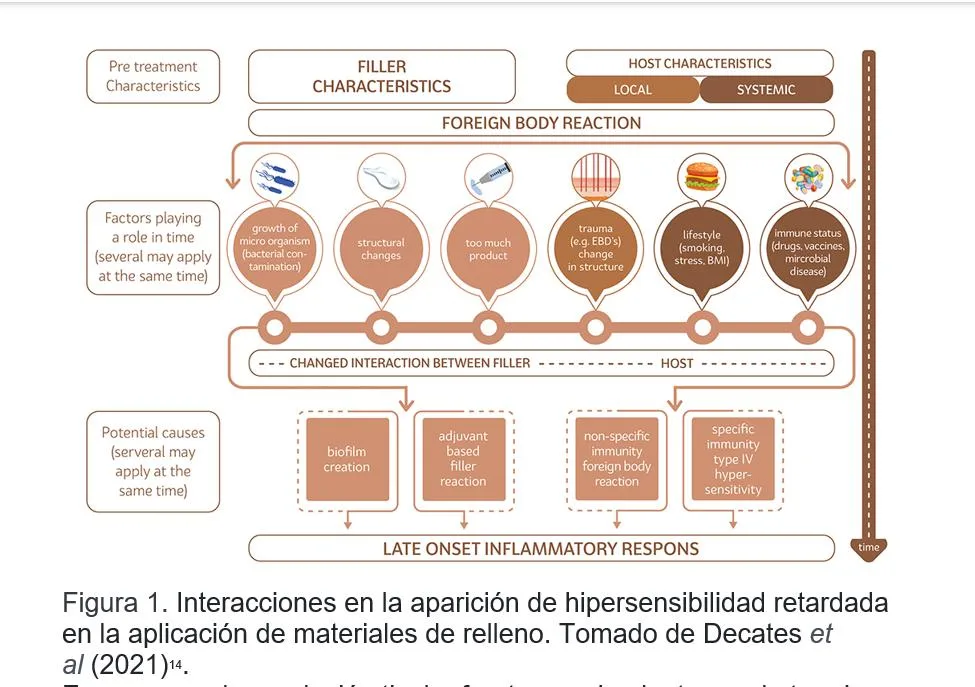
Fig 3. Interactions producing delayed hypersensitivity to filler materials, after Decates et al. (UPO Sorted, Tejero, slide p. 168). > Fuentes: UPO Sorted, Tejero, Complicaciones de rellenos [20]; concept after Decates [12].
Pathophysiology (Fig 3), grounded. Against the implant the host mounts an immediate/innate response that normally self-limits if no adjuvant factor is present, but can smoulder and manifest late as a specific immune (granulomatous) response [20][5]. Three converging routes: (a) type-IV delayed hypersensitivity to the HA or its residues; (b) a foreign-body/adjuvant reaction amplified by product volume, structural change or recent trauma; (c) a low-grade biofilm acting as the chronic inflammatory substrate [5][20]. Certain HLA haplotypes (HLA-B*08 and DRB1*03) are over-represented in granulomatous/immune filler reactions [5].
Timeline. Onset ranges from several hours to several weeks after the trigger, and the trigger itself is often weeks to months after the implant [12][32]. LIRS diagnostic pattern: at least 2 of 4 signs (erythema, edema, tenderness, palpable nodules) appearing no earlier than about 3 weeks post-injection [5]. Fig 4 shows the characteristic soft, non-purulent malar/infraorbital edema of the ETIP phenotype, which the eye must learn to separate from the tense, warm, fluctuant swelling of infection [33].
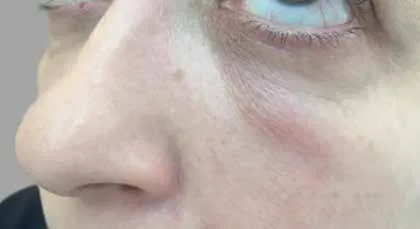
Fig 4. ETIP (edema tardío intermitente e persistente) at the infraorbital region. (Cavallieri, 2017, p. 3). > Fuentes: Cavallieri, Edema tardío intermitente e persistente [33].
Differential BEFORE immunosuppression (the branch that prevents disaster).
| Diagnosis | Warmth | Fluctuance/drainage | Fever | Timing to trigger | Discriminator |
|---|---|---|---|---|---|
| Non-inflammatory placement/product nodule | No | No | No | Any (often early) | Palpable since injection; no inflammation [4] |
| Sterile delayed inflammatory reaction (DIR/ETIP) | Mild/none | No | No | Days-weeks post-trigger | Symmetric-ish, post-trigger, responds to steroid + hyaluronidase [33][6] |
| Bacterial biofilm / abscess | Yes | Often | +/- | Indolent, reactivates | Low bacterial load, refractory, culture/biopsy [5] |
| Foreign-body granuloma | Variable | No | No | Months-years | Firm, late, histology giant cells [21][5] |
| Edema / lymphatic obstruction | No | No | No | Any | Positional, soft, non-nodular [4] |
| Disease mimic (autoimmune, neoplasm) | Variable | Variable | Variable | Unrelated | Systemic signs, atypical course, biopsy [6] |
Use ultrasound, and culture/aspiration or biopsy, when the phenotype is atypical, persistent or infection-suggestive [5][6]. Avoid corticosteroid monotherapy when infection has not been reasonably excluded [5][12].
The biofilm-versus-immune debate, kept practical. Bjarnsholt- and Christensen-type work detected bacteria in biopsies of late inflammatory nodules in nearly all cases, sometimes years after injection, and HA is an excellent growth medium for biofilm, which underpins the infection-first caution [5]. Beleznay- and Decates-type series emphasize the short duration, the post-trigger timing and the rapid response to steroid plus hyaluronidase, which fit an immune mechanism [4][6]. The practical reconciliation (Fig 3): late reactions are multifactorial, so hyaluronidase (which breaks both HA and biofilm matrix) plus infection cover when plausible plus steroid for the inflammatory component treats the whole mechanism rather than betting on one half [4][5][20]. The formal side-by-side of the two algorithms is in L4.9 [6].
Graded management ladder (severity- and diagnosis-dependent).
| Severity / phenotype | First line | Add if inadequate | Notes |
|---|---|---|---|
| Mild self-limited edema | Observation, reassurance | Antihistamine if histaminergic | Many resolve without intervention [12] |
| Convincing sterile inflammatory phenotype | Oral prednisone 20-40 mg every morning 5-7 days | Intralesional triamcinolone 5-10 mg/mL, repeat q2-4 wk | Taper if longer course [4][6] |
| HA depot driving the reaction | Intralesional hyaluronidase 10 U per 0.1 cm³ of HA depot | Repeat at 2-4 wk; use even if biofilm suspected (breaks HA + matrix) | Reduces antigen/depot burden [4][19] |
| Infection plausible | Add antibiotic: clarithromycin 500 mg BID 2-6 wk (or doxycycline) | Incision/drainage; single-dose azithromycin regimens described | Cover before/with steroid, not steroid alone [5][6] |
| Refractory granulomatous | Biopsy; intralesional 5-fluorouracil (with steroid); specialist referral | Laser/intralesional heat as adjunct | Multidisciplinary [4][21] |
| COVID-associated DIR | Standard ladder above | ACE-inhibitor (e.g. lisinopril) is an evidence-limited option, not default | Do not withhold vaccination [30][29] |
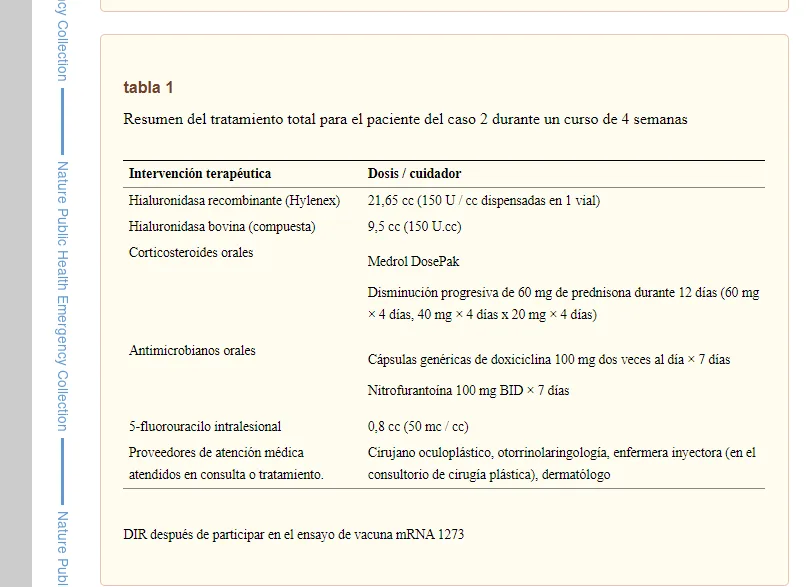
Fig 5. Total 4-week treatment for a post-vaccine DIR case. (UPO Sorted, Tejero, slide p. 197). > Fuentes: UPO Sorted, Tejero [20]; consistent with published DIR management [6][19].
Rechallenge. Wait for full resolution and hold an explicit risk discussion; individualize interval after a prior DIR, and prefer reversible material [12][32]. Link J5: the biofilm/asepsis mechanism, sterilization and infection-first work-up live in J5; L4 owns the immune classification and the ladder [5].
Trigger-to-onset latency (record both timelines: implant-to-trigger and trigger-to-symptom).
| Trigger | Typical latency to reaction | Note |
|---|---|---|
| Systemic viral illness (influenza-like, COVID-19) | Hours to weeks after the illness | Most common reported precipitant [12][30] |
| SARS-CoV-2 vaccination (mRNA and others) | Hours to several weeks after the dose | Signal rose during vaccination campaigns; still rare [29][31] |
| Dental procedure / infection | Days to weeks | Local bacterial/immune stimulus [5] |
| Other vaccination / systemic immune stimulus | Days to weeks | Any adjuvant-like stimulus [12] |
| No identifiable trigger | Any time months after implant | Product/biofilm/host factors [20][4] |
Ultrasound features that separate the differential (when the phenotype is atypical).
| Entity | High-frequency ultrasound signature |
|---|---|
| Non-inflammatory product depot | Well-defined anechoic/hypoechoic HA pocket, no surrounding flow [15] |
| Sterile DIR / ETIP | Depot with surrounding hypoechoic inflammatory halo, increased Doppler flow, no drainable collection [15][33] |
| Abscess / infected biofilm | Complex fluid collection, debris, marked peripheral hypervascularity [5][15] |
| Granuloma | Solid hypoechoic mass with internal vascularity, no drainable pocket [15][21] |
Corticosteroid taper regimens used in a convincing sterile phenotype. Short course: prednisone 20-40 mg every morning for 5-7 days, stop or brief taper [4][6]. Severe/persistent: a longer tapering course (for example prednisone from about 60 mg tapered over roughly 12 days, as in published post-vaccine DIR management, Fig 5) with concurrent hyaluronidase and infection cover as indicated [6][20]. Intralesional triamcinolone 5-10 mg/mL, repeated at 2-4 weeks, targets a localized inflammatory nodule while limiting systemic exposure [4][5]. Add antihistamine only for genuinely histaminergic (urticarial) symptoms; it does not treat a type-IV nodule [6].
The ACE-inhibitor option, in context. For COVID-associated DIR, an ACE-inhibitor (the reported example is lisinopril; losartan has also been described) was proposed on the spike-protein/ACE2-pathway rationale as an adjunct in refractory cases; the evidence is limited to small series and it is not a default first-line agent [30][29]. It is offered here as an evidence-limited option to escalate to, never as a substitute for hyaluronidase, steroid or infection cover [6][12].
Hyaluronidase is first-line even when biofilm is suspected, because it dissolves both the crosslinked HA depot (the antigen and the nutrient bed) and the biofilm matrix embedded in it; pair it with antimicrobial cover rather than withholding it [4][5][19]. Typical intralesional dose is about 10 units per 0.1 cm³ of HA depot, repeated at 2-4 weeks; have adrenaline available because hyaluronidase is itself an allergen [4][19][34].
Rechallenge protocol. (1) Full clinical resolution first; (2) explicit documented risk discussion; (3) individualize the interval after a prior DIR (some avoid re-implantation entirely at that site); (4) prefer a reversible material; (5) counsel to defer elective filler during acute illness and to report any new swelling promptly [12][32][6].
Product and volume as modifiable risk factors. Reported DIR series concentrate on cohesive HA products and larger-volume/older depots; Beleznay described delayed-onset nodules after a smooth cohesive HA, and the recurring lesson is that too much product, structural change over time and repeated layering raise the foreign-body/adjuvant contribution (Fig 3) [4][20][5]. This does not indict any single brand; it argues for conservative volumes and for mapping what is already in the tissue before adding more [4][15].
Counseling and prevention table (what the patient should hear and do).
| Message | Rationale |
|---|---|
| A late swelling weeks-months after filler, especially after an illness or vaccine, is a known and treatable reaction | Sets expectation, prompts early presentation [12] |
| Do not delay or skip vaccination because of filler | Reactions are rare and treatable; vaccination benefit dominates [29][31] |
| Report new nodules/edema early rather than waiting | Early hyaluronidase + steroid works best [6][19] |
| Defer elective filler during acute systemic illness | Avoids injecting into an activated immune state [12] |
| Disclose all prior fillers and reactions | Enables the material map and risk stratification [4] |
Antibiotic choices when infection is plausible. Macrolides (clarithromycin 500 mg BID for 2-6 weeks) are favored for biofilm-active coverage; tetracyclines (doxycycline 100 mg BID) add anti-inflammatory action; single-dose or combination azithromycin regimens have been described; incision and drainage is added for a drainable collection [5][6]. Cover infection alongside, not instead of, depot reduction with hyaluronidase [4][5]. Link J5 for the biofilm and asepsis mechanism [5].
Trampa clásica: treating every late nodule identically with steroid, which converts a smouldering biofilm into a refractory abscess and averages away the very distinction (sterile vs infected) that decides the drug [5][12].
L4.4 · Drug, supplement and condition interactions
Consensus (all schools): the pre-procedure interaction history must actively elicit prescription drugs, non-prescription products AND relevant conditions; there is no blanket "stop everything" rule, and prescribed antithrombotics are never stopped unilaterally [7][8][9]. Separate the medically indicated from the discretionary, document the reason for any hold, and default to low-trauma technique and compression as the risk controls [9].
A. Anticoagulants / antiplatelets (bleeding, bruising, hematoma).
| Agent class | Peri-procedure decision | Discriminator |
|---|---|---|
| Therapeutic warfarin (valve, AF, VTE) | Do not stop unilaterally; confirm INR in range; prescriber coordination | Thrombotic risk >> bruise risk [8] |
| DOAC (apixaban, rivaroxaban, dabigatran) | Continue for minimally invasive injectables; note last dose and renal function | No routine bridging for superficial aesthetics [8] |
| Antiplatelet (aspirin, clopidogrel) for secondary prevention | Continue; low-trauma technique | Stopping risks stroke/MI [8] |
| Discretionary NSAIDs, aspirin taken for comfort | May pause 5-7 days if patient agrees and no indication | Discretionary only, documented [9] |
Universal risk controls regardless of drug: fewest passes, blunt cannula where appropriate, small aliquots, immediate compression, avoid dangerous vascular territories on anticoagulation [9][8]. For the serious-bleeding/vascular-event pathway see L4.8 and the ophthalmologic-emergency literature [14][35].
B. Supplements and non-prescription products (elicit them explicitly).
| Product | Reported effect | Peri-procedure |
|---|---|---|
| Fish oil / omega-3 | Possible increased bruising | Optional hold 5-7 days; heterogeneous evidence [9] |
| Vitamin E (high dose) | Antiplatelet-like | Optional hold; document [9] |
| Ginkgo, garlic, ginseng, ginger ("the G herbs") | Uncertain bleeding/interaction | Optional hold; do not overstate [8] |
| Nicotine / smoking | Impaired healing, vasoconstriction | Advise cessation around energy/regenerative/implanting work [10] |
Never issue universal cessation claims for supplements; the evidence and product doses are heterogeneous, and the default controls (technique, compression) matter more than stopping a fish-oil capsule [9][8].
C. Isotretinoin (the medication-to-procedure decision; the schools are in L4.9). Isotretinoin is not a single yes/no interaction. Capture current dose, cumulative exposure, mucocutaneous fragility and scar history, then decide by procedure depth [36][37]:
| Procedure | Interaction stance |
|---|---|
| Injectables, superficial procedures | No mandatory delay [36] |
| Superficial chemical peels, nonablative laser | Evidence does not mandate delay [36] |
| Fractional ablative, mechanical dermabrasion | Caution; individualize; the traditional 6-month school still applies here [37] |
| Fully ablative/deep resurfacing, extensive incisional surgery | Highest caution; defer or specialist decision [37][36] |
D. Immunomodulators (not handled by indiscriminate interruption).
| Agent | What to record | Decision |
|---|---|---|
| Systemic corticosteroids | Dose, duration, infection risk, wound healing | Defer deep/implanting work in active high-dose use [7] |
| Conventional immunosuppressants (MTX, azathioprine) | Indication, cytopenias, disease activity | Coordinate prescriber; avoid during flares [7] |
| Biologics (TNF, IL-17/23), JAK inhibitors | Dosing cycle, infection status | Time elective deep work away from immunosuppression trough; prescriber input [13] |
| Checkpoint inhibitors | Active immune-related adverse events | High threshold; expect atypical immune reactions [13] |
| Transplant immunosuppression | Graft stability, infection | Specialist coordination mandatory [7] |
Do not stop disease-control therapy solely to fit an elective aesthetic date, and defer during active infection, uncontrolled disease or material-related inflammation [7][13].
E. Neuromuscular-junction disease and BoNT (condition-drug interaction, not L3 population selection). Myasthenia gravis, Lambert-Eaton syndrome and bulbar/respiratory weakness raise the systemic-risk stakes of any botulinum toxin; drugs that alter neuromuscular transmission (aminoglycosides, magnesium, and neuromuscular blockers) may potentiate cholinergic blockade [7][22]. Verify indication, current medicines and disease stability, then defer or obtain specialist clearance when transmission is compromised [7][2]. The published list of drugs that induce or worsen myasthenia is the reference for this screen [7].
DOAC last-dose context (for the rare deeper procedure; superficial injectables usually continue). For a minimally invasive injectable there is no routine interruption; when a clinician and prescriber judge a higher-bleeding-risk procedure, the decision uses last-dose timing and renal function rather than an INR (DOACs are not INR-monitored), and bridging is not used for elective aesthetics [8][9]. Warfarin is the exception that is INR-monitored: confirm the INR is in the therapeutic range and do not push an elective procedure with a supratherapeutic INR [8].
Supplement pharmacology (why "a week" is the common but soft number).
| Supplement | Putative mechanism | Practical hold |
|---|---|---|
| Fish oil / omega-3 | Reduced platelet aggregation (thromboxane) | Optional 5-7 days; heterogeneous evidence [9] |
| Vitamin E (high dose) | Antiplatelet, vitamin-K antagonism at dose | Optional 5-7 days [9] |
| Ginkgo | Platelet-activating-factor inhibition | Optional hold; do not overstate [8] |
| Garlic, ginger, ginseng | Variable antiplatelet | Optional; document [8] |
| Alcohol (acute) | Vasodilation, platelet effect | Advise avoiding around the procedure [9] |
Half-lives and effect durations are heterogeneous and the clinical bleeding effect of most supplements is modest; the reason to elicit them is to explain and reduce bruising, not to justify stopping a medically indicated antithrombotic [9][8].
Isotretinoin cumulative exposure and mucocutaneous fragility. Capture the current daily dose, the cumulative dose to date and the mucocutaneous state (cheilitis, xerosis, fragile epithelium), because these predict impaired re-epithelialization far better than the binary "on/off isotretinoin" label; scar and keloid history raises the threshold for any resurfacing depth [36][37]. The procedure-depth matrix above is the decision; the six-month-versus-procedure-specific dispute is adjudicated in L4.9 [36].
Neuromuscular potentiators (mechanism, so the screen is not rote). Aminoglycosides reduce presynaptic acetylcholine release and block postsynaptic receptors; magnesium competes with calcium at the presynaptic terminal; non-depolarizing neuromuscular blockers act postsynaptically; each can potentiate botulinum cholinergic blockade and unmask weakness in a susceptible patient [7][22]. Other agents that induce or worsen myasthenia (fluoroquinolones, macrolides, beta-blockers, penicillamine, checkpoint inhibitors) belong on the same screen when BoNT is planned in a patient with any bulbar/respiratory or fatigable weakness [7]. Verify the indication, the current medicines and disease stability, then defer or obtain specialist clearance when transmission is compromised [7][2].
Immunomodulator timing detail. Elective deep, implanting or inflammatory procedures are best timed away from the immunosuppression trough (for example the days around a biologic dose or a chemotherapy nadir), coordinated with the prescriber; active infection, uncontrolled disease or material-related inflammation is a defer, not a proceed [7][13]. Checkpoint-inhibitor patients can mount atypical, brisk immune reactions and warrant a high threshold and close follow-up [13].
Consolidated peri-procedure decision (the one-look table).
| Agent / factor | Default at minimally invasive injectable | Coordinate with prescriber? | Documentation |
|---|---|---|---|
| Warfarin (indicated) | Continue; confirm INR in range | Yes | INR value, indication [8] |
| DOAC (indicated) | Continue; note last dose/renal function | For deeper work | Last dose, eGFR [8] |
| Antiplatelet (secondary prevention) | Continue | Yes | Indication [8] |
| Discretionary NSAID/aspirin | Optional hold 5-7 days | No | Reason for hold [9] |
| Fish oil/vitamin E/herbals | Optional hold 5-7 days | No | Reason for hold [9] |
| Isotretinoin | Decide by procedure depth (matrix) | Dermatology if deep | Dose, cumulative, scar history [36] |
| Systemic immunosuppression/biologic | Time away from trough; defer if active | Yes | Cycle, infection status [7] |
| Myasthenia/Lambert-Eaton + BoNT | Defer or specialist clearance | Yes (neurology) | NMJ status, medicines [7] |
| Aminoglycoside/magnesium + BoNT | Avoid concurrent; defer | Yes | Current medicines [7] |
Condition interactions beyond drugs. Uncontrolled diabetes and active smoking impair healing and raise infection risk around energy and implanting procedures; a bleeding diathesis (inherited or acquired) changes the bruising/hematoma calculus independent of any antithrombotic; and any active systemic infection or uncontrolled autoimmune flare is a defer, because it is the host state, not only the drug list, that drives the reaction [10][7][5]. Record the condition, its control status and the treating physician, exactly as for a drug [7].
Two separations that prevent most errors. First, separate prescribed antithrombotics (never stopped unilaterally) from discretionary NSAIDs/supplements (may be held with the patient's agreement) [8][9]. Second, separate the medication-to-procedure decision (this block) from the disputed timing schools (isotretinoin six-month vs procedure-specific, in L4.9), so a live clinical decision is never held hostage to an unresolved controversy [36][37].
A note on the serious adverse-event pathway for injectable pharmacology. The deoxycholic-acid submental-fat literature is a reminder that an injectable drug (not just filler) can produce serious local events (marginal-mandibular nerve injury, dysphagia, ulceration) whose management is its own protocol; the transversal lesson is to know the specific serious-event pathway of each injectable pharmacologic agent before using it, not only its efficacy profile [35]. For vascular and ophthalmologic emergencies of injectables the dedicated review governs the acute pathway [14].
Peri-procedure timeline (a defensible default, individualized). About 5-7 days before: discuss discretionary NSAID/supplement holds; confirm the anticoagulation plan with the prescriber; screen isotretinoin and immunomodulators against procedure depth [9][8]. Day of: verify no acute illness, confirm current medicines, confirm neuromuscular status if BoNT [7]. After: document any hold and its reason, and give the delayed-reaction and emergency-contact counseling that L4.3 and L4.5 require [9][12].
Trampa clásica: asking "are you on any medications?" and stopping there. The bruise comes from the fish oil and the ibuprofen the patient did not consider "medication", and the catastrophe comes from stopping the clopidogrel nobody coordinated with the cardiologist [9][8].
L4.5 · Hypersensitivity and immunologic reactions across product classes
Consensus (all schools): map the immune phenotype and its reversibility before calling any reaction "allergy"; reversibility differs by material, and that difference drives the whole management [5][19][21]. HA can be enzymatically reduced with hyaluronidase; particulate biostimulators (CaHA, PLLA) and permanent fillers (PMMA) cannot, so they require longer anti-inflammatory, intralesional, surgical or specialist pathways [21][5].
Gell-Coombs phenotype map (across HA, CaHA, PLLA, PMMA, BoNT).
| Type | Timing | Phenotype | Typical culprit interface | First action |
|---|---|---|---|---|
| I (IgE / non-IgE mast-cell) | Minutes-hours | Urticaria, angioedema, anaphylaxis | Lidocaine, excipients, rarely HA residue | Adrenaline + emergency pathway; allergy referral [13][14] |
| III (immune complex) | Hours-days | Vasculitic/serum-sickness-like | Any particulate | Systemic anti-inflammatory; investigate [5] |
| IV (delayed, T-cell) | Days-weeks | Edema, inflammatory nodules, granuloma | HA (DIR), any material | Steroid + hyaluronidase (HA); biopsy if atypical [12][5] |
| Foreign-body granuloma (non-classic) | Months-years | Firm late nodule/plaque | CaHA, PLLA, PMMA, HA | Histology; intralesional steroid/5-FU; surgery [21][5] |
| Innate/adjuvant reaction | Variable | Non-specific inflammation | Volume, biofilm, trauma | Reduce burden; treat substrate [20] |
The geometric distribution of a reaction is itself a clue: Fig 6 shows an HA hypersensitivity reaction laid out in the grid pattern of an intradermal skinbooster template, which points to the injected material rather than a spontaneous dermatosis, while Fig 7 shows the bilateral, symmetric infraorbital nodularity of a delayed filler reaction that still has to be separated from infection and malposition [5].
Granuloma vs hypersensitivity (do not conflate). A true foreign-body granuloma is a histologic diagnosis (epithelioid macrophages, multinucleated giant cells around material) with a months-to-years latency and affects all filler classes; a delayed hypersensitivity is a T-cell reaction, often HA-associated and post-trigger [5][21]. Certain HLA haplotypes (B*08, DRB1*03) predispose to the granulomatous end [5]. The clinical overlap is real, which is why histology and ultrasound settle atypical cases [5].
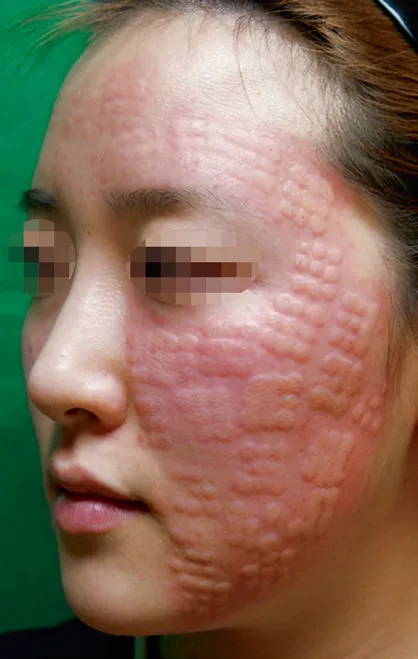
Fig 6. HA-filler allergic reaction in an intradermal grid pattern. (Ko / Filler-Induced Hypersensitivity Reactions, 2019, p. 35). > Fuentes: Filler Complications: Filler-Induced Hypersensitivity Reactions [5].
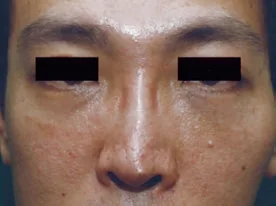
Fig 7. Infraorbital filler-induced hypersensitivity/nodularity. (Ko / Filler-Induced Hypersensitivity Reactions, 2019, p. 56). > Fuentes: Filler Complications: Filler-Induced Hypersensitivity Reactions [5].
Histology anchors the atypical case (Fig 8, Fig 9).
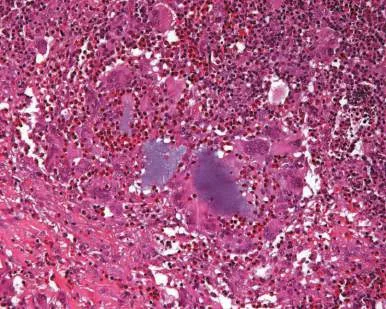
Fig 8. Inflammatory/granulomatous reaction to HA filler, H&E. (Cosmetic Medicine & Surgery, 2016, p. 643). > Fuentes: Cosmetic Medicine & Surgery [38].
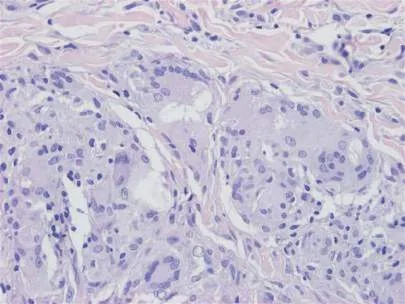
Fig 9. PLLA granuloma, giant-cell reaction. (Cosmetic Medicine & Surgery, 2016, p. 645). > Fuentes: Cosmetic Medicine & Surgery [38]; PLLA reaction biology [21].
Cross-reactivity assessed at COMPONENT level, not by product-class name. Review the specific prior reaction, then the plausible components [5][34]:
| Component | Present in | Note |
|---|---|---|
| The active material (HA, CaHA, PLLA, PMMA) | Respective fillers | A prior HA reaction does not prove allergy to all HA products [5] |
| Bacterial fermentation residues | HA fillers (Streptococcus-derived) | Rare protein contaminant sensitization [5] |
| Lidocaine | Many "+lidocaine" fillers | Test/avoid if amide-anesthetic allergy documented [5] |
| Human serum albumin, sucrose (Xeomin), trehalose/polysorbate-20 (Daxxify) | BoNT excipients | Excipient neo-epitopes relevant to BoNT immunogenicity [18] |
| Lidocaine/lactose or milk-protein contaminants | Formulation-specific | Check where relevant [5] |
| Polysorbates, antiseptics (chlorhexidine) | Prep and excipients | Chlorhexidine anaphylaxis is a real prep hazard [13] |
| Recombinant vs animal hyaluronidase | Reversal agent | Recombinant (Hylenex) lowers, not eliminates, hypersensitivity vs ovine/bovine [19][34] |
Work-up rules. Prior tolerance does not exclude delayed inflammation, and a prior HA reaction does not condemn every HA product [5]. Systemic or immediate reactions require emergency treatment and allergy referral before any rechallenge [13][14]. Routine unvalidated skin testing is not a substitute for phenotype-based work-up [5]. Hyaluronidase itself carries a hypersensitivity risk and is an allergen in its own right; have adrenaline available when using it [19][34].
Reversibility by material drives the whole management plan.
| Material | Reversible? | Primary reaction management |
|---|---|---|
| Hyaluronic acid (HA) | Yes, enzymatically | Hyaluronidase (~10 U/0.1 cm³) + steroid; reduces antigen depot [19][4] |
| Calcium hydroxylapatite (CaHA) | No enzyme | Anti-inflammatory, intralesional steroid, time; not dissolvable [5] |
| Poly-L-lactic acid (PLLA) | No | Intralesional steroid/5-FU, time; granuloma pathway [21][5] |
| Polymethylmethacrylate (PMMA) | No (permanent) | Intralesional steroid/5-FU, surgical excision; highest-stakes [5] |
| Botulinum toxin | Not applicable (self-limited effect) | Supportive; reactions are rare, mostly immunogenic (L4.2) [2] |
Immediate (type I) reaction: the emergency algorithm. Urticaria/angioedema/anaphylaxis after any injectable or its prep is a medical emergency: intramuscular adrenaline (the first drug, not the last), airway support, high-flow oxygen, IV fluids, then adjuncts (H1-antihistamine, corticosteroid), activate the emergency pathway, and refer to allergy before any rechallenge [13][14]. Chlorhexidine skin prep is a recognized anaphylaxis trigger and must be on the differential for a reaction that began at prep, not injection [13].
Delayed (type IV) reaction management follows the L4.3 ladder for HA and the granuloma pathway for particulate/permanent materials; the difference is reversibility, which is why identifying the material precedes treatment [5][21].
Material-specific reaction timelines.
| Material | Immediate | Delayed inflammatory | Late granuloma |
|---|---|---|---|
| HA | Rare (excipient/lidocaine) | Days-weeks, common post-trigger (DIR) | Months (uncommon) [12][5] |
| CaHA | Rare | Weeks | Months-years [5] |
| PLLA | Rare | Weeks (papules/nodules) | Months-years (giant-cell) [21] |
| PMMA | Rare | Variable | Years (permanent risk) [5] |
Hyaluronidase is itself an allergen. Ovine/bovine hyaluronidase carries higher hypersensitivity risk than recombinant human hyaluronidase (Hylenex); both can provoke immediate reactions, so keep adrenaline available and consider a small test in a patient with prior hyaluronidase or animal-protein allergy [19][34]. Recombinant lowers, but does not eliminate, that risk [19].
Skin-testing caveat. Routine unvalidated intradermal skin testing before HA filler is not evidence-based and does not predict delayed reactions; it can mislead by producing a wheal that is mechanical rather than allergic, and it is not a substitute for a phenotype-based component history [5]. Formal allergy work-up (specialist patch/intradermal testing for a specific suspected component, for example lidocaine) is reserved for a documented reaction [5][13].
Immediate vs delayed: the branch that sets urgency.
| Feature | Immediate (type I) | Delayed (type IV / granuloma) |
|---|---|---|
| Onset | Minutes to hours | Days to weeks (DIR); months-years (granuloma) |
| Signs | Urticaria, angioedema, wheeze, hypotension | Edema, inflammatory nodules, firm plaques |
| First action | Adrenaline + emergency pathway [14] | Diagnose, then steroid + hyaluronidase (HA) [12] |
| Rechallenge | Only after allergy work-up | After resolution, individualized [5] |
Particulate and permanent materials: why the pathway is longer. CaHA, PLLA and PMMA cannot be enzymatically reduced, so a delayed or granulomatous reaction commits the patient to intralesional corticosteroid (with or without 5-fluorouracil), time, and sometimes surgical excision, rather than the rapid depot reduction available for HA (Fig 9) [21][5]. This asymmetry is the single strongest argument for preferring reversible material in any immune-primed patient (L4.7, L4.9) [21][5]. PLLA reactions in particular can present as delayed papules or nodules weeks after treatment and as giant-cell granulomas months to years later; the contemporary PLLA literature stresses correct reconstitution, dilution and injection technique as prevention, since there is no enzymatic rescue once material is in tissue [21].
Immune-status timeline as a decision axis. The same patient is not equally injectable at all times: an active viral illness, a recent vaccination, an autoimmune flare or a checkpoint-inhibitor course transiently raises the reaction risk, so timing the elective procedure to a quiescent immune window is itself a hypersensitivity-prevention step, not only a courtesy (Fig 3) [12][13][20]. This connects L4.5 to L4.3 (post-trigger DIR) and L4.4 (immunomodulator timing): the immune state at the moment of injection is a shared risk variable across all three [12][7].
Excipient and cross-reactivity pitfalls, restated as rules. A prior HA reaction does not condemn every HA product; prior tolerance does not exclude a later delayed reaction; the culprit may be the lidocaine, a fermentation residue, an antiseptic (chlorhexidine) or a BoNT excipient rather than the headline material; and hyaluronidase, the reversal agent, is itself an allergen [5][19][18]. Assess at component level, treat systemic/immediate reactions as emergencies, and refer to allergy before rechallenge [13][14].
Ophthalmic and vascular hypersensitivity-adjacent emergencies. Some of the most feared events at the injectable interface are not classic allergy but vascular or ophthalmologic: an inflammatory or embolic event around the eye can threaten vision, and the periocular region carries the highest stakes; any visual symptom, disproportionate pain or skin change suggesting vascular compromise is an immediate stop-and-refer, treated on the vascular/ophthalmologic emergency pathway rather than the hypersensitivity ladder [14][9]. Distinguishing an immune flare from a vascular event at the bedside is itself a safety skill: vascular events are early, painful and follow a vascular territory; immune flares are later, less painful and follow the implant [14][12].
Documented-reaction work-up. After a confirmed reaction, the specialist allergy work-up targets the suspected component (for example amide-anesthetic testing for a lidocaine-containing filler) rather than a generic "filler allergy" panel; the result then guides a lidocaine-free product or an alternative material, and the reaction, its work-up and the substitution are documented for the next clinician [5][13][17].
Trampa clásica: reading "hyaluronic acid" as inherently hypoallergenic and therefore skipping the component history, then re-injecting a patient whose reaction was to the lidocaine or the fermentation residue, not the HA [5][19].
L4.6 · Advanced cross-modality sequencing risk (link L2)
Consensus (all schools): compounded risk is driven by cumulative injury and lost attribution, not by the number of modalities; stable low-risk pairings may be same-session, high-inflammatory/deep-energy/regenerative/implanting procedures are staged until tissue returns to baseline [10][11][8]. Link L2 for the routine order (energy before injectable, separate sterile fields); L4 owns the risk multiplier and the stop rule [8].
Energy-over-implanted-material: the decision depends on where energy is deposited relative to the filler plane [11][10].
| Device | Energy depth | Interaction with filler | Rule |
|---|---|---|---|
| Superficial nonablative laser / IPL | Epidermis-superficial dermis | Minimal if filler is deep | Generally safe over deep HA; avoid over inflamed sites [11] |
| Fractional ablative laser | Dermis | Thermal + edema near mid-dermal filler | Space from fresh filler; treat before fresh filler when feasible [11] |
| Monopolar/bipolar radiofrequency | Deep dermis / subcutis | Heat can alter HA integrity and cause edema | Map product plane first; avoid high-energy passes over recent/inflamed implants [11][10] |
| Microfocused ultrasound (MFU) | Fixed focal depths (SMAS) | Mechanical/thermal disruption of deep filler | Treat deeper energy before fresh filler; avoid direct high-density passes over recent implant [11] |
Principle: map existing product and plane first, treat the deeper energy modality before fresh filler when feasible, and avoid high-energy passes directly over recent or inflamed implants when the evidence for that pairing is absent [11][10]. Heat, mechanical disruption, edema and altered filler integrity are device-, depth-, product- and interval-specific, so no single interval covers all pairings [11].
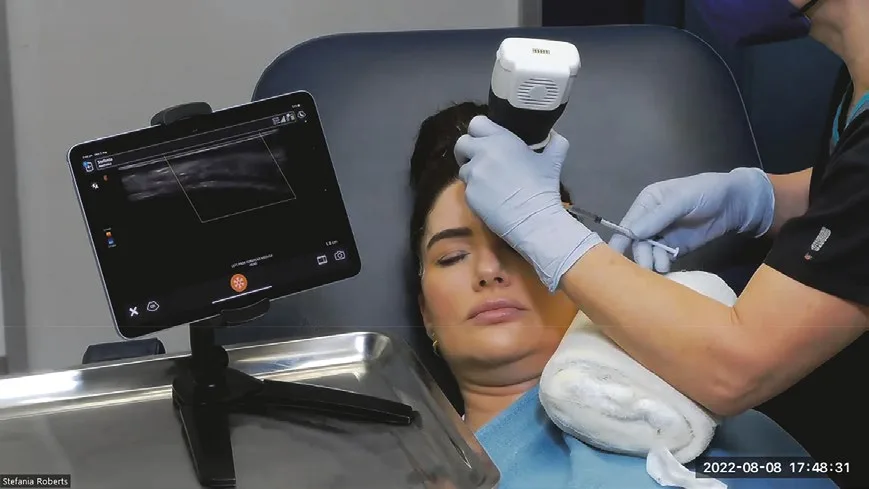
Fig 10. Ultrasound-guided assessment/injection of the facial soft tissue. (Malherbe, Ultrasound Protocol for Facial Aesthetics, 2024, p. 55). > Fuentes: Malherbe, Ultrasound Protocol for Facial Aesthetics [15].
Cumulative inflammatory load: what never stacks in the same session [10][8][5]:
| Combination flag | Why it never stacks same-session |
|---|---|
| A component that breaches an infected/colonized barrier + an implant | Seeds the depot; biofilm risk [5] |
| Extensive thermal injury + fresh particulate implant | Compounds edema, distorts result, granuloma risk [21] |
| A procedure that provokes a patient's prior delayed immune phenotype + anything | Re-triggers DIR/granuloma [12] |
| Two modalities that remove the ability to attribute a complication | You cannot tell which caused the vascular event or the nodule [8] |
| Deep energy + fresh regenerative product (PRP, exosomes) + implant | Unknown thermal effect on cells and material [10] |
High-risk-patient multiplier. Immunosuppression, frailty, prior delayed reaction, pigment/scar propensity or uncertain implanted material shifts every combination toward staged sessions with reassessment between modalities [10][8]. Link L3 for who is high-risk; L4 owns the stop rule: when the field is unstable or unmapped, the answer is to space, not to combine for convenience [8][10].
When same-session is defensible. Selected low-risk pairings with contamination controls (energy first, then injectable, separate sterile fields) reduce visits and are supported for specific combinations such as skin-quality boosters with EBD [11][10]. The evidence is pairing-specific; do not generalize a validated pairing into a universal same-session rule [11]. The high-risk-patient multiplier overrides even a validated pairing: immunosuppression, frailty, a prior delayed reaction, pigment/scar propensity or uncertain implanted material converts an otherwise same-session-eligible pairing into a staged one [10][21][8].
Same-session sequence rules for the pairings that are defensible. When a low-risk pairing is combined in one visit, the shared operating rules are: energy before injectable; separate sterile fields and fresh instruments; treat the deeper energy modality first so subsequent filler is not displaced or heated; and avoid high-density passes over any recent or inflamed implant [11][10][8].
Pairing-specific staging guidance (no universal interval).
| Pairing | Same-session? | Rationale |
|---|---|---|
| Superficial nonablative laser/IPL + deep HA | Often yes, energy first | Energy is superficial to the depot [11] |
| Skin-quality booster (e.g. VYC-12L) + EBD | Yes, with expert protocol | Expert-supported low-risk combination [11] |
| Deep RF / MFU (SMAS) + fresh mid-deep filler | Prefer stage; if combined, energy first then filler | Heat can alter HA integrity; displacement risk [11][10] |
| Fully ablative resurfacing + any implant | Stage | Barrier breach + implant = infection/graft risk [10] |
| Threads + energy over the thread plane | Stage | Thermal/mechanical disruption of sutures [10] |
| Regenerative (PRP/exosomes) + deep energy | Stage; evidence weak | Unknown thermal effect on cells [10] |
| CaHA/PLLA biostimulator + fresh HA same site | Prefer stage | Compounded inflammation, attribution loss [21] |
What compounds risk (the multiplier, not the count). Cumulative injury is the driver: a same-session combination that breaches an infected/colonized barrier, creates extensive thermal injury, implants a persistent particulate product, re-provokes a prior delayed immune phenotype, or removes the ability to attribute a complication is the combination to refuse, regardless of how "minor" each component seems alone [10][8][5]. Map product and plane first (Fig 10); when the field is unstable or unmapped the answer is to space, not to combine for convenience [15][8].
Filler integrity under energy. Heat and mechanical energy can alter crosslinked HA rheology and provoke edema; the effect is device-, depth-, product- and interval-specific, which is why a validated pairing (superficial energy over deep filler) does not license an unvalidated one (high-density deep energy over recent superficial filler) [11][10]. Link L2 for the routine order; L4 owns the risk multiplier and the stop rule [11].
Depth-overlap is the single best predictor of a bad pairing. When the energy focal depth coincides with the filler plane, the risk of thermal alteration, displacement and edema is highest; when they are clearly separated (superficial energy over a deep depot), same-session is usually tolerated [11][10]. Map the plane first (Fig 10), then ask whether the device deposits its energy at that plane [15][11].
Regenerative products in the sequence. PRP, exosomes and polynucleotides add a biologic and inflammatory phase whose interaction with fresh heat or fresh implant is poorly characterized; the marketing claim of "synergy" outruns controlled interaction data, so the conservative default is to stage regenerative injections away from deep energy and fresh particulate implants and to reassess between them [10][21]. This is a currency-and-evidence gap declared openly (L4.8), not a settled contraindication [10][39].
Threads and regenerative products in the stack. Suspension sutures (PLLA/PLGA, PCL) and biostimulators add a persistent implant and an inflammatory phase; layering fresh energy over a recent thread plane risks thermal and mechanical disruption, and adding a regenerative injection (PRP, exosomes, polynucleotides) into the same inflamed field has weak supporting evidence and unknown cell-thermal interaction, so these are staged [10][21]. A stable, healed thread or biostimulator field is a different situation from a fresh one; the interval, not the modality label, decides [10].
Attribution as a first-class safety goal. Beyond tissue injury, same-session stacking removes the ability to attribute a complication: if a vascular event or a nodule follows a session that combined RF, filler and PRP, neither the clinician nor a later reviewer can say which caused it, which harms both the patient's next decision and the pharmacovigilance signal (L4.8) [8][16]. Preserving attribution is itself a reason to stage [8].
Return-to-baseline as the staging clock. The interval between staged modalities is set by tissue recovery, not the calendar: wait until edema, erythema and any inflammatory nodularity from the first modality have resolved before the second, because operating on an inflamed field is what converts a routine sequence into a compounded injury [10][8]. In a high-risk or previously reactive patient, extend the interval and reassess rather than defaulting to a fixed gap [10][21].
Worked sequencing examples.
| Scenario | Defensible plan |
|---|---|
| Deep RF tightening + tear-trough HA | Stage: RF session, let edema settle, then map and inject HA [11][15] |
| IPL for redness + lip HA | Same-session possible: IPL first (superficial), then lip HA (separate field) [11] |
| MFU to SMAS + fresh mid-face filler | Stage; if combined, MFU first, avoid passes over the depot [11][10] |
| Threads + same-plane RF | Stage until threads integrate [10] |
| Ablative resurfacing + any implant | Stage; barrier must heal first [10] |
Trampa clásica: stacking a deep RF or MFU pass, a fresh mid-dermal filler and a regenerative injection in one visit "to save the patient a trip", then facing a nodule nobody can attribute and a filler plane nobody mapped [11][8].
L4.7 · The complication-prone / poly-treated patient (link L3)
Consensus (all schools): before another intervention, build a material-and-energy map; do not inject into an unmapped painful, indurated, edematous or distorted field [4][15][8]. De-escalation is an active plan, not passive waiting [4][6].
The map to reconstruct (get outside records).
| Field | What to capture |
|---|---|
| Timeline | Dates of every prior treatment [8] |
| Products / brands / lots | HA, CaHA, PLLA, PMMA, threads, permanent fillers [4] |
| Sites and planes | Anatomic site, depth, side [15] |
| Prior dissolving attempts | Hyaluronidase dose, response [19] |
| Devices | EBD type, depth, settings, passes [11] |
| Regenerative products | PRP, exosomes, polynucleotides [10] |
| Every prior reaction | DIR, granuloma, vascular event, hypersensitivity [12] |
When history is uncertain or examination suggests residual material, obtain records and use high-frequency ultrasound or specialist imaging to identify product location or complications (Fig 10) [15][4]. Permanent and semi-permanent fillers are the highest-stakes unknowns because they cannot be dissolved and are the substrate for late granuloma [21][5].
De-escalation plan (one reversible problem at a time). 1. Pause all new products; let tissue return to baseline [4][6]. 2. Collect outside records; map with ultrasound [15]. 3. Diagnose unresolved nodules/edema/asymmetry before treating [4][6]. 4. Address one reversible problem at a time (e.g. dissolve a malpositioned HA depot before judging the rest) [19]. 5. Reassess between steps; resist the urge to "fix everything today" [8].
Stop and refer (the honest answer is sometimes "not here, not now"). Stop elective treatment and refer for: progressive inflammation; suspected infection; granulomatous or systemic disease; unknown permanent filler; neurologic or visual symptoms; or repeated complication without a stable diagnosis [4][14][6]. Link L3 for psychological/population eligibility (body dysmorphia, the treatment-seeking pattern, unrealistic expectation); L4 does not repeat that screen, it owns the physical de-escalation [8].
The complication-prone phenotype. Repeated delayed reactions, a strong atopic/autoimmune history, multiple prior dissolutions, or reaction after each of several unrelated products marks a patient in whom the next intervention is more likely to fail; document the pattern and lower the threshold to stop [12][5]. Autoimmune/autoinflammatory disease and immune-modifying treatment shift the material choice toward reversible products; permanent particulate fillers and collagen stimulators demand a higher threshold because their reactions cannot be rapidly reversed [21][5][7].
High-frequency ultrasound in the poly-treated field (what it answers). A structured scan localizes the plane and quantity of residual material, distinguishes HA (anechoic pockets) from particulate biostimulator and from a solid granuloma, and detects a drainable collection versus a solid inflammatory mass (Fig 10) [15][4]. It is the single most useful bedside test when the history is incomplete, because it converts "unknown filler" into "HA depot at this plane" or "non-HA material, do not expect hyaluronidase to work" [15][19].
The unknown-filler algorithm. (1) Assume the worst (possible permanent/particulate material) until proven otherwise; (2) obtain outside records; (3) ultrasound-map the material; (4) if HA is confirmed and problematic, a hyaluronidase trial is both diagnostic and therapeutic (HA shrinks, non-HA does not); (5) if non-HA or permanent material is present, do not add product and route to the granuloma/specialist pathway [4][15][19]. Permanent and semi-permanent fillers are the highest-stakes unknowns because they cannot be dissolved and are the substrate for late granuloma [5][21].
Records-request template (what to ask the previous clinic for). Dates, product brands and lot numbers, volumes per site, planes, any dissolving attempts and response, device types/depths/passes, regenerative products, and every prior reaction with its treatment and outcome [4][8]. Reconstruct the map before, not during, the next intervention [15].
Staged dissolution. When de-escalating a problematic HA field, dissolve conservatively and reassess between sessions rather than dissolving everything at once, so the contribution of each depot can be judged and over-correction avoided; wait for tissue to return to baseline before any new product [19][4]. Address one reversible problem at a time [6].
The complication-prone phenotype, made operational. Flag the patient who carries several of: repeated delayed reactions across unrelated products; a strong atopic or autoimmune history; multiple prior dissolutions; an unknown or permanent implanted material; an active immune trigger (recent illness/vaccination); or a pattern of dissatisfaction driving escalating treatment [12][5][8]. Each additional flag lowers the threshold to stop, prefer reversible material, and reassess between single interventions rather than combining [21][5].
Reconstruction when records are unobtainable. When the previous clinic cannot be reached, the map is rebuilt from what is knowable: the patient's own recollection of products and dates, palpation, and ultrasound to localize and characterize material; a hyaluronidase trial then doubles as a diagnostic (HA responds, non-HA does not) [4][15][19]. The default posture with an irreducibly unknown field is conservative: do not add product, treat only the active problem, and document the uncertainty explicitly for the next clinician [4][17].
Triage of the poly-treated presentation.
| Presentation | First move |
|---|---|
| Stable, well-documented HA field, patient wants a touch-up | Map, confirm HA, proceed conservatively [15] |
| Undocumented field, no active problem | Records + ultrasound before any new product [4][15] |
| Active nodule/edema/asymmetry | Diagnose and treat first; no new product [6][4] |
| Unknown permanent/particulate material | Do not add product; granuloma/specialist pathway [5][21] |
| Progressive inflammation, visual/neurologic symptoms | Stop, activate emergency pathway, refer [14] |
Autoimmune and immunomodulated patients shift material choice toward reversible HA and raise the threshold for permanent particulate products, because a granulomatous or delayed reaction in that host cannot be rapidly reversed; coordinate with the treating physician and prefer staged, reversible steps (this is the physical counterpart of the L3 eligibility screen, not a repeat of it) [21][5][7].
De-escalation timeline (a worked example). Visit 1: pause all new products, request outside records, ultrasound-map the field, diagnose the active problem [4][15]. Visit 2 (after records/imaging): if a malpositioned or inflamed HA depot is the culprit, conservative hyaluronidase and reassess; treat any infection/inflammation per L4.3 [19][6]. Visit 3+: allow return to baseline, then address the next single problem; do not batch corrections [4][6]. Throughout, resist the patient's pressure to "fix everything today", which is the pressure that created the poly-treated field in the first place [8].
Limits of ultrasound (say what it cannot do). High-frequency ultrasound localizes material and detects collections and granulomas, but it does not reliably identify the brand of a permanent filler, does not exclude a low-grade biofilm, and its yield depends on operator skill; an atypical or refractory case still needs culture, biopsy or specialist imaging [15][5]. Treat it as the first, not the last, investigation [15].
Stop-and-refer thresholds (restated as a checklist). Progressive inflammation; suspected infection; granulomatous or systemic disease; unknown permanent filler; neurologic or visual symptoms; repeated complication without a stable diagnosis [4][14][6]. Link L3 for the psychological and population-eligibility screen (the treatment-seeking pattern, body dysmorphia, unrealistic expectation); L4 owns the physical de-escalation and does not repeat that screen [8].
Trampa clásica: treating the poly-treated patient as a blank canvas because the last clinic's records are missing, injecting into an unmapped field, and discovering permanent filler or an active granuloma with the needle [4][15].
L4.8 · Pharmacovigilance and emerging transversal risks
Consensus (all schools): an adverse event is reportable on concern, not on proven causality, and the reporting route depends on whether the product is a medicine or a medical device [16][40][39]. Spontaneous databases detect signals, not incidence [16][41].
Route the event correctly (medicine vs device).
| Product | Regulatory class (EU/Spain) | Report to |
|---|---|---|
| Botulinum toxin | Medicine | AEMPS pharmacovigilance (tarjeta amarilla) + EMA EudraVigilance; manufacturer [40] |
| Dermal fillers, threads, most EBD | Medical device | AEMPS device vigilance + manufacturer; EU MDR incident reporting [16][40] |
| PRP / autologous regenerative | Tissue/medicine per national rule | National competent authority [10] |
In the US the analogous routes are FDA MedWatch (drugs) and MAUDE/device reporting; the published analyses of soft-tissue-filler complications and delayed complications of recently approved HA fillers come from exactly these databases [16][41].
What always warrants prompt assessment and reporting [16][40]: death; life threat; hospitalization; persistent disability; congenital risk; an event requiring urgent intervention (e.g. vascular occlusion, blindness); a product defect (suspected counterfeit, contamination, device malfunction); a cluster; or a novel/unexpected reaction.
Minimum adverse-event dataset (preserve it at the moment of the event).
| Domain | Fields |
|---|---|
| Patient | Age, sex, relevant comorbidity [39] |
| Product | Exact product, manufacturer, lot/expiry, dose/volume, dilution [40] |
| Procedure | Indication, site/plane, device settings, dates [16] |
| Context | Concomitant products/procedures, latency to onset [41] |
| Event | Phenotype, diagnostic work-up, treatment, outcome [6] |
| Evidence | Standardized photographs, imaging (with consent) [15] |
| Custody | Preserve packaging and chain-of-custody for suspected counterfeit/contamination [16] |
| Reporter | Contact for follow-up [40] |
Signal detection has denominator traps. Spontaneous reports carry duplicates, stimulated reporting, missing denominators, variable terminology and under-reporting, so they cannot compare product incidence [16][41]. Track emerging transversal risks as phenotype-time-product clusters (the post-COVID DIR wave is the canonical example) and escalate when disproportional, severe or reproducible, while explicitly labelling the evidence gap until registries or analytic studies supply exposure denominators [31][12]. A new signal changes consent and surveillance before it justifies a universal contraindication [12][29]. The lip-filler systematic review is the cautionary case: adverse reactions are under-documented and evidence-based practice is thin even for a very common procedure [39].
Institutional-SOP template value. A hospital's serious-event SOP (activation criteria, roles, checklist order, escalation path) is a structural template for a clinic's emergency and reporting protocol; use its shape, cite published evidence for its content [16]. A clinic that adapts an SOP's structure (who declares the emergency, who draws up the adrenaline, who calls the receiving unit, who documents) responds faster to the very events this chapter flags as stop-and-refer, and the same document names the reporting owner so the pharmacovigilance step is not forgotten in the aftermath [16][40].
European vs US reporting architecture (route the product correctly). In the EU/Spain, botulinum toxin is a medicine reported through AEMPS pharmacovigilance (the yellow-card/notificaRAM route) and EMA EudraVigilance, while dermal fillers, threads and most energy devices are medical devices reported through AEMPS device vigilance and the manufacturer under the EU Medical Device Regulation (MDR) incident-reporting scheme [40][16]. In the US the analogues are FDA MedWatch for drugs and MAUDE for devices; the published soft-tissue-filler complication analyses and the delayed-complication surveillance of recently approved HA fillers both draw on these device databases [16][41].
Causality assessment (report on concern; grade causality separately). Reporting does not require proven causality, but a good report grades it: standardized frameworks (WHO-UMC categories: certain/probable/possible/unlikely; or a Naranjo-style score) capture temporality, dechallenge/rechallenge, alternative explanations and prior reports without over-claiming a mechanism [16][40]. A device-material event and a medicine event are graded on the same logic but routed to different authorities [40].
Disproportionality metrics and their limits. Signal detection in spontaneous databases uses disproportionality (reporting odds ratio, proportional reporting ratio): a product-event pair reported more than expected raises a signal, not an incidence [16][41]. These metrics are distorted by duplicates, stimulated reporting (media/regulatory attention), notoriety bias, variable MedDRA terminology and missing exposure denominators, so they cannot rank brands by safety [16][41][40].
Cluster escalation and the consent consequence. Track emerging transversal risks as phenotype-time-product clusters (the post-COVID DIR wave is the canonical example) and escalate when the signal is disproportional, severe or reproducible, while labelling the evidence gap until registries or analytic studies supply denominators [31][12]. A validated new signal first changes consent and surveillance (disclose it, watch for it), and only later, with denominator data, could justify a universal contraindication [12][29]. The lip-filler systematic review is the reminder that even a very common procedure is under-documented, so absence of reports is not evidence of safety [39].
Counterfeit and device-malfunction custody. For a suspected counterfeit, contamination or device malfunction, preserve the packaging, the lot/batch and the device, and record the chain of custody; these events carry public-health weight beyond the individual patient [16][40].
Reporting timeliness. Serious events (death, life threat, hospitalization, persistent disability, congenital risk, an event requiring urgent intervention) are reported promptly rather than batched, because early reporting is what lets a cluster be detected while the exposure is still traceable; non-serious but novel or unexpected reactions are also reported so the signal can accumulate [16][40]. The exact statutory windows differ by scheme and product class, but the operating rule is: serious or novel equals prompt [40].
What a good report changes downstream. A single well-documented report with the minimum dataset (product, lot, dose/volume, latency, phenotype, work-up, outcome, photographs) feeds disproportionality analysis and, aggregated, can move a product's label, its consent language or its surveillance requirement; a vague report ("filler reaction") cannot [16][41][40]. The clinician's dataset discipline is therefore the rate-limiting step of the whole pharmacovigilance chain [40].
Denominator, in one worked idea. If clinic A reports three delayed nodules for product X and clinic B reports one for product Y, X is not more dangerous unless the number of treatments (the denominator) is known: X may simply be used ten times more often, or clinic A may report more diligently [16][41]. This is why the field's honest statements are about signals and phenotypes, and why brand-level safety ranking waits for shared exposure denominators (the unexplored-directions registry proposal) [16][40].
Emerging transversal risks to watch (declared as gaps, not contraindications). Post-viral/post-vaccine DIR remains the best-characterized recent cluster [12][31]; the immunogenicity of newer complexing-protein-free toxins with novel excipients is a formulation signal to monitor [18][28]; and immunomodulatory claims for regenerative products (exosomes, polynucleotides) outrun controlled interaction data [10]. Each is tracked and disclosed, not converted into a blanket ban absent denominator data [12][39].
Authority routing, concretely (Spain/EU). Botulinum toxin adverse events go to the Sistema Espanol de Farmacovigilancia (AEMPS, the notificaRAM/yellow-card route) and onward to EMA EudraVigilance; filler, thread and energy-device events go to AEMPS device vigilance and the manufacturer under EU MDR, and a serious device incident is a manufacturer-and-authority report, not a chart note [40][16]. Keeping the medicine and device routes straight is itself part of the safety task, because a filler event filed as a drug event is effectively unreported [40].
Minimum dataset, worked as a sentence. A usable report reads like: a woman in her forties, no relevant comorbidity, received 1 mL of a named cohesive HA (brand, lot, expiry) to the tear trough on a given date, developed tender infraorbital edema three weeks later after a viral illness, ultrasound showed an inflammatory depot without collection, treated with intralesional hyaluronidase and a prednisone taper with full resolution, reporter contactable [39][6][40]. Every element in that sentence is a field the analyst needs; drop one and the report weakens [16][41].
Trampa clásica: treating a spontaneous-database count as an incidence and telling a patient one brand is "safer" because it has fewer MAUDE reports, when the denominator (units sold, reporting behaviour) is unknown [16][41].
L4.9 · Alternatives and competing schools on the disputed transversal calls
The rule for this whole block: classify the case, state what evidence would move the patient between pathways, and never average the two schools into a single number or interval [6][36].
Controversy 1: late inflammatory filler nodule, infection-first vs inflammation-first.
Consensus: both schools defer steroid monotherapy in a tender/fluctuant/draining/systemic presentation and both act promptly on a classic sterile post-trigger phenotype [5][6]. Discrepancy: - Infection-first school: obtain culture/biopsy when feasible and start antimicrobials before immunosuppression, because a smouldering biofilm is common in late nodules and steroid alone feeds it [5]. - Inflammation-first school: a classic sterile, symmetric, post-trigger phenotype is treated promptly with corticosteroid and HA-depot reduction (hyaluronidase), because Beleznay-type series show rapid response and short duration consistent with immune, not infective, aetiology [4][6]. - Decide by: phenotype (warmth/fluctuance/drainage/fever → infection-first; symmetric, non-purulent, clear trigger → inflammation-first) and response; escalate and re-image uncertain or refractory cases [5][6]. Note the corpus itself carries both positions (Tejero's infection/biofilm emphasis vs Beleznay's immune-mediated argument), which is why it is a genuine controversy, not an error [20][4]. - What would move a patient between lanes: a positive culture or a drainable collection moves an apparent inflammation-first case to infection-first; a classic symmetric post-vaccine phenotype that resolves rapidly on steroid plus hyaluronidase confirms inflammation-first; failure to respond in either lane triggers biopsy and specialist referral [5][6][12]. Because hyaluronidase serves both lanes (it reduces the HA depot and disrupts biofilm matrix), starting it is rarely the wrong first move even before the lane is settled [4][19].
Controversy 2: isotretinoin and procedure timing.
Consensus: injections and superficial procedures need no delay; fully ablative/deep resurfacing and extensive surgery keep the highest caution [36][37]. Discrepancy: - Traditional / package-insert school: defer dermabrasion, peels, laser and surgery for six months after isotretinoin, based on older case reports of atypical scarring and keloid [37]. - Procedure-specific evidence school: contemporary reviews and specialty consensus find insufficient evidence to delay superficial peels, nonablative lasers and superficial/focal dermabrasion, while retaining caution for mechanical dermabrasion, fully ablative/deep resurfacing and extensive surgery [36]. - Decide by: the specific procedure depth (present the procedure-by-procedure matrix from L4.4), cumulative dose, mucocutaneous fragility and scar history; do not apply a blanket six-month rule to a superficial peel [36][37].
Controversy 3: filler and vaccination/viral-illness spacing.
Consensus: both schools defer elective treatment during active systemic illness and individualize after a previous DIR; both disclose that any interval is consensus-based, not trial-defined; neither treats existing filler as a contraindication to vaccination [12][29]. Discrepancy: - Conservative-spacing school: separate elective filler from vaccination or acute viral illness (commonly by about two weeks), particularly after a prior delayed reaction [29][30]. - No-routine-deferral school: do not delay vaccination and do not treat existing filler as a contraindication, because reactions are rare and usually manageable [12][31]. - Decide by: prior DIR history and patient risk tolerance; counsel without deterring vaccination, and never present the vaccine as the greater risk [12][29].
Controversy 4: same-session vs staged multimodality.
Consensus: both perform energy before injectables and maintain separate sterile fields when same-session is chosen; both stage when depths overlap, inflammation is substantial, attribution matters or evidence is weak [11][8]. Discrepancy: - Selected same-session school: combine evidence-supported low-risk pairings (e.g. skin-quality booster + EBD) in one visit with contamination controls to reduce visits [11][10]. - Staged school: separate deep thermal, ablative, thread, regenerative and implanting procedures whenever depth overlaps or evidence is weak, to preserve attribution and limit cumulative injury [8][10]. - Decide by: the specific pairing's evidence and the patient's risk profile; there is no universal interval, and a validated pairing does not license an unvalidated one [11].
Controversy 5: reversible vs permanent/particulate filler in the immune-primed patient.
Consensus: active autoimmune/autoinflammatory disease, immune-modifying therapy and a prior delayed nodule all raise the threshold for any implant, and disease activity plus recent immune triggers matter more than the diagnosis label alone [21][5][7]. Discrepancy: - Reversible-only school: in the immune-primed patient use only HA, because a delayed or granulomatous reaction to a particulate biostimulator or permanent filler cannot be rapidly reversed [5][21]. - Proceed-with-caution school: biostimulators may be used in selected stable patients with a high threshold and full consent, because disease control and stability, not the material class alone, determine risk [21]. - Decide by: disease activity, prior delayed reaction, and the reversibility you would need if it goes wrong; when in doubt, reversible material [5][21].
Strength of evidence per controversy (so the disagreement is weighted, not flattened).
| Controversy | Evidence base | Where it is strongest |
|---|---|---|
| Infection-first vs inflammation-first | Case series both ways, biofilm biopsies vs Beleznay-type immune series | External + corpus agree it is genuine [5][4] |
| Isotretinoin timing | Older case reports vs contemporary reviews/consensus | Procedure-specific school has the newer evidence [36][37] |
| Vaccine-filler spacing | Case series and expert opinion; no trials | Both schools consensus-based, not trial-defined [12][29] |
| Same-session vs staged | Expert opinion and pairing-specific series | Evidence exists only per pairing, never universal [11][10] |
| Reversible vs permanent in immune-primed | Mechanistic + reaction series | Reversibility argument is mechanistically strong [21][5] |
The corpus is strong on the toxin-immunogenicity and filler-reaction biology (books and UPO slides) and thin on the pharmacovigilance and same-session controversies, which is exactly why the 2020-2025 external lane carries these disputed calls; a controversy resolved from corpus alone would be resolved from the weaker side of the evidence here [20][12][11].
Summary of the disputed calls (never averaged).
| Controversy | Decide by | The averaging trap to avoid |
|---|---|---|
| Infection-first vs inflammation-first nodule | Phenotype + response | Steroid + token antibiotic without diagnosis [5][6] |
| Isotretinoin timing | Procedure depth + scar history | A blanket compromise wait for all procedures [36][37] |
| Vaccine-filler spacing | Prior DIR + risk tolerance | A routine gap for everyone that deters vaccination [12][29] |
| Same-session vs staged | Pairing evidence + risk profile | A universal interval for all pairings [11][8] |
| Reversible vs permanent in immune-primed | Disease activity + needed reversibility | "It is probably fine" without a stop plan [5][21] |
Trampa clásica: resolving a controversy by splitting the difference (steroid + a "little" antibiotic without diagnosis; a "compromise" three-month isotretinoin wait; a routine one-week vaccine gap for everyone), which is exactly the averaging this block forbids [6][36].
L4.10 · Documentation, consent and medicolegal for advanced/off-label transversal work (link L3, B-series)
Consensus (all schools): the advanced-intervention record must make later reconstruction possible, and consent for off-label/combination work is a documented decision process, not a generic signature [17][16][9]. Injectable fillers are already a documented source of adverse-event litigation, so the record is a clinical and legal instrument [17].
The reconstructable record (combination work must show which modality was first and why).
| Field | Why it matters legally/clinically |
|---|---|
| Problem, alternatives (including no treatment) | Proves informed choice [17] |
| L2/L3 linkage | Shows sequencing and eligibility were considered [8] |
| Prior material map | Establishes the pre-existing field [4][15] |
| Interaction and immune history | Documents the L4.4/L4.5 screen [7] |
| Exact product, lot, expiry | Traceability for recall/counterfeit [16][40] |
| Dose/volume, dilution, site/side/plane | Reconstructs the technique [9] |
| Instrument, device settings, passes | Reconstructs energy exposure [11] |
| Sequence and interval between modalities | Attribution of any complication [8] |
| Photographs, consent version | Baseline and informed-consent proof [17] |
| Aftercare, emergency contact | Duty of care after the visit [14] |
| Adverse-event evolution, authority/manufacturer report number | Closes the pharmacovigilance loop (L4.8) [40] |
Consent for advanced/off-label transversal treatment must name [17][9][12]: the off-label element and its rationale; reasonable alternatives including no treatment; material permanence/reversibility; the uncertain cross-modality interaction; plausible immediate AND delayed immune reactions; the possible need for imaging, dissolution, surgery or referral; staged versus same-session options; and the limits of the evidence. New information, a changed sequence or a new product requires a renewed discussion, not a reused form [17][9].
Off-label is lawful but raises the documentation bar. Most aesthetic filler and much combination use is off-label; the medicolegal exposure is not the off-label status itself but an inadequately documented decision process and consent [17][16]. Link the B-series for the private-practice consent architecture and L3 for the population-eligibility record; L4 owns the advanced/off-label and combination-specific elements [17].
Off-label framework (EU/Spain). Off-label and unlicensed use of a licensed product is lawful when clinically justified, documented and consented; the exposure is not the off-label status itself but a decision process and consent that fail to name it [17][16]. Fillers used outside their labelled site, combination protocols and toxin used for an unlicensed indication all fall here and all raise the documentation bar [17].
Consent-renewal triggers (a signed form is a moment, not a shield). Re-consent when any of these change: the product or brand, the anatomic site or plane, the sequence or the same-session-vs-staged decision, new evidence or a new pharmacovigilance signal (for example a DIR cluster), or a new patient risk factor [17][9][12]. A consent reused across a changed product and a changed sequence is the record that loses the claim [17].
Photography and data protection. Standardized before/after and adverse-event photographs are both clinical evidence and personal data: capture them under explicit consent, store them under GDPR-compliant controls, and attach them to any pharmacovigilance report only within the consent and privacy limits [17][16][40]. Retain the record for the jurisdiction's medical-record retention period, which for aesthetic work with delayed complications should comfortably exceed the plausible latency of a late granuloma (years) [17][21].
The combination-record rule. A combination record must show which modality occurred first and why, with the interval, so that any later complication can be attributed; this is the medicolegal counterpart of the L4.6 sequencing rule and the L4.8 reporting dataset [8][11][16]. Link the B-series for the private-practice consent workflow and L3 for the population-eligibility record; L4 owns the advanced/off-label and combination-specific elements [17].
Named-element consent checklist (each element is a documented conversation, not a checkbox). 1. The off-label element and its clinical rationale [17]. 2. Reasonable alternatives, including no treatment [17]. 3. Material permanence and reversibility (HA reversible; CaHA/PLLA/PMMA not) [21][5]. 4. The uncertain cross-modality interaction when combining [11][10]. 5. Plausible immediate AND delayed immune reactions, including post-viral/vaccine DIR [12][29]. 6. The possible need for imaging, dissolution, surgery or referral [15][19]. 7. Staged versus same-session options and why [8]. 8. The limits of the evidence for the specific plan [39][16].
Why off-label documentation loses or wins claims. The injectable-filler litigation analysis shows adverse events and claims cluster around inadequate consent and record-keeping rather than the off-label status itself; a reconstructable record with named-element consent, product/lot traceability, photographs and a combination sequence is both the clinical and the legal defense [17][16]. The record that documents the decision process is the one that holds [17].
The record closes three loops at once. The same reconstructable note serves the clinician (what was done, so a complication can be diagnosed), the pharmacovigilance system (the minimum dataset of L4.8, so a signal can be filed), and the medicolegal file (the documented decision process, so a claim can be defended) [16][40][17]. Designing the note once to satisfy all three is more reliable than reconstructing it after an event [17]. For advanced/off-label transversal work the note must additionally carry the interaction and immune history (L4.4, L4.5), the material map (L4.7) and the sequence/interval (L4.6), because those are the fields a late immune or vascular complication will demand [4][11][12].
Trampa clásica: a generic pre-printed consent that names neither the off-label element nor the delayed-reaction possibility, signed once and reused across a changed product and a changed sequence, which is the record that loses the claim [17][9].
Coverage vs UPO
| Topic UPO teaches | State in this chapter | What the atlas adds |
|---|---|---|
| Filler complications, biofilm, infection (Tejero, T10) | Covered (L4.3, L4.5, L4.9) | The immune classification, the DIR ladder and the infection-first vs inflammation-first controversy, with 2020-2025 external evidence [20][12] |
| Hyaluronidase for HA complications (Tejero slides) | Covered (L4.3, L4.5) | Component-level hypersensitivity of hyaluronidase itself and the recombinant-vs-animal distinction [19][34] |
| Botulinum toxin basics (T-toxina) | Extended (L4.2) | Immunogenicity, complexing-protein load by brand, secondary non-response work-up and the switch pathway [3][18] |
| Late inflammatory reaction pathophysiology (Decates diagram) | Covered (L4.3, Fig 3) | Maps the diagram to a differential and a graded ladder [20][6] |
| Corticosteroid + 5-FU management (Tejero) | Covered (L4.3) | Placed inside a severity-tiered ladder with infection caveats [4][5] |
| NOT in UPO: BoNT neutralizing-antibody diagnosis and formulation switch | Added (L4.2) | Bedside EDB/frontalis test, assay limits, complexing-protein-free switch [3][2] |
| NOT in UPO: anticoagulant/immunomodulator/isotretinoin peri-procedure decision | Added (L4.4) | No-blanket-stop rule, procedure-depth isotretinoin matrix, prescriber coordination [7][36] |
| NOT in UPO: cross-modality sequencing risk multiplier | Added (L4.6) | Energy-over-implant depth grid and never-stack list [11][10] |
| NOT in UPO: pharmacovigilance routing and minimum dataset | Added (L4.8) | Medicine-vs-device routes, AEMPS/EMA/MAUDE, denominator traps [16][40] |
| NOT in UPO: off-label/combination consent and medicolegal record | Added (L4.10) | Reconstructable record and named-element consent [17][9] |
UPO master slides are the fastest-ageing lane; every dose sourced from a UPO slide here is corroborated by an external or book reference, and no UPO-only figure carries a dose unsupported elsewhere (never_sufficient_alone) [20][6]. Where UPO teaches filler complications as a single-modality topic, this chapter re-frames them transversally: the same DIR knowledge is connected to toxin immunogenicity, drug interactions, sequencing and pharmacovigilance so the reader meets the interface, not ten separate complication lists [20][12]. The topics UPO does not teach at all (toxin neutralizing-antibody work-up, the interaction matrix, sequencing risk, pharmacovigilance routing, off-label consent) are the reason L4 exists as its own chapter rather than a footnote to the modality chapters [3][16][17].
Self-assessment
- A previously responsive patient reports their toxin "stopped working". What must you prove before considering neutralizing antibodies?
Answer
Objective failure in more than one anatomically correct target on an adequate dose, after excluding wrong point selection, under-dosing, dilution/storage error, interval fluctuation and unrealistic endpoint [3][1]. - Which antibodies actually cause secondary non-response, and against what target?
Answer
Only neutralizing antibodies against the 150 kDa core neurotoxin; antibodies against the complexing proteins do not neutralize therapy [2][3]. - Name the four converging routes to a delayed inflammatory filler reaction.
Answer
Type-IV delayed hypersensitivity, foreign-body/adjuvant reaction, low-grade biofilm, and non-specific innate inflammation, converging on one clinical event [20][5]. - Before giving a corticosteroid for a late nodule, what must you exclude and why?
Answer
Infection/biofilm, because steroid monotherapy over an occult biofilm feeds it into a refractory abscess [5][12]. - First-line intralesional hyaluronidase dose for an HA depot driving a DIR?
Answer
About 10 units per 0.1 cm³ of HA depot, repeated at 2-4 weeks, used even when biofilm is suspected because it breaks HA and the biofilm matrix [4][19]. - Why is "stop all anticoagulants before injectables" wrong?
Answer
Stopping prescribed antithrombotics for elective minimally invasive aesthetics creates disproportionate thrombotic harm; continue and use low-trauma technique plus compression, coordinating with the prescriber [8][9]. - Which isotretinoin-plus-procedure pairings do the evidence schools agree need no delay?
Answer
Injections, superficial procedures, superficial peels and nonablative lasers; deep/ablative resurfacing and extensive surgery keep the highest caution [36][37]. - Which HLA haplotypes are over-represented in granulomatous filler reactions?
Answer
HLA-B*08 and DRB1*03 [5]. - Why can a spontaneous-report database not tell you which filler brand is "safer"?
Answer
It detects signals, not incidence: duplicates, stimulated/under-reporting and missing exposure denominators make cross-product comparison invalid [16][41]. - What single question separates a same-session-defensible combination from one that must be staged?
Answer
Whether a complication could still be attributed to a specific modality, and whether cumulative injury/contamination is controlled; if attribution is lost or injury compounds, stage [8][11].
What's new and trends (2020-2026)
| Year | Change | Maturity |
|---|---|---|
| 2024-2025 | Systematic review and meta-analysis confirm the dose/interval gradient and the lower neutralizing-antibody signal of complexing-protein-free BoNT-A [24][3] | clinically actionable now |
| 2024 | Excipient analysis shows complexing-protein-free formulations still differ (RTP004, polysorbate-20 in daxibotulinumtoxinA may add neo-epitopes) [18][28] | promising but not validated |
| 2025 | Systematic review of post-viral/vaccine HA-filler DIR standardizes phenotype and management (corticosteroid + hyaluronidase), still on case-series evidence [12][6] | clinically actionable now |
| 2022-2023 | Spike-protein/ACE2 hypothesis and the COVID-era granuloma signal reframed late reactions as immune, ACE-inhibitor proposed but evidence-limited [30][31] | promising but not validated |
| 2025 | Recombinant hyaluronidase reviews clarify formulation/safety and its own hypersensitivity risk [19][34] | clinically actionable now |
| 2020-2022 | FDA/MAUDE analyses of soft-tissue-filler complications and delayed complications of newly approved HA fillers formalize device pharmacovigilance [16][41] | clinically actionable now |
| 2025 | "Filler brand X is immune-safe/permanent-and-safe" marketing without denominator data [40][39] | unsupported commercial claim |
| 2025 | Exosome/polynucleotide "immunomodulatory" combination claims ahead of controlled interaction data [10] | preclinical/speculative |
What did not change, and why the older references still stand. The immunology core is stable: only anti-150 kDa antibodies neutralize BoNT, the lowest-effective-dose/≥12-week-interval prevention rule, the multifactorial nature of late filler reactions and the infection-before-steroid caution all predate 2020 and remain the state of the art [2][5][22]. The 2020-2025 literature refined the magnitude and mechanism (COVID trigger, formulation excipients, meta-analytic dose/interval data) without overturning the mechanism, so the foundational texts are still cited for the biology and the recent articles for the currency [3][12]. The interaction principles (no blanket antithrombotic stop, procedure-depth isotretinoin decision, neuromuscular screen before toxin) are likewise stable and predate the cutoff; what changed is the weight of evidence behind the procedure-specific isotretinoin school and the formalization of device pharmacovigilance, not the underlying clinical logic [36][7][16].
Unexplored directions (AI speculation)
> The following are AI-generated research directions, not clinical recommendations. Each is tagged [IA-ESPEC]. None is a dose, product or protocol a reader may act on; each names its anchor, proposal, expected effect, confounder and what would settle it.
[IA-ESPEC]Anchor: complexing-protein-free formulations carry the lowest reported neutralizing-antibody signal [18]. Proposal: prospectively test whether starting immunogenicity-prone high-frequency patients on a complexing-protein-free formulation from the first session lowers lifetime secondary non-response. Expected effect: fewer confirmed neutralizing-antibody failures at long follow-up. Confounder: patient self-selection and heterogeneous cumulative dose across indications. What would settle it: a registry-based prospective cohort with assay-confirmed endpoints and exposure denominators.[IA-ESPEC]Anchor: the spike-protein/ACE2 hypothesis for COVID-associated DIR [30]. Proposal: test whether a validated host-factor profile (HLA-B*08/DRB1*03 plus prior DIR) predicts who flares after an immune trigger. Expected effect: a pre-treatment risk score that individualizes vaccine-filler spacing counselling. Confounder: low event rate and recall bias in retrospective trigger dating. What would settle it: a prospective genotyped cohort followed through documented immune triggers.[IA-ESPEC]Anchor: high-frequency ultrasound resolves product plane and complications in poly-treated fields [15]. Proposal: test whether mandatory pre-injection ultrasound mapping in the poly-treated patient reduces vascular and inflammatory complications versus history alone. Expected effect: fewer unmapped-field complications. Confounder: operator ultrasound skill and case-mix severity. What would settle it: a randomized or stepped-wedge comparison with standardized complication capture.[IA-ESPEC]Anchor: spontaneous databases cannot supply incidence [16]. Proposal: test whether a shared multi-clinic denominator registry (units used per product) converts existing signal data into comparative incidence. Expected effect: the first valid brand-level safety comparison. Confounder: reporting-behaviour variance between clinics. What would settle it: a prospective registry linking exposure and outcome at the same sites.
Safety
The chapter is a safety chapter; the operational rules are consolidated here (the doses and intervals behind them live in the blocks cited). Do not blindly escalate a failed toxin [3][24]. Do not inject through an unexplained inflammatory nodule [4][5]. Do not give corticosteroid monotherapy for a late nodule before excluding infection [5][12]. Do not stop prescribed antithrombotics unilaterally [8][9]. Do not stack inflammatory modalities in an unstable or unmapped patient [10][11]. Verify neuromuscular status before BoNT in any patient on aminoglycosides/magnesium or with myasthenia/Lambert-Eaton [7][22]. Have adrenaline available whenever hyaluronidase is used, as it is itself an allergen [19][34]. Stop and refer for systemic/immediate allergy, suspected infection, vascular compromise (impending skin necrosis or visual symptoms), granulomatous/systemic disease, unknown permanent filler, or progressive neurologic weakness [14][6]. Report serious or novel events on concern, not proven causality, by the correct medicine-vs-device route [16][40]. Prefer reversible material in any immune-primed or complication-prone patient, because a reaction to particulate or permanent filler cannot be rapidly undone [21][5]. Map before you inject in any poly-treated or previously reactive field, with ultrasound when the history is incomplete [15][4]. Cover infection before or with, never after, corticosteroid when a late nodule could be infected [5][6]. Do not delay vaccination for existing filler; counsel and watch instead [29][12]. Re-consent whenever the product, plane, sequence or evidence changes [17][9].
(P) When two safety rules conflict in a specific patient, the one that prevents an irreversible outcome (blindness, thrombosis, systemic toxin spread, anaphylaxis) takes precedence over the one that prevents a reversible one. (P) When the evidence is a controversy, classify the case and choose a lane deliberately rather than averaging the two, because an averaged plan satisfies neither school and often does the specific harm each school was trying to avoid.
References
- [A] Exploring Nonresponse to Botulinum Toxin in Aesthetics: Narrative Review of Key Trigger Factors and Effective Management Strategies. JMIR Dermatol. 2025. PMID 40273416 DOI 10.2196/69960
- [C] Benedetto AV. Botulinum Toxins in Clinical Aesthetic Practice, 3rd ed, Vol 1. CRC Press; 2018. (own corpus)
- [A] Immunogenicity of Botulinum Toxin A: Insights. Dermatol Surg. 2024. PMID 39196845 DOI 10.1097/dss.0000000000004293
- [C] van Loghem J, ed. Soft Tissue Filler Complications. CRC Press; 2023. (own corpus)
- [C] Ko HS, et al. Filler Complications: Filler-Induced Hypersensitivity Reactions. Springer; 2019. (own corpus)
- [B] Management of Delayed Complications of Hyaluronic Acid Fillers: Case Series From the Middle East. J Cosmet Dermatol. 2025. PMID 40257429 DOI 10.1111/jocd.70166
- [A] Drugs That Induce or Cause Deterioration of Myasthenia Gravis: An Update. J Clin Med. 2021. PMID 33917535 DOI 10.3390/jcm10071537
- [C] Few J, ed. The Art of Combining Surgical and Nonsurgical Techniques in Aesthetic Medicine. Thieme; 2018. (own corpus)
- [B] The 10-Point Plan 2021: Updated Concepts for Improved Procedural Safety During Facial Filler Treatments. Clin Cosmet Investig Dermatol. 2021. PMID 34276222 DOI 10.2147/ccid.s315711
- [B] Minimally Invasive Aesthetic Treatment of the Face and Neck Using Combinations of a PCL-Based Collagen Stimulator, PLLA/PLGA Suspension Sutures, and Cross-Linked Hyaluronic Acid. Clin Cosmet Investig Dermatol. 2020. PMID 32440186 DOI 10.2147/ccid.s248280
- [B] Integrating VYC-12L With Energy-Based Devices for Skin-Quality Improvement: Global Expert Considerations. J Cosmet Dermatol. 2025. PMID 40702906 DOI 10.1111/jocd.70352
- [A] Systematic Review of Post-Viral Delayed Inflammation Associated with Hyaluronic Acid Dermal Fillers. Medicina (Kaunas). 2025. PMID 41155751 DOI 10.3390/medicina61101764
- [B] Cutaneous adverse effects of the available COVID-19 vaccines. Clin Dermatol. 2021. PMID 34518015 DOI 10.1016/j.clindermatol.2021.04.001
- [B] Ophthalmological Complications of Aesthetic Medicine Procedures: A Narrative Review. J Clin Med. 2025. PMID 40807018 DOI 10.3390/jcm14155399
- [C] Malherbe J. Ultrasound Protocol for Facial Aesthetics. Springer; 2024. (own corpus)
- [A] Analysis of U.S. Food and Drug Administration Data on Soft-Tissue Filler Complications. Dermatol Surg. 2020. PMID 31592917 DOI 10.1097/dss.0000000000002208
- [A] A Cross-sectional Analysis of Adverse Events and Litigation for Injectable Fillers. JAMA Facial Plast Surg. 2018. PMID 29270603 DOI 10.1001/jamafacial.2017.1888
- [A] Complexing Protein-Free Botulinum Neurotoxin A Formulations: Implications of Excipients for Immunogenicity. Toxins (Basel). 2024. PMID 38393178 DOI 10.3390/toxins16020101
- [A] Hyaluronidase Use in Aesthetic Medicine: Formulations, Safety, and Clinical Practice. J Clin Med. 2025. PMID 41517528 DOI 10.3390/jcm15010279
- [D] Tejero P. Complicaciones de rellenos inyectables (UPO Sorted, master-course slides). (own corpus; never_sufficient_alone)
- [B] Advances in Poly-l-lactic Acid Injections for Facial and Neck Rejuvenation. Plast Reconstr Surg Glob Open. 2025. PMID 40765682 DOI 10.1097/gox.0000000000007029
- [C] Truong D, Dressler D, Hallett M, eds. Manual of Botulinum Toxin Therapy. Cambridge University Press; 2009. (own corpus)
- [C] Whitcup SM, Hallett M, eds. Botulinum Toxin Therapy. Springer; 2021. (own corpus)
- [A] Systematic Review and Meta-Analysis of Secondary Treatment Failure and Immunogenicity With Botulinum Neurotoxin A in Multiple Indications. Eur J Neurol. 2025. PMID 40729416 DOI 10.1111/ene.70289
- [B] Addressing the Real-World Challenges of Immunoresistance to Botulinum Neurotoxin A in Aesthetic Practice. Toxins (Basel). 2023. PMID 37505725 DOI 10.3390/toxins15070456
- [C] Carruthers J, Carruthers A. Botulinum Toxin (Procedures in Cosmetic Dermatology series). Elsevier. (own corpus)
- [A] Santamato A, et al. Benefits and Risks of Non-Approved Injection Regimens for Botulinum Toxins in Spasticity. Drugs. 2017. DOI 10.1007/s40265-017-0786-1
- [A] Immunogenicity of DaxibotulinumtoxinA for Injection in Glabellar Lines. Aesthet Surg J. 2023. PMID 37051886 DOI 10.1093/asj/sjad101
- [B] COVID-19 vaccines and filler reactions: Should it be considered as a concern? J Cosmet Dermatol. 2022. PMID 36181343 DOI 10.1111/jocd.15428
- [B] COVID-19/SARS-CoV-2 virus spike protein-related delayed inflammatory reaction to hyaluronic acid dermal fillers. Arch Dermatol Res. 2022. PMID 33559733 DOI 10.1007/s00403-021-02190-6
- [B] Are Delayed Dermal Filler Granulomas More Common Since COVID-19? J Oral Maxillofac Surg. 2023. PMID 36270386 DOI 10.1016/j.joms.2022.09.011
- [B] Delayed hypersensitivity reaction to cosmetic filler following two COVID-19 vaccinations and infection. Allergy Asthma Clin Immunol. 2023. PMID 37076880 DOI 10.1186/s13223-023-00788-1
- [C] Cavallieri FA, et al. Edema tardio intermitente e persistente (ETIP): reacao adversa tardia. Surg Cosmet Dermatol. 2017. (own corpus)
- [A] Hyaluronidase: structure, mechanism of action, diseases and therapeutic targets. Mol Biomed. 2025. PMID 40646377 DOI 10.1186/s43556-025-00299-y
- [A] Management of Serious Adverse Events Following Deoxycholic Acid Injection for Submental and Jowl Fat Reduction. Aesthet Surg J Open Forum. 2024. PMID 39247122 DOI 10.1093/asjof/ojae061
- [B] Keloid Formation and Any Skin Complications in Patients Treated With Isotretinoin and Undergone Any Skin-Related Procedures. J Cosmet Dermatol. 2024. PMID 39568321 DOI 10.1111/jocd.16680
- [B] Oral isotretinoin (Roaccutane) use during incisional surgery: safe or risky? Case Reports Plast Surg Hand Surg. 2022. PMID 35601983 DOI 10.1080/23320885.2022.2071275
- [C] Cosmetic Medicine & Surgery. CRC Press; 2016. (own corpus)
- [A] Aesthetic lip filler augmentation is not free of adverse reactions: lack of evidence-based practice from a systematic review. Front Oral Health. 2024. PMID 39483115 DOI 10.3389/froh.2024.1495012
- [B] Good scientific practice of using worldwide post-marketing surveillance data to ensure safety with HAALI BDDE cross-linked hyaluronic acid fillers. Drugs Context. 2024. PMID 39717059 DOI 10.7573/dic.2024-10-6
- [A] Postmarket Safety Surveillance of Delayed Complications for Recent FDA-Approved Hyaluronic Acid Dermal Fillers. Dermatol Surg. 2022. PMID 34935756 DOI 10.1097/dss.0000000000003350
Verification: authored EN canonical from four lanes: own-model reasoning marked as model voice, external 2020-2025 via biomcp with clickable identifiers, MEDLIB corpus text via medrag per-subchapter runs, and MEDLIB figures via figure_pick with each image opened before captioning. 10 figures bundled in _images/L4/. Transversal safety and immunology chapter; links L2, L3, J5 and the B-series, does not repeat them. No prior version existed (--no-prior).